

SPECIAL PROJECT
27 July 2026
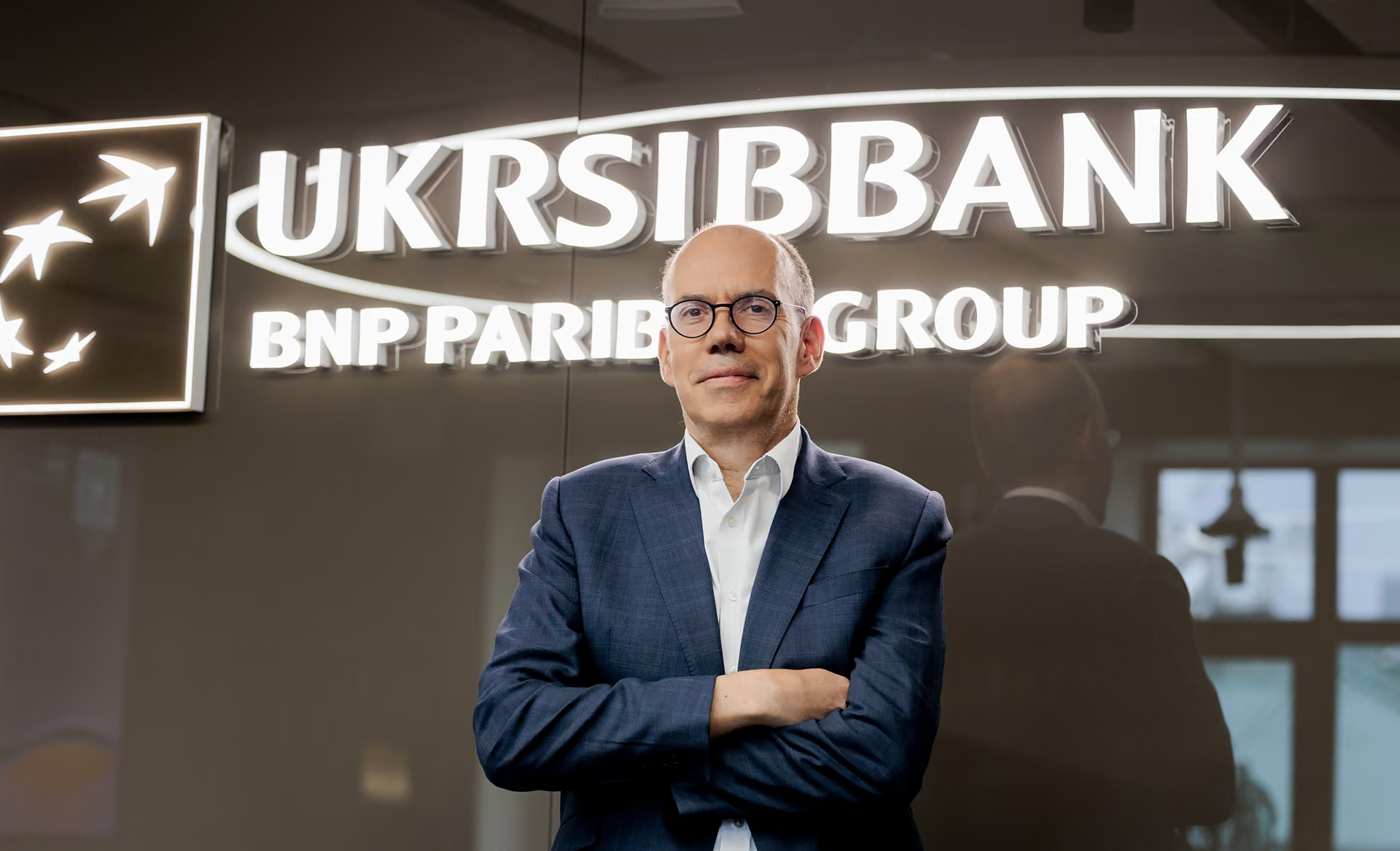
"We are happy to be in Ukraine and to support the country," says François Benaroya, CEO of BNP Paribas Europe-Mediterranean and Chairman of the Supervisory Board of UKRSIBBANK BNP Paribas Group.
BNP Paribas was one of the first international banks to invest in Ukraine and has remained a strategic partner of UKRSIBBANK for the past 20 years. Despite the full-scale war, the French banking group has not only continued operating in the country but is also preparing to play an active role in its future reconstruction.
In an interview with Ekonomichna Pravda, François Benaroya spoke about how BNP Paribas assesses the prospects of the Ukrainian economy, which sectors it considers key to the country’s recovery, why the Group is ready to act as a bridge between European businesses and Ukraine, and the challenges of EU integration, banking taxation, and the development of artificial intelligence.
"UKRSIBBANK is a bank for a changing Ukraine"
Twenty years ago, UKRSIBBANK joined the BNP Paribas Group. During that time, Ukraine has gone through numerous political and economic crises, including the Revolution of Dignity and the beginning of its European integration process, Russia’s occupation of Crimea, the outbreak of war in Ukraine’s east, the pandemic, and now the full-scale Russian invasion. Despite these challenges, the country continues to transform on its path toward the European Union. How has the bank evolved alongside Ukraine over these 20 years?
The slogan of BNP Paribas is: "The bank for a changing world." As we celebrate the 20th anniversary of UKRSIBBANK joining BNP Paribas, we can also say that we have become "the bank for a changing Ukraine."
Over these years, Ukraine has experienced a series of major crises: significant currency devaluation, the occupation of Crimea, the outbreak of war in Ukraine’s east, and now Russia’s full-scale aggression. Naturally, the banking sector reflects developments across the country.
As Europe’s largest bank by size, BNP Paribas has always been committed to ensuring that UKRSIBBANK remains reliable and resilient, providing support whenever needed. At the beginning of this journey, when BNP Paribas became a shareholder, the Group participated in increasing the bank’s capital, strengthening its development and financial stability. The Group also shared its expertise, best practices, and international experience from its worldwide operations. Today, BNP Paribas is present in more than 60 countries.
How does BNP Paribas support Ukrainians and businesses during the war? What are its main priorities?
When the full-scale war began, our first response was one of solidarity with Ukraine, Ukrainian society, and the people who were forced to leave their homes.
Since the start of the war, we have allocated approximately €30 million to charitable initiatives and support programs for Ukrainians and local communities. In our day-to-day operations, we have focused on two key priorities.

The first has been ensuring business continuity. We are extremely proud that, throughout this period, the bank has operated steadily, without disruption or interruption.

The second priority, as for any business, has been to protect and support our employees as much as possible.

Finally, another important objective is preparing for Ukraine’s reconstruction. Already today, we are preparing for the next phase of growth and development that we believe lies ahead for the country.
What are BNP Paribas Group’s main objectives in Ukraine through 2026 and beyond?
We are proud to have been operating in Ukraine for 20 years, and we are happy to be here supporting the country’s development.
Today, we are working on a new strategic plan. It is a roadmap through 2030 focused on further growth and development. This applies particularly to corporate clients, both multinational companies and large Ukrainian businesses seeking to expand internationally, as well as affluent retail clients.
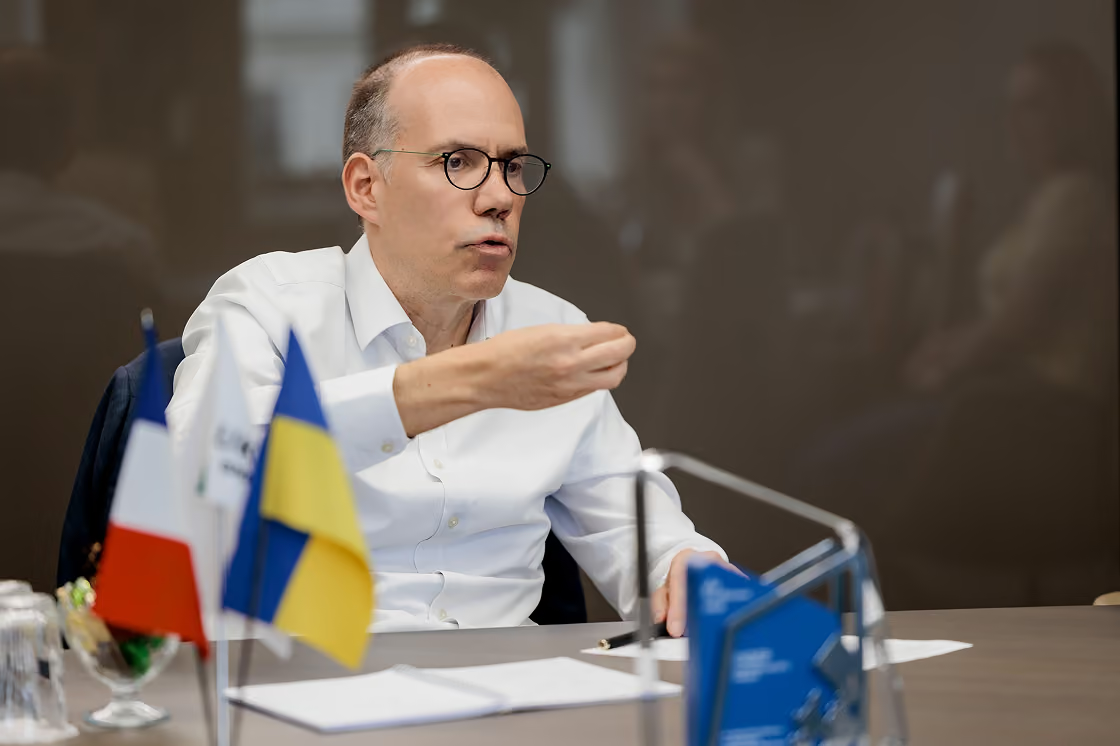
We will continue investing in IT solutions, digitalisation, and employee development to deliver the quality of service our clients deserve. Of course, we want to be part of Ukraine’s recovery. We aim to contribute to the country’s reconstruction and to serve as a bridge between Europe and Ukraine throughout this process.
70% of Europe’s leading companies are clients of BNP Paribas. It is therefore natural for us to play this bridging role and help those companies invest in Ukraine if they have not already done so, while also expanding and strengthening their presence in the Ukrainian market.
"Energy and infrastructure are among the top priorities"
In your view, which sectors should Ukraine prioritise during reconstruction: energy, agriculture, IT, or defence technology? How does BNP Paribas Group plan to support these projects?
Ukraine has competitive advantages across all the sectors you mentioned.

Agriculture has long been one of the country’s strongest industries. For many years, Ukraine has been one of Europe’s leading agricultural centres, thanks in part to its exceptionally fertile soils.

The IT sector has also historically been a major strength of the Ukrainian economy. As a bank, we actively support this industry and see significant potential for its further development.

The defence industry has likewise become one of the country’s key sectors. At a global level, BNP Paribas is interested in supporting and helping develop this industry.

When it comes to Ukraine’s reconstruction, energy is undoubtedly among the highest priorities, both rebuilding and expanding energy generation capacity, as well as infrastructure development and modernisation.
We have substantial expertise and a strong presence across all these sectors. At the same time, our particular focus remains on supporting private companies and multinational businesses, which is part of BNP Paribas’ DNA.
What scenarios is the bank preparing for, given the uncertainty around the war?
You are right: unfortunately, nobody knows how long the war will last. As a bank, however, we are required to conduct stress tests and prepare three-year strategic plans, which we submit to the National Bank of Ukraine.
Our base-case scenario, unfortunately, assumes that the war will continue. We are doing everything necessary to ensure that we can continue supporting our clients and the broader economy even if the war persists in the medium term.
At the same time, our team has developed an action plan for what we call a positive stress-test scenario — if a ceasefire were suddenly achieved and followed by a rapid economic recovery. In other words, we are prepared for both scenarios.
"Ukraine’s European integration is becoming more tangible"
Ukraine continues moving toward EU membership. The country is implementing the necessary reforms, yet recent EU reports note a slow pace of implementation and call for more tangible results, particularly in the areas of the rule of law and anti-corruption policy. What should the government, businesses, media, and society do to ensure that Ukraine’s accession to the EU does not take decades?
The European Union officially opened its first negotiation cluster with Ukraine in June, which is truly very good news. There will be six clusters in total, and significant work still lies ahead. It is important to approach these negotiations systematically and seriously. What matters is not only adopting the required legislation but also ensuring its effective implementation in practice.
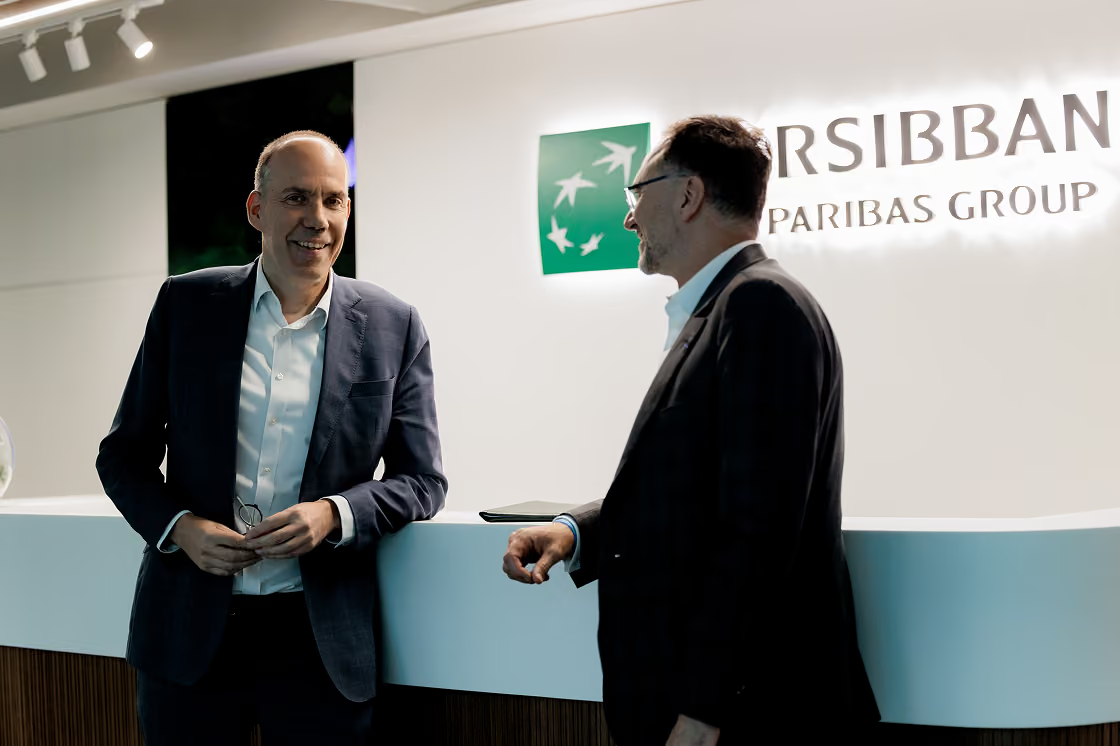
As for the media, my humble advice is to tell the truth: this will not be a quick process. It may take six, seven, or even eight years. However, even before membership is achieved, the accession process itself brings substantial benefits. Ukraine gains access to additional investment, receives greater financial support from the European Union, and is encouraged to accelerate reforms. The process itself already delivers positive outcomes for the country. Journalists also play a crucial role in combating fake news and disinformation.
The path toward EU membership will inevitably involve difficult debates and moments of tension. There will be actors seeking to distort reality and make Ukraine’s European integration appear more difficult than it is. That is why journalists have a vital role to play, helping society access reliable information, distinguish facts from manipulation, and objectively cover Ukraine’s European integration process.
How do you personally see Ukraine’s future?
Once the war is over, I believe Ukraine will have strong prospects for growth and development. The prospect of European integration is becoming increasingly tangible. Of course, much will depend on the security guarantees that are put in place.
Based on that future, we want to continue developing and remain the leading international private bank in the country.
"Predictability is essential when it comes to taxation"
Ukraine’s Parliament is preparing for a fourth extension of the 50% bank profit tax, arguing that the sector continues to generate excess profits. The tax has previously been criticised because of its unpredictability and retroactive application. What is your view?
We are among the country’s largest taxpayers and are proud to contribute to Ukraine’s economy. Paying taxes is both our responsibility and our contribution to supporting the state. At the same time, banks are currently in a less favourable position than other industries. The banking sector is subject to the highest tax rate of 50% and is also the only sector not allowed to distribute dividends. Why should banks, and no other sectors, be treated this way? I also do not recall anyone advocating for lower tax rates for banks in 2022 when many institutions were posting losses.
This is ultimately a matter of fairness, predictability, and maintaining an attractive investment climate.
If a country wants to attract investors, including new foreign investors to its banking sector, it is essential to provide predictability. Investors need to understand not only next year’s tax environment but also what it will look like in the years ahead.
We will continue operating in Ukraine and paying taxes. But if the rules were more predictable and more balanced across sectors, the environment would be even more attractive for both existing market participants and future investors.
"Our priority is supporting defenders, veterans, and their families"
UKRSIBBANK was among the pioneers of sustainable development and ESG implementation in Ukraine. Which ESG initiatives are you currently financing and planning to develop further?
For us, sustainability is a fundamental pillar of our strategy. We are concluding a strategic cycle built around three priorities: sustainability, technology, and growth.
In Ukraine, we are primarily focused on two major areas.
The first is the energy transition. We want to help the country become more energy-secure, resilient, and self-sufficient.
The second priority is supporting defenders and veterans in their reintegration into society. This is clearly one of Ukraine’s greatest challenges. The bank has developed a comprehensive We’re Proud platform dedicated to supporting defenders, veterans, and their family members.
We also attach great importance to supporting future generations of Ukrainians, particularly children, who need help more than ever in the context of the war.
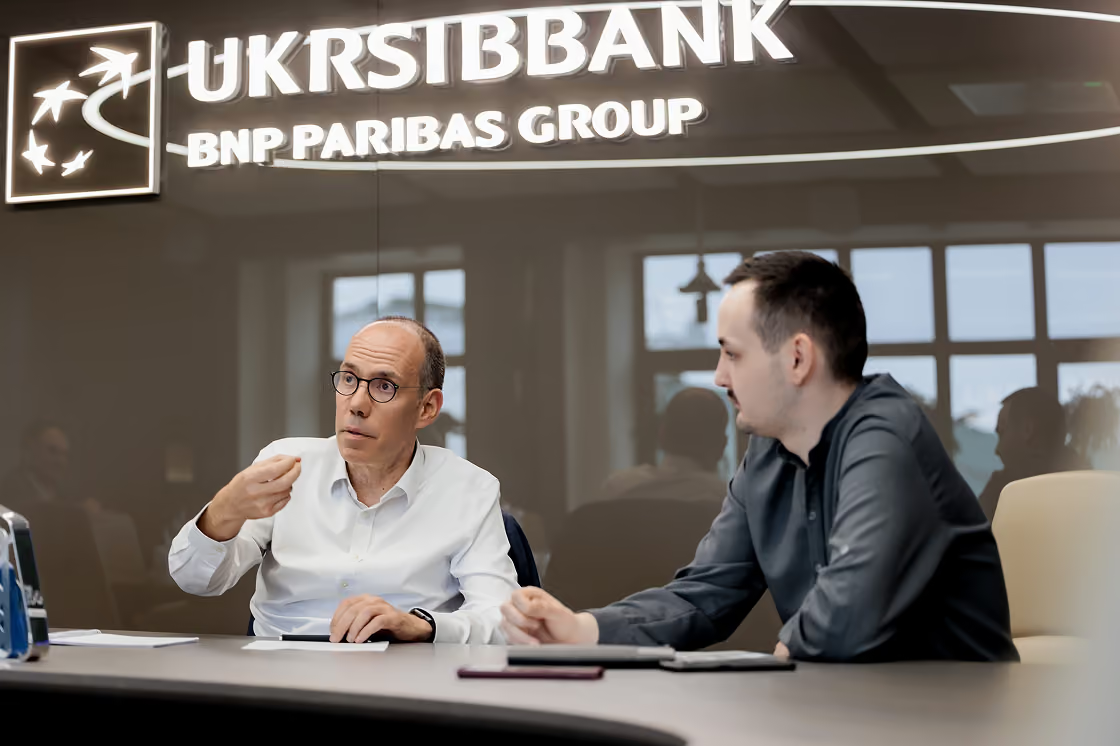
"We are investing in European AI solutions"
Artificial intelligence and digitalisation are becoming global trends across industries. How is BNP Paribas Group developing in this area?
BNP Paribas is investing heavily in artificial intelligence. First, we are developing a wide range of AI use cases. Across the Group, we currently have more than 800 AI applications in different business areas.
Second, we invest in European AI solutions to support the European economy. We have invested in the French company Mistral AI, one of the leading players in the large language model market. We are also dedicating substantial resources to employee training and upskilling.
We believe that AI solutions, combined with robust cybersecurity, will create significant opportunities for both our clients and employees, making banking services simpler, faster, and more efficient.
At the same time, BNP Paribas develops its AI capabilities while strictly complying with the EU AI Act, which clearly defines the boundaries of permissible and responsible AI use.
NBU banking license №75 dated October 5, 2011 Entered into the State Register of Banks on October 28, 1991. For №57. JSC UKRSIBBANK is a member of BNP Paribas Group.
© 2000-2026, Ukrainska Pravda, LLC "UP Media Plus". All rights reserved.
The use of site materials is allowed only with a reference (for online publications — a hyperlink) to "Ukrainska Pravda" no lower than the third paragraph.
Any copying, publication, reprinting, or further distribution of information containing a reference to " Interfax-Ukraine" is strictly prohibited.
Materials marked as PROMOTED are advertisements and are published as advertising. The editorial board may not share the views promoted in them.
Materials marked as SPECIAL PROJECT and WITH SUPPORT are also advertisements, but the editorial team participates in preparing this content and shares the views expressed in these materials.
The editorial board is not responsible for the facts and value judgments published in advertising materials. According to Ukrainian law, the advertiser is responsible for the content of the advertisements.
Project founder: Georgiy Gongadze, Editor-in-chief: Sevgil Musaeva, Founding editor: Olena Prytula, Editorial e-mail: [email protected]
Registered online media entity; media identifier — R40-02280.
Address: 01032, Kyiv, Zhylianska St., 48, 50A. Phone: +380 95 641 22 07