"We're fighting to lose fewer lives, or there'll be no one left" – Vsevolod Kozhemiako, Khartiia Brigade founder


Gone are paper logs, replaced by smartphone app reporting. Lengthy meetings and parades have given way to sharp, focused briefings. Arbitrary command and hazing are out, with KPIs now driving commanders and units. Most crucially, robotics lighten the load on infantry. This isn't a futuristic fantasy but the daily reality of the Khartiia Brigade, Ukraine's testing ground for business-like efficiency in the military. The brigade's approach hinges on deep analytics and process automation, both on the battlefield and in management.
At Khartiia's headquarters, IT specialists rival soldiers in number. Soldiers, equipped with augmented reality glasses, storm virtual targets tens of kilometres from the front line. In ground robotics, the brigade claims leadership.
As criticism grows over chaos and mismanagement in Ukraine's military command, innovative approaches are as vital as weapons.
How can auditing, consulting, logistics and legal firms aid the Defence Forces? Why does Khartiia recruit public figures? And how do personal connections drive army reform? Vsevolod Kozhemiako, the brigade's informal leader, shares insights in an interview with Ukrainian Pravda.
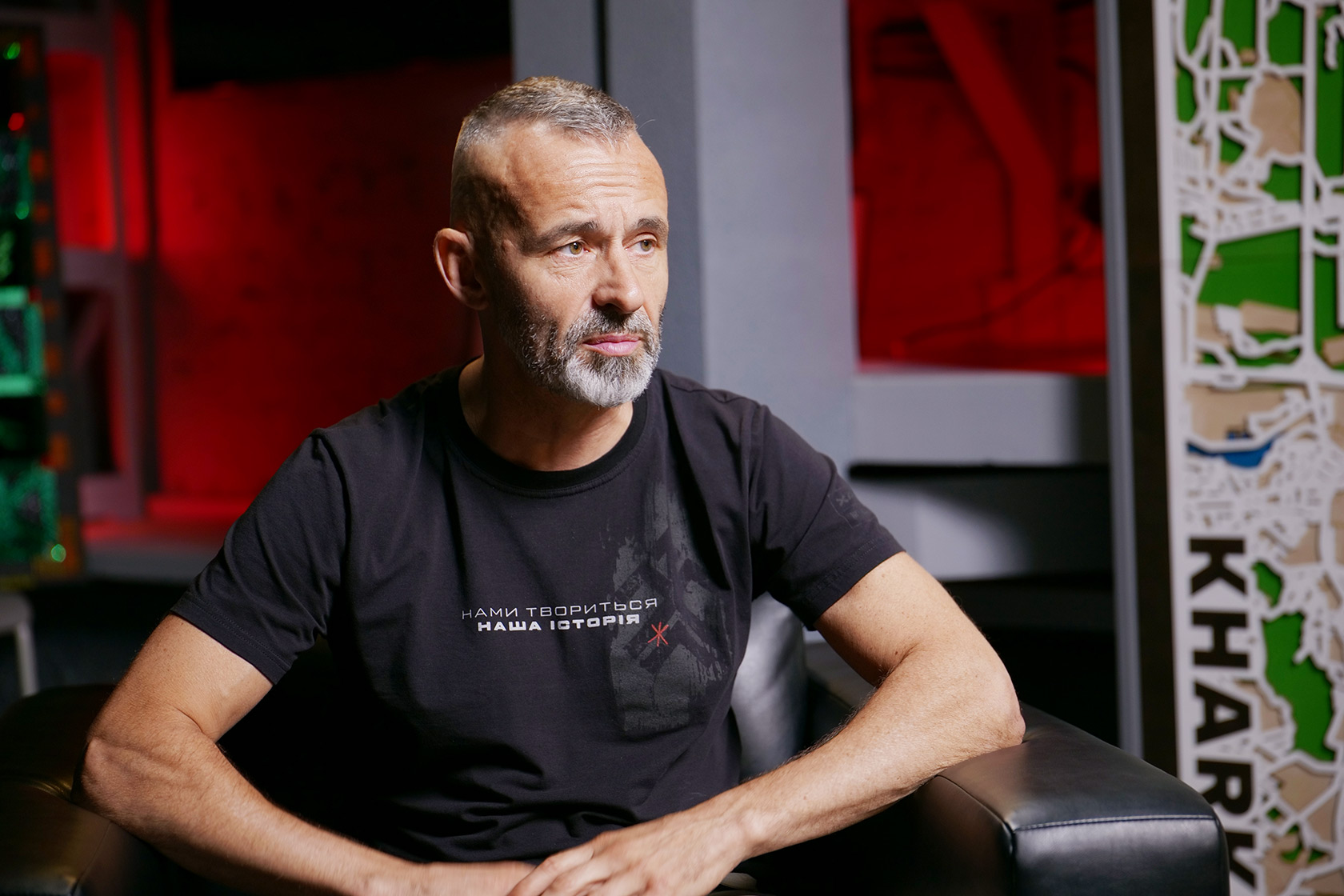
"We took 24 kilometres of front – it saved the day"
Who are you in the Khartiia Brigade? A grey cardinal?
In the Khartiia Brigade, I'm nobody – just an adviser. I founded the volunteer Khartiia unit, which grew into a brigade and now a corps. I wouldn't even claim to be the founder, as it involved orders from the minister, commander-in-chief and presidential decisions.
I'd say I sparked this movement, creating conditions for remarkable people to unite and do vital work for Ukraine.
Did you personally lead a territorial defence unit at the invasion's start?
Yes, I managed the volunteer unit. Ihor Obolienskyi, a long-time colleague, handled combat operations, while I built the unit. Our late brother-in-arms, Oleksandr Yushchenko, was chief sergeant. With other veterans and military experts, we shaped it together.
Do you now secure Kharitia's rear by liaising with senior officials, businesses and local authorities, seeing this as your mission?
Many people approach me, and I've pulled together talented teams and professionals who now work cohesively. I helped the commander forge ties between strong-willed leaders, enabling them to achieve great things.
There is a certain faith in me and my methods. To provide, train, and develop the most heroic individuals of our infantry brigade, the unit must have a strong intellectual core capable of streamlining processes.
That is what I do.
Some join us through personal connections with corps commander Ihor Obolienskyi. Broadly, we're building a new Ukrainian army. We're not shy about it – that's the truth.
I'm driven by passion. Some ask, 'Is he chasing a political career?' I've been at this for 11 years…
Those without deep values like love for the homeland or a drive for freedom can't grasp this.
In 2014, I met Ihor Obolienskyi, then deputy commander of Kyiv's Omega unit. His sincere, selfless work inspired me. He later led a rapid reaction brigade.
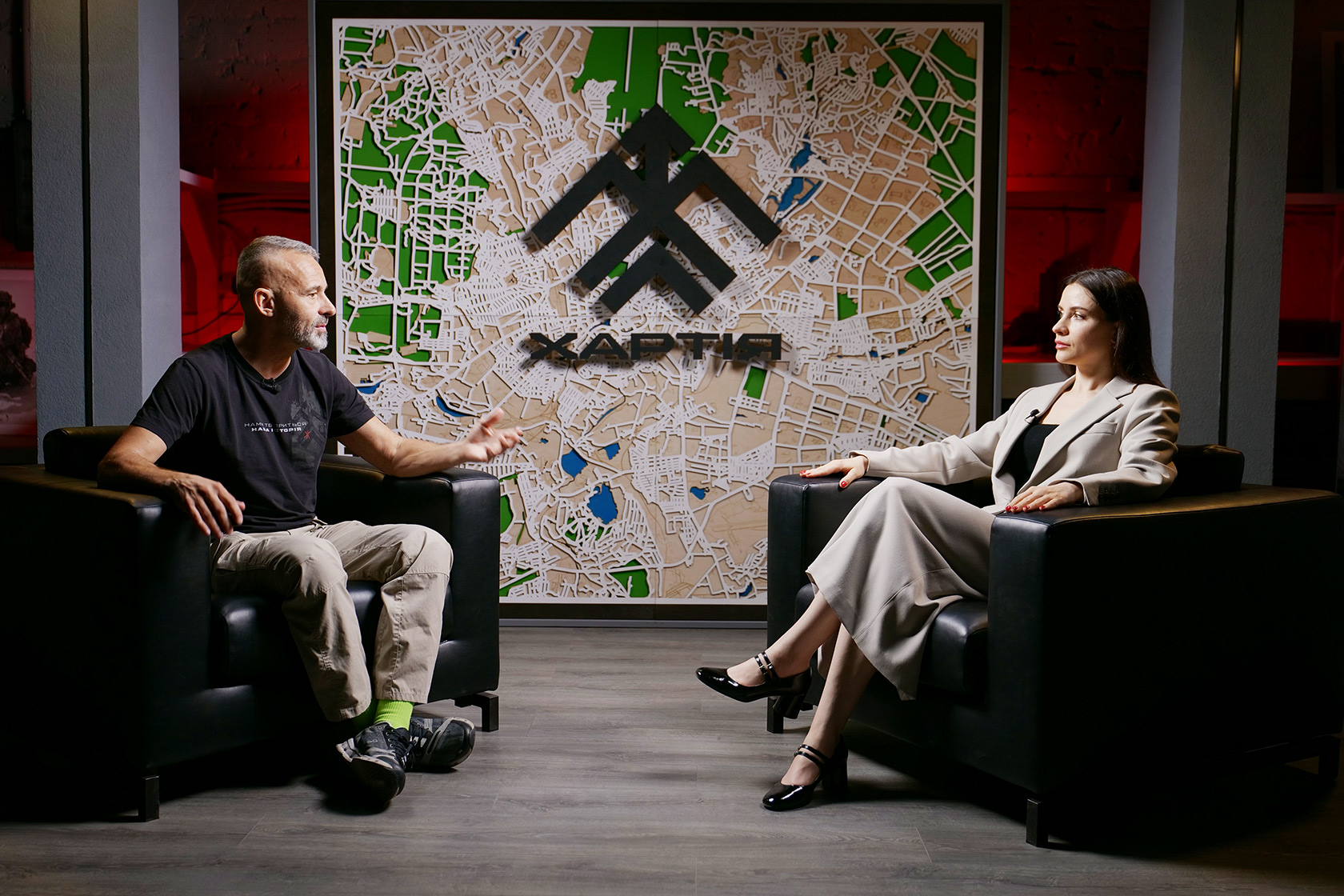
Is this the "future brigade" once led by journalist Yurii Butusov?
Yes, the team was primarily composed of NATO standards specialists who now work for us. They were then unable to get a position in the army. For political reasons, I believe the brigade's leadership was replaced as soon as it received funds.
The commander changed and some of the trained professionals remained while others moved on to other forces.
Obolienskyi left. He was promised jobs and apartments in exchange for his silence. He quit and went into business, working as a top management at MHP Kosyuk and Agrotrade [owned by Kozhemiako - ed.]. From that unit, the current Hostomel Rubizh brigade emerged, now part of the Khartiia corps.
Why build a brigade in the National Guard system? You're close to Commander-in-Chief Syrskyi, aren't you?
We seized the last chance during the formation of offensive brigades. The state leadership backed us, and I believe no one regrets it – we haven't failed.
Initially, we fought on the Lyman front.
In 2024, as Russia attacked Kharkiv, our soldiers said, "Why are we in Lyman when units are retreating near Kharkiv, where our families, homes and ancestors' graves are?"
We were rushed to Lyptsi without returning to base, thrown straight into a counter-battle. The front was a chaotic chessboard – our units and the enemy's intermingled, the situation was "tough but under control". Management faltered, I reckon.
We were tasked with holding a 24-kilometre front, huge for a forming brigade. That's when Khartiia was forged in battle.
The Russians' plan was clear. We found a tablet on a killed officer detailing their bridgehead strategy. We pushed them back, securing key positions. In two months, our positions endured nearly 1,000 airstrikes, with 980 guided aerial bombs dropped.
Read also: War of guided aerial bombs: why Ukraine is talking about its own production of guided bombs
"Training must teach survival, not just range shooting"
The Ukrainian army faces a personnel crisis, with fewer people every day.
The whole country feels this crisis…
But the army suffers most, worsened by negative sentiment around recruitment centres, fueled by Russian propaganda, real challenges and war fatigue…
Dull-witted people play a part in creating that sentiment too.
How does Khartiia handle this? Is the flow of recruits drying up?
We face the same challenges.
But when people talk about forced mobilisation or deserters, they miss that joining a quality team transforms recruits. Given new skills, care and roles that suit their strengths, they thrive.
I'm amazed by the talent we attract – top company managers, partners, renowned athletes.
A young woman studying in the UK, with an American education and athletic fame, wrote to me: 'To earn respect in my team, I need combat missions. I want this.' It's inspiring, especially against the backdrop of indifference, inertia and unprofessionalism from higher-ups.
You mention inertia and unprofessionalism at the top, impacting soldiers fighting for every inch. Yet, you're a skilled communicator, connected with the elite – from Syrskyi to Yermak and Zelenskyy.
It's not my achievement; it's a tool.
My mission for Khartiia is to ensure the team functions smoothly, unlike Obolienskyi’s wasted efforts in 2016.
I seize every chance to explain our work [to those in power] and people listen.
I've only faced pushback locally.
Is there tension with Kharkiv's mayor?
I stated the fact: the city barely supports one of the main brigades defending Kharkiv.
Since we arrived, we've received about UAH 20 million [approx. US$477,953] from city hall, which is less than UAH 2 million [US$47,793] per month. That's not enough.
That's talking about Kharkiv's toughness. Who makes Kharkiv unbreakable?
Those dining in restaurants and strolling in parks, or those in trenches holding back an enemy advancing daily? With respect to residents and the city's beauty, shouldn't we prioritise drone procurement? Enemy drones block rotations, forcing fighters to stay put for weeks. They say, 'We'd rather stay here and not rotate for a month, as every rotation is a huge risk.'
We need drones to monitor, mine and strike to keep the enemy at bay.
Your brigade boasts heavy artillery in public figures like Taira, Serhii Zhadan, Vakhtang Kipiani and Yurii Butusov, the army's chief critic.
In the past, yes.

An important clarification: did the President's Office thank you for turning Butusov from journalist to soldier?
No, Butusov thanked us for joining a top-tier, professional project. Mariana Bezuhla [a Ukrainian MP] claimed that Butusov's voice has been silenced. It is not true. Yurii has long been a friend and it was his idea to form this rapid response brigade. And, by the way, I was the one who presented him to Obolienskyi.
He is sincere and made the decision himself, even though he has three minor children. Per law, he can resign at any time.
Yes, he wrote a lot about [the country's] problems. And then perhaps he got fed up?
Knowing his tendency toward criticism, we said, "Yura, you are an honest man. Stay that way. If you enter the system, you can't be honest anymore…
Becoming a rifleman is a beautiful step, from a public point of view, but why didn't he become an officer?
Do you think he should have become a general right away?
To become our general, colonel, or major, you have to start from the lower ranks.
Butusov is making his way with honour. A week ago, he passed certain tests and got a patch.
There are many other famous people besides Yurii...
[Serhii] Zhadan [a well-known writer] has been with us from the very beginning. He was the one who came up with the name Khartiia. He was a volunteer soldier for 1-1.5 years. Later, his entire volunteer group mobilised and is now engaged in combat work. Then Zhadan himself joined. When a person who feels everything so delicately comes to you, it is a sign of trust.
Obolienskyi and I dissuaded him and other opinion formers who were useful to society from mobilising and who were usef. We tried for half a year, and he said: If you don't hire me, I'll go to another unit.
Which one?
Any other unit is another for us because Zhadan is our man and my close friend. He is a man of Kharkiv and a symbol of our generation.
Many opinion leaders and famous people are part of our brigade because we are doing many things for the first time. Only leaders who have already accomplished something in life can take responsibility and bring their expertise to this fight.
A partner from the law firm Moris has joined us, and we will build a legal vertical with them. We also plan to rebuild our logistics with one of the market leaders, but I can't reveal all the details yet.
If you ask how much one day of war or a day of a brigade's stay on the front line costs, no one will answer; there is no answer.
The army must introduce specific business models to calculate the cost of a killed enemy solidier, a kilometre of the front, or a particular manoeuvre.
We plan to calculate all this in money: we will consider the brigade an enterprise in which the profit is killed enemy soldiers and destroyed equipment, and the loss is, unfortunately, our own casualties.
This allows us to compare brigades within the сorps, battalions and companies.
We plan to create a personnel management system with the Baker Tilly company. A senior partner of this company compared what we are creating with the first Ukrainian IPO.
Commanders need to focus on combat work, and we want to do everything we can to provide it as efficiently as possible. This is my task and challenge. Right now we form teams for this purpose, make an inventory of people, and look primarily for people in the team and сorps who were engaged in consulting, financial consulting, auditing, logistics, and HR management in civilian life.
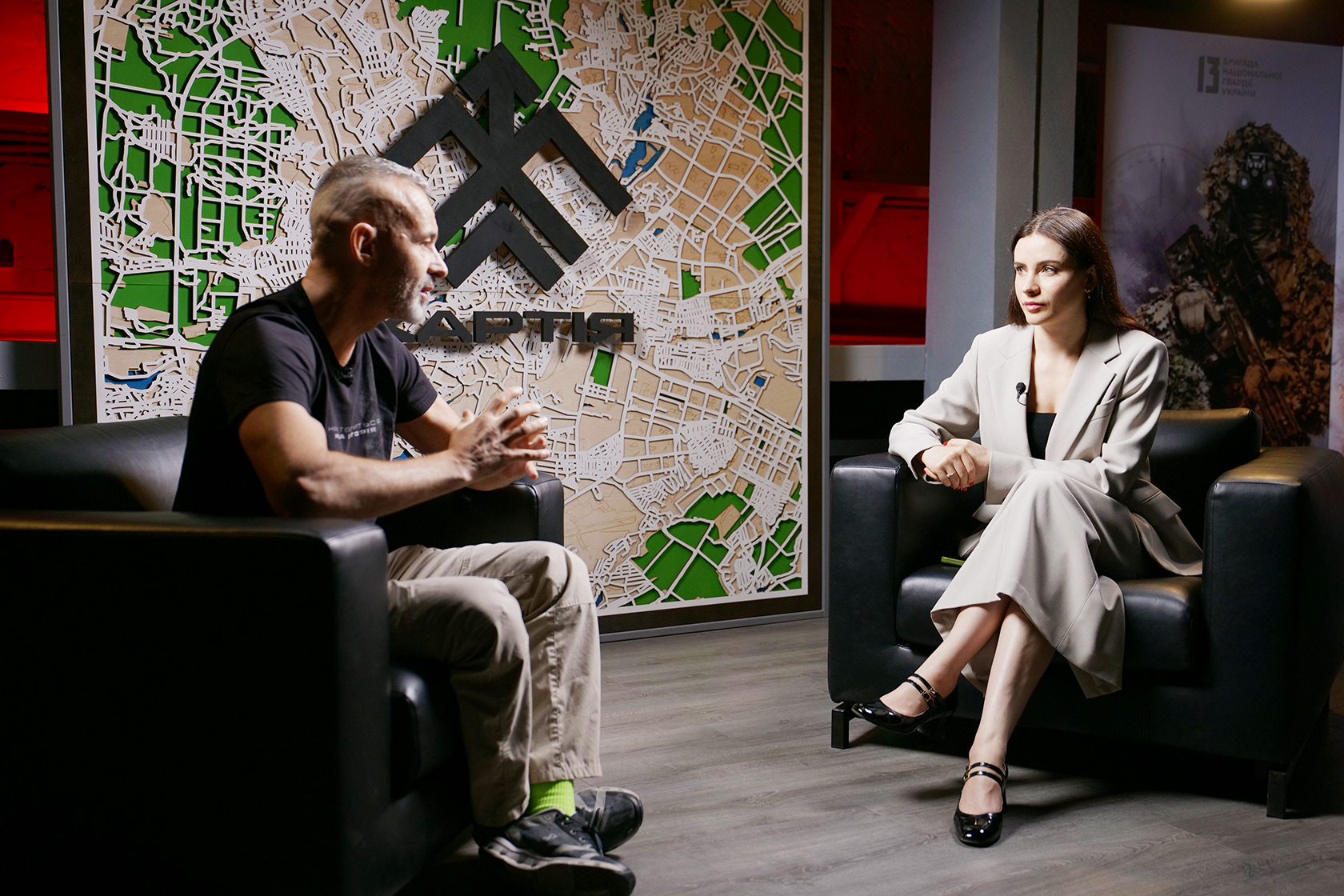
Your corps is to be reinforced with five brigades of varying levels of manning and technical equipment...
Each of them is unique in its way. Two of them are fully manned and well-equipped – Spartan and Rubizh. Both are quite well-known and have been fighting for a long time.
There's also the Poltava Brigade and the Sloviansk Brigade, though they are somewhat smaller.
The Sloviansk brigade is a former battalion of Donbas. There are cool guys there.
The Poltava brigade is currently engaged in fighting on the Zaporizhzhia front. We've already approved them – they're very decent people.
Who was easier to work with on implementing your ideas – Zaluzhnyi or Syrskyi?
I know Valerii Fedorovych [Zaluzhnyi] less. Under his command, we were just a small group of volunteer soldiers, 50-100 people.
Zhadan introduced us to Zaluzhnyi shortly before his resignation. It was more of a philosophical conversation; from a military standpoint, we weren't of much interest to him. Still, he signed the order to deploy us to Bakhmut – because Territorial Defence Volunteer Units (DFTG) can only be sent outside their oblast if the commander-in-chief signs a combat order. At the time, Syrskyi was commanding the Khortytsia Operational Group. I reached out to him, and he, in turn, approached Zaluzhnyi, who signed the order."
Have you known Syrskyi for a long time?
When he was the commander of Khortytsia, he came to Kharkiv, and we cooperated during the counteroffensive. He gave us the first CO [combat order].
At first, he didn't take us all that seriously: we were just some volunteer soldiers making noise. He said, "You say you'll defend our territory? Well then, defend it. Good luck."
He couldn't exactly say, "You're fools. Get out. We'll do it without you." So he let us go for it.
"We're nationalists. We just happen to be from the East"
You are not the first unit formed with a modern approach. What makes you different?
We have more business-focused approach, with less centralisation, more decentralisation, and we give people freedom for development. This is understood by people who know me as a businessman.
In terms of values, could your unit be seen as a liberal project, in contrast to the 3rd Assault Brigade, which is more nationalistic?"
We are nationalists too. We just happen to be from the East of the country. But we consider ourselves heirs to the heroes who defended and fought for Ukraine's independence in the early and mid-20th century. I don't consider myself a liberal.
I take a hard stance on the need to speak in Ukrainian, on who our heroes are and who aren't. Zhadan and I tore down the Pushkin monument in Kharkiv until Terekhov [Ihor Terekhov, mayor of Kharkiv] finally had it removed.
I used to be a liberal, but I was greatly influenced by Dmytro "Da Vinci" Kotsiubailo [the youngest battalion commander in the history of the Ukrainian Army, killed in 2023].
He was half my age, but we talked a lot. He was a very complete person… I started following his example in many ways, and I'm not ashamed to say that. His potential was enormous.
He was a charismatic personality and a professional military man. He was aware that he still had to learn and grow to become a commander, so when Dmytro was offered the opportunity to lead this brigade, he refused.
At the same time, he was very creative.
When we were friends, I was 48 and he was 23 or 24. He had his whole life ahead of him.
What do you think about the current situation at the front line?
At the beginning of the year, I made a prediction: that there would be no elections, no ceasefire and no end to the war this year."
Politicians and businesses believe in negotiations and agreements…
When the invasion began in 2022, I met with a friend, an important businessman. He said: "This can't be real, negotiations are underway. The Americans are talking to someone, something secret is going on right now." I replied: "The war is already underway, missiles are flying, what Americans, what kind of negotiations, what are you talking about? Nothing happens." "Maybe it'll stop soon. This can't last." I said: "No, it'll last for a long time. Unfortunately."
Unfortunately, I was right. We still have work to do. But I'm sure we have every chance.
Every chance for what?
For a good outcome of this war. I do not know, for victory, for sustainable peace, for example…
What would count as a victory?
That question is a cliché. And I have a clichéd answer: when victory comes, we'll know.
"The army is a business. Just far more tragic."
While businesses and politicians believe in a big diplomatic game and agreements, the armies on both sides of the front line believe that everything is lost.
I see ways, how and what can be done, and what should be done, and I do it. That's what keeps me in a stable mental state.
Why do businessmen believe in agreements? I'm a businessman myself, but I'm a slightly broken one. Because I understand that not everything is solved by money. Only a person who has lived through a war – something impossible to explain to others – understands how deep this process is on the scale of human life and the historical events that are taking place. People in business measure everything in money.
One well-known businessman, who had long sympathised with Katsapstan [a derogatory Ukrainian name for Russia] – even in 2022 – told me: "I thought he was about business. But he's just insane." He meant Putin. And I thought: wasn't that clear in 2014 already? It's not about business or efficiency, it's just about destruction.
Most business people can't understand this. When I come to Kyiv, I often hear completely naive questions.
And these are the people who created corporations, and it's not that they just manage them – they created them. They are serious and smart people. So everyone is always welcome. We invite everyone to visit, see, and hear exactly how a war is fought. Without pomp or heroics. Just how it's actually done.
War is done somehow, and business is done somehow. Later, you can talk about profits or achievements. But how is it really done? Who knows? We try to show that. And they get very interested when they start to understand. They see that war is much like business – just more tragic."
So, from a military standpoint, you don't believe the situation is hopeless?
Ihor Obolienskyi said in an interview that our ancestors spent 100 years sitting in bunkers and basements and planning by candlelight how they would fight for Ukraine, fight for independence, and defend it. And we are also sitting in the basement right now, planning something. But we are in Kharkiv.
We're advancing. In historical terms, we've made serious progress. We need to continue. I'm sure everything will be fine.
Tetiana Danylenko, Ukrainska Pravda
Translation: Theodore Holmes and Yulia Kravchenko
Editing: Shoël Stadlen