
Slava Canada, Slava Greenland: The Imperialist Annexation Fantasies of Trump, Putin, and the Broligarchs
When Donald Trump first referred to Canada as "the 51st state" in a December pre-inauguration meeting with then-Prime Minister Justin Trudeau, Canadian officials present thought he was joking.
He wasn’t.
Almost immediately after inauguration, the new Trump administration began baffling international watchers in its undertaking of a scorched earth trade war against the whole world. But the bafflement shifted to real shock when these hyper-aggressive economic attempts turned, unexpectedly, northward.

In January, Trump began to publicly threaten the use of "economic force" towards annexation of Canada, historically the US’ staunchest ally.
Canada shares a 9000-kilometre border with the US. It’s the world’s second-largest nation geographically, with a population of 40 million people.
By March, Trudeau was warning his population: "What he wants is a total collapse of the Canadian economy, [to] make it easier to annex us".
What would have read like a comedic plot under any other US presidency was now actually being discussed by Trump and his surrogates as if it were a normal proposal.
***
In Canada, public reaction to Trump’s threats first drew a mixture of disbelief and fear-- that then turned to fury and a massive patriotic wave.
American products off store shelves. A truly powerful tourism boycott: Canadian travel to the US down 75%. Canceled flight routes. Empty airport lines, border crossings, and hotels.
In March, reports that the Canadian Forces recruitment website had crashed with unusually heavy traffic.
"We’ve had enough with this rhetoric," foreign minister Mélanie Joly finally snapped on television. "We’re insulted, we’re angry, and that’s enough. This is NEVER going to happen. We will NEVER be the 51st state".
All this has transpired while Trump also loudly threatens several other sovereign lands like Greenland and Panama.
***
Many with grounding in gendered geopolitical analysis have raised the obvious: Donald Trump, adjudicated rapist, seems to have a lifelong problem with the concept of consent.
In an eyebrow-raising tack for someone with such an extensive background of assault allegations, Trump repeatedly declared on the 2024 campaign trail, "I’m going to protect the women-- whether they like it or not".
The day after his first official conversation with Putin, Trump tried a new statecraft approach that mixed feigned benevolence with old-fashioned gangsterism: "The world is a very unsafe place. Canada needs our protection".
(Trump’s advisor-propagandist, convicted felon Steve Bannon, has been more forthright: "If Canada doesn’t agree to become the 51st state, Trump will force it to".)
As for Greenland, Trump also attempted to sell the same softer touch when he vowed to Greenlanders, "we will keep you safe". But to Americans, a different tune: "we need Greenland. And one way or the other we’re gonna get it".
This is all no less than the language of the authoritarian as rapist, and of attempted imperial expansion as rape-- a cultural pathology I recently addressed for Ukrainska Pravda in its Russian strain.
As Jonathan Fink of Silicon Curtain noted, "Don’t ignore the signs in his language. It is the rapist’s defense. Trump has the mind and attitude of the abuser."
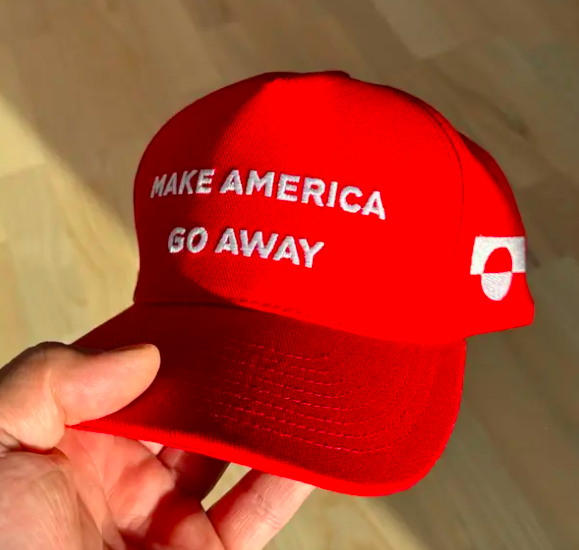
The people of Greenland have had a succinct response to Trump’s "offer of protection" (if the 85% polling preferring the US leave them alone wasn’t already clear enough). At a recent Nuuk protest, one woman held a sign that read, "We are not a p---y you can grab".
***
Many commentators are still scrambling to find strategy, or even rationality, in Trump’s 2025 expansionist obsessions.
Is it a "savvy negotiating tactic? A wild fantasy? A greed for natural resources?"
Some have looked to the historical. Political scientist Todd Belt has posited, "I think someone put it in his head that great presidents acquire territory as a legacy".
Others, to the pathological. Canadian MP Fareed Khan spoke at Parliament referencing the 2017 psychiatrists’ warning The Dangerous Case of Donald Trump to argue that "Trump’s repeated comments about annexing Canada reveal sociopathy"-- through which he "poses a threat to the entire world and democracy".
But any attempts at either realpolitik or psychiatric analyses only address part of the picture if they don’t fold in the motivations of two other factions: Vladimir Putin and the Kremlin, and the "broligarchs" led by Elon Musk.
***
First, Putin.
Trump’s Russia ties have been extensively documented back to the 1980s. Yet his increasingly blatant 2025 priorities have yet again shifted the conversation directly into the global mainstream.
US Congressman Alexander Vindman queries: "What does Putin have on Trump? It doesn’t make a huge amount of sense. He's voting against Ukraine, our allies in NATO. He’s calling Zelensky a dictator. He’s saying he’s going to visit Putin at the Kremlin. It’s just very surreal".
Citing the regime’s stances in Ukraine-Russia negotiations, US Senator Jeff Merkley openly raised the question in a March congressional hearing. Noting that "what a Russian asset would do would be to attempt to get the very best deal for Russia. That appears to be exactly what Donald Trump is trying to accomplish", he asked, "what else could a Russian asset actually possibly do that Trump hasn’t yet done?".
French senator Claude Malhuret has been most blunt:
"Each day worsens the capitulation to Putin. Voting with Russia at the UN. Dismantling federal structures investigating Russian interference. Appointing an intelligence director whom Russian propagandist Solovyov publicly called ‘a Putin agent’. Russia is being strengthened.
We were at war with a dictator, we are now at war with a dictator and a traitor.
Is [Trump] under kompromat, or simply an utter fool? What is certain is that he is the best Russian president in American history."
And British MP Graham Stuart: "we have to consider the possibility that President Trump is a Russian asset. If so, he is the crowning achievement of Putin’s FSB career".
***
And one can always simply head straight to the Russian source itself.
Kremlin official Nikolai Patrushev infamously and ominously said it all just days after Trump’s 2024 result: "To achieve success in the election, Donald Trump relied on certain forces to which he has corresponding obligations. As a responsible person, he will be obliged to fulfill them".
Since January, both Russian politicians and state media have been jubilant about Trump, praising him for destructive implementations beyond even their wildest hopes. His actions indeed "coincide with our vision", Dmitry Peskov affirmed. "It’s such a pleasure to watch!", Russian propagandists have raved. "We wanted to saw the Western world into pieces, but he decided to saw through it himself!".
All this has provoked a real question hanging in the international air. In Trump’s annexation obsessions and rhetoric, is he acting alone? Or is he being externally "counselled"?
***
In March, Putin gave a speech in which he openly explained how he and Trump will carve up their spheres of influence: Ukraine, the Baltics, and Poland for Russia; Canada, Greenland, and Panama for the US. He even helpfully affirmed that "the US has really serious plans about Greenland", with "old historic origins".
Margarita Simonyan began boasting on television that the US would acquire Greenland by "cosplaying Russia" (thus, in passing, fully confessing to the country’s trademark methods in thievery by phony referendum):
"What did [US Vice-President JD] Vance say this week about Greenland? He said there will be a referendum in Greenland. As a result of it, Greenland will ask for independence. The people of Greenland will support this independence. Then, there will be another referendum, and as a result, Greenland will accede to the US. Sounds familiar? It’s simply amazing".
***
Trump offered his own rationale for why it would be perfectly proper for him to annex Greenland, a Danish territory: "Denmark's very far away. A boat landed there 200 years ago or something, and they say they have rights to it. I don't know if that's true. I don't think it is, actually".
But we would be credulous to take Trump at his word on his Greenland obsession; it’s unlikely that it actually emerges from what journalist Gabriel Gatehouse has archly called Trump and Putin’s shared "fondness for cartography".
With snow caps melting and certain minerals especially sought-after, Arctic rights have become a pressing topic. Bannon has deemed the Arctic "the great game of the 21st century".
As in all matters Trump, following the money is frequently the surest bet. A May report revealed that tech moguls lobbying for their need for Greenlandic rare earth minerals donated 243 million dollars to his 2024 campaign.
***
Regardless of hidden motives or alliances, it’s undeniable that the Trump regime has become ever-more comfortable using the particularly Russian method known in disinformation-watch circles as the "firehouse of falsehood": offer the public a wild justification for an outrageous position, discard it, shamelessly present a new one.
But instead of organ harvesting labs and bioengineered mosquitoes à la Kremlin 2022, in the US-Canadian case it’s drug-smuggling and map lines.
First has been the attempt to manufacture a "Northern border crisis". Regime officials have spent months pushing the narrative that Canada is "attacking" the United States by sending masses of fentanyl across the border. Trump surrogate (and third Trump regime convicted felon to appear herein) Peter Navarro has repeatedly gone on television to tell Americans that "Canada has been taken over by Mexican cartels".
In fact, the total amount of fentanyl smuggled into the US from Canada in 2024 would fit in one suitcase-- 0.2% of the seized product. (The quantity of drugs coming into Canada from the US is, of course, infinitesimally larger.)
Another new tactic: the assertion that Canada does not really exist.
Just weeks after the inauguration, Trump on a call with then-PM Trudeau began to reference an obscure 1908 treaty, declaring it invalid.
Trump then argued repeatedly for the need for the border’s "revision": "[i]f you look at a map, they drew an artificial line right through it, between Canada and the U.S., just a straight artificial line. Somebody did it a long time ago. Many, many decades ago. And it makes no sense".
Fascism historian Timothy Snyder calls this the kind of rhetoric that grounds "the lies that imperialists tell themselves before beginning wars of aggression".
He also classifies Trump’s tactics as "strangely Putinist. Trump's rhetoric about Canada uncannily echoes that of Russian propagandists towards Ukraine. This is all familiar, as is Trump’s curious ambiguity about a neighbor: they are our brothers, they are also our enemies; they are doing terrible things to us, they don’t really exist".
When asked about Trump’s quote that "Canada only works as a state", Gatehouse explained: "What it sounds incredibly like to me is Vladimir Putin [on] Ukraine. In 2008 Putin said to then-president George W. Bush, ‘you understand George, Ukraine is not even a proper country’. This is exactly what Donald Trump is now saying about his neighbor".
***
In their April election, Canadians voted loudly against both US aggression and collaborationism, sweeping new Liberal prime minister Mark Carney and his strong anti-US rhetoric into office. Trump-aligned Conservatives lost a 27-point lead to be trounced nationally. Polls showed large numbers of voters changed parties on one single issue: the Trump threat.
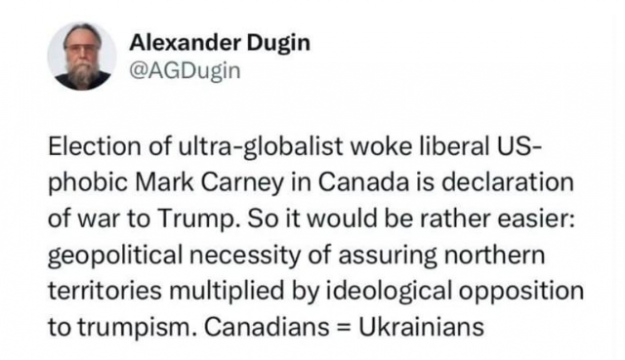
The global far-right nexus was decidedly unhappy with this outcome. Putin’s court philosopher Aleksandr Dugin was particularly apoplectic at Canadians’ choice.
In Dugin’s characterization, Canadians do not defend their sovereignty. Rather, they impudently stand in the way of Trump and Putin assuring their "Northern interests". This makes them equivalent to another "imaginary people"-- who also, rudely, don’t simply acquiesce to their neighbour’s demand to hand over anything to which they feel entitled. Now, Dugin declares, "Canadians = Ukrainians".
***
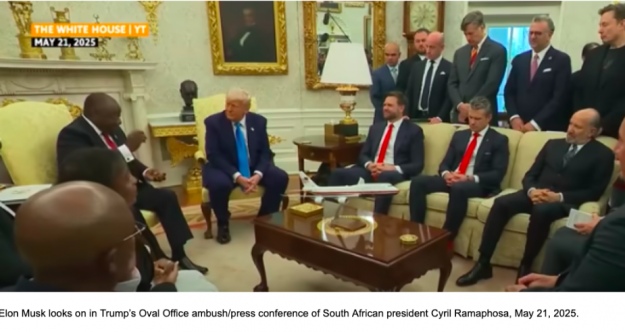
In this moment of US aggression, there remains one final player who cannot go unaddressed: he’s quite literally been at Trump’s side for the last year. It’s the world’s richest man, South African-born US immigrant Elon Musk.
This week, the two men descended into a very public and messy uncoupling, complete with threats of revoked contracts and revelations of criminal secrets. No one can predict the outcome of this ongoing narcissists’ battle royale.
But Musk’s billions, and their role in saving Trump’s faltering campaign in summer 2024, undeniably propelled him to the status of shadow president for the first four months of the Trump regime.
And it is Musk and the other broligarchs’ connection to these strange, sinister, and suddenly pressing ideas-- annexations, state dissolutions, technocratic reconfigurations-- that may provide the most chilling puzzle piece of all.
***
***
There is a disturbing neo-reactionary ideological movement that’s become the darling of the technofascist wing of Silicon Valley billionaires. Known as "the Dark Enlightenment"/NRx, it calls for the creation of a post-democracy, pan-state technocratic dictatorship. "Philosopher" Curtis Yarvin, Musk, and fellow South African-US immigrant billionaire Peter Thiel are all disciples.
The other billionaires and "futurist thinkers" pushing this nihilist societal re-engineering project seem largely motivated by having read one too many dystopian sci-fi novels (if having missed their actual lessons).
But in Musk’s specific case, his quest for international political realignments may not be rooted in quite the same "futurism" of his nerd-peers at all. His technofascist dreams may also be based in resurrection of a particularly egregious family history.
Think less 2020s, more 1930s.
***
Elon Musk’s maternal grandparents were Canadian Nazi supporters. His grandfather, Joshua Haldeman, both opposed Canadian sovereignty and ran as a fringe candidate for provincial premier and prime minister.
Haldeman was concurrently active in a Nazi-adjacent group called Technocracy, Inc. Its goal was to create a fascist "North American Technate", annexing multiple nations and ruled by engineers.
After falling under government scrutiny for these plots, Haldeman decamped from Canada in 1950 to move the family to apartheid South Africa-- a last bastion of postwar Nazi ideology and the perfect place to comfortably practice his white supremacy openly.
This history has finally begun to pierce the mainstream: Edward Luce of The Financial Times has reminded that the Canadian escape, generational Nazism, and choice to settle in apartheid South Africa are all "a family legacy that [Musk] has not repudiated". When Musk sieg heils on live television or shares white supremacist conspiracy theories on X, this is "not something we should just dismiss as the trolling of a Silicon Valley tycoon".
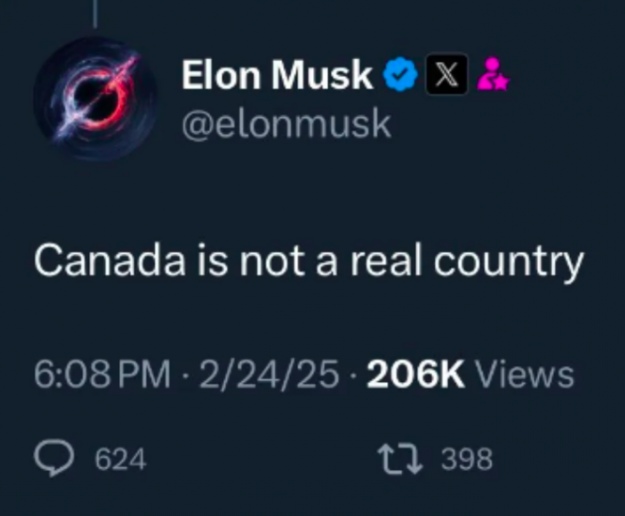
A look at a 1940 "Technate of America" map shows its encompassing of many of the precise nations with whom Trump has been especially aggressive in this heretofore Musk-bankrolled term: Canada, Greenland, Panama.
***
So while Trump may be partially driven by his own limited cartographic analyses or imperial delusions-- it’s virtually inconceivable that he’s been acting solely of his own accord.
In his threats of Arctic conquest, he’s been voicing Putin’s lust for spheres of world domination.
And in his attempts to erase Canada as a nation, he’s been facilitating the reanimation of the grievances and fantasies of Musk’s family.
It’s clear that in 2025, expansionist fascisms-- old and new-- are driving hard to assert themselves. For years, Ukrainians have been pushing them back virtually alone. years. Now, Canadians and Greenlanders are part of the fight, too.
As the hockey-loving Canadians say: elbows up.
Dr. Kerry McElroy