Ukraine unveils robotic platform for launching multiple FPV drones simultaneously – photos, video

Ukrainian company IRV has developed a ground robotic platform called Karakurt, designed for the remote launch of multiple drones. The system, which can deploy up to six UAVs, was unveiled for the first time at IRON DEMO 2025.
Source: Oboronka, a defence industry project by Mezha.Media, a technology and IT news platform within Ukrainska Pravda's holding company
Details: The Karakurt system is mounted on the tracked ground robotic platform Vepryk, equipped with two rails holding three FPV drones each. The concept behind the design is to enable drone launches from locations far removed from operators or Ukrainian positions. Additionally, the system can remain on standby around the clock in high-threat areas and activate upon detecting enemy targets.
The drones are operated either via an integrated onboard retransmitter or through an aerial relay station, which can be launched from the platform itself or from nearby positions. This allows the drones to operate at ranges of up to 30 km. The robotic platform can be deployed up to 4 km away from the communication hub.
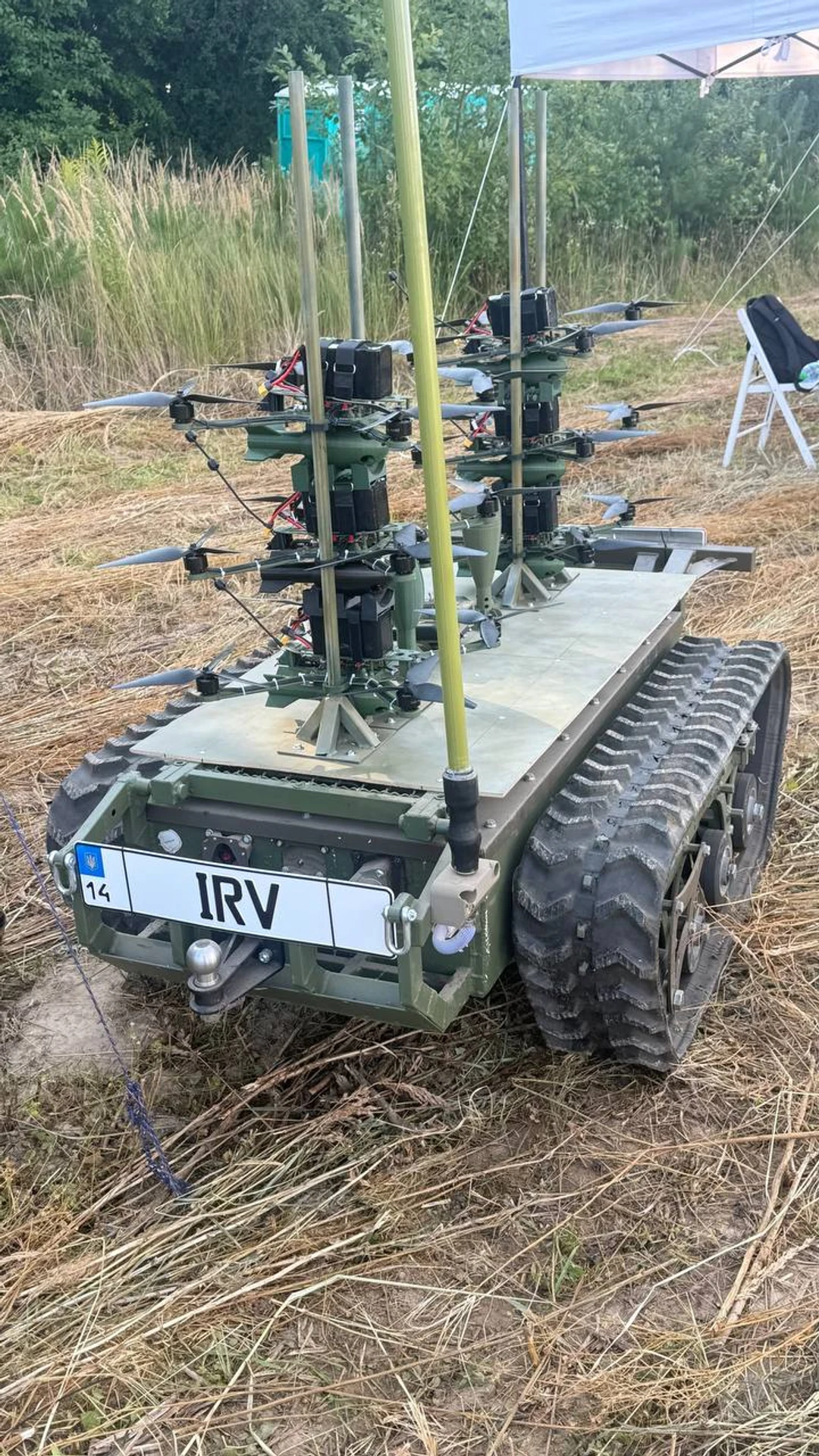
Karakurt supports both individual and dual-drone launches. In dual mode, two drones are controlled via a single remote, with the operator able to switch between them. Both drones can strike the same target: the second drone follows 30-40 metres behind the lead and automatically locks onto the same point of impact.
"There may be a slight margin of error, as the drones separate and are affected by airflows, among other factors. But that gap is actually useful. If we’re targeting a large road or a Russian logistics convoy, drones spaced 30 metres apart can hit two separate vehicles. This also works well against clusters of enemy equipment or railway targets, such as a long train with dozens of wagons – it helps neutralise any targeting inaccuracy of the second drone," says Andrii Malyshev, IRV chief engineer.
The company plans to develop swarming capabilities using artificial intelligence.
Currently, the platform is fitted with 13-inch drones. A solution already exists that allows the launch of not only kamikaze drones but also reusable bombers – although for now, they must return to the original launch point, as the platform’s drone-landing system is still in development.
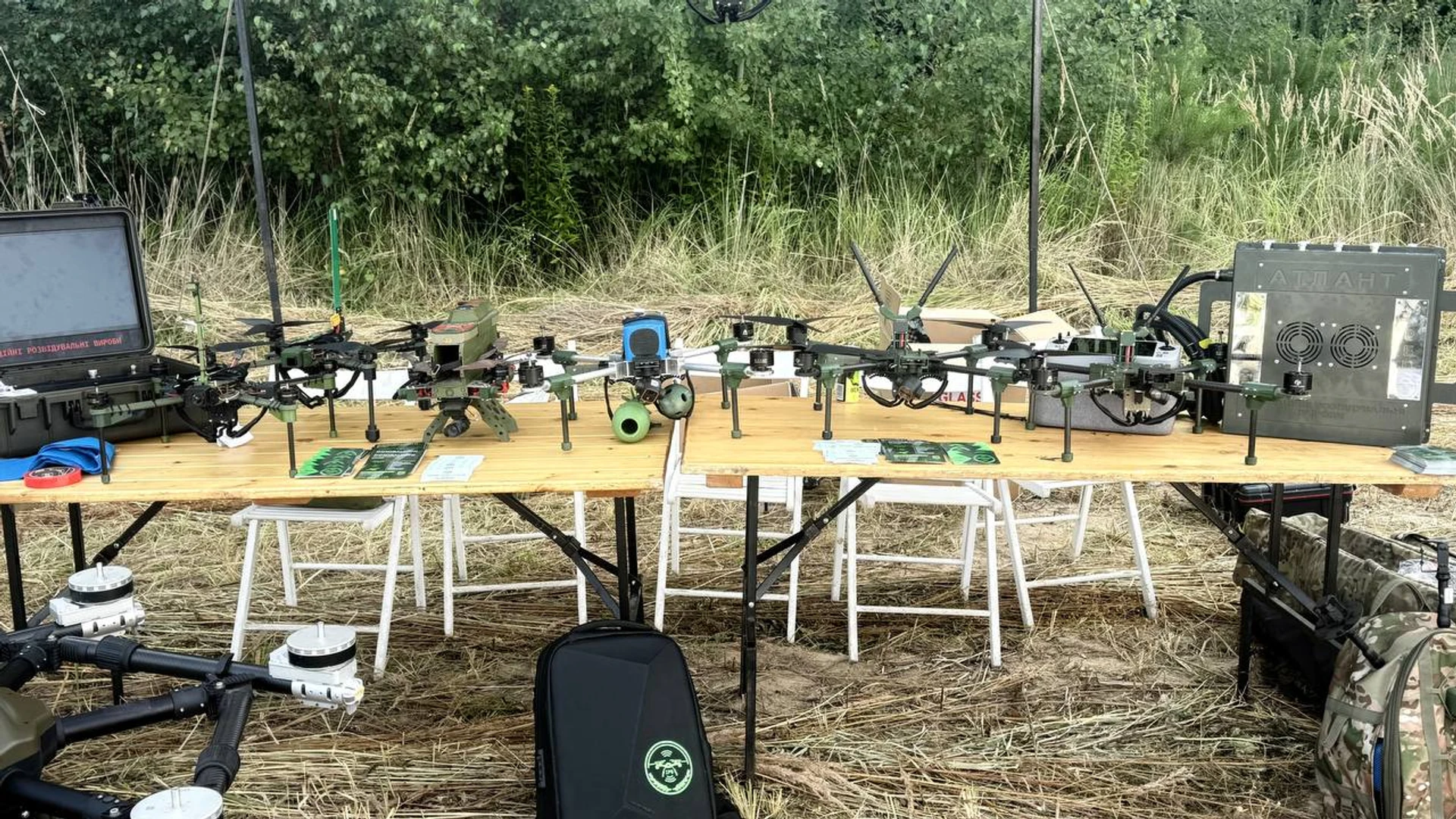
IRV is also working on integrating larger 15-inch drones, which would increase the system’s range and power.
"Our record so far – achieved by the 42nd Brigade – was a one-way flight of 32.5 km with a 2.6 kg payload. That means we can reliably hit targets 30 km away carrying 3 kg. Now add the 4 km distance from the command post to the launch platform – that’s over 34 km effective range. And if we reduce the payload and boost the signal relays, we could reach targets up to 40 km away," Malyshev says.
When asked whether sensitive drone components might get dusty as the platform moves into position, Malyshev noted that IRV currently coats critical parts with an aerosol film. Moreover, the drone’s propellers quickly blow off dust from its structure during launch.
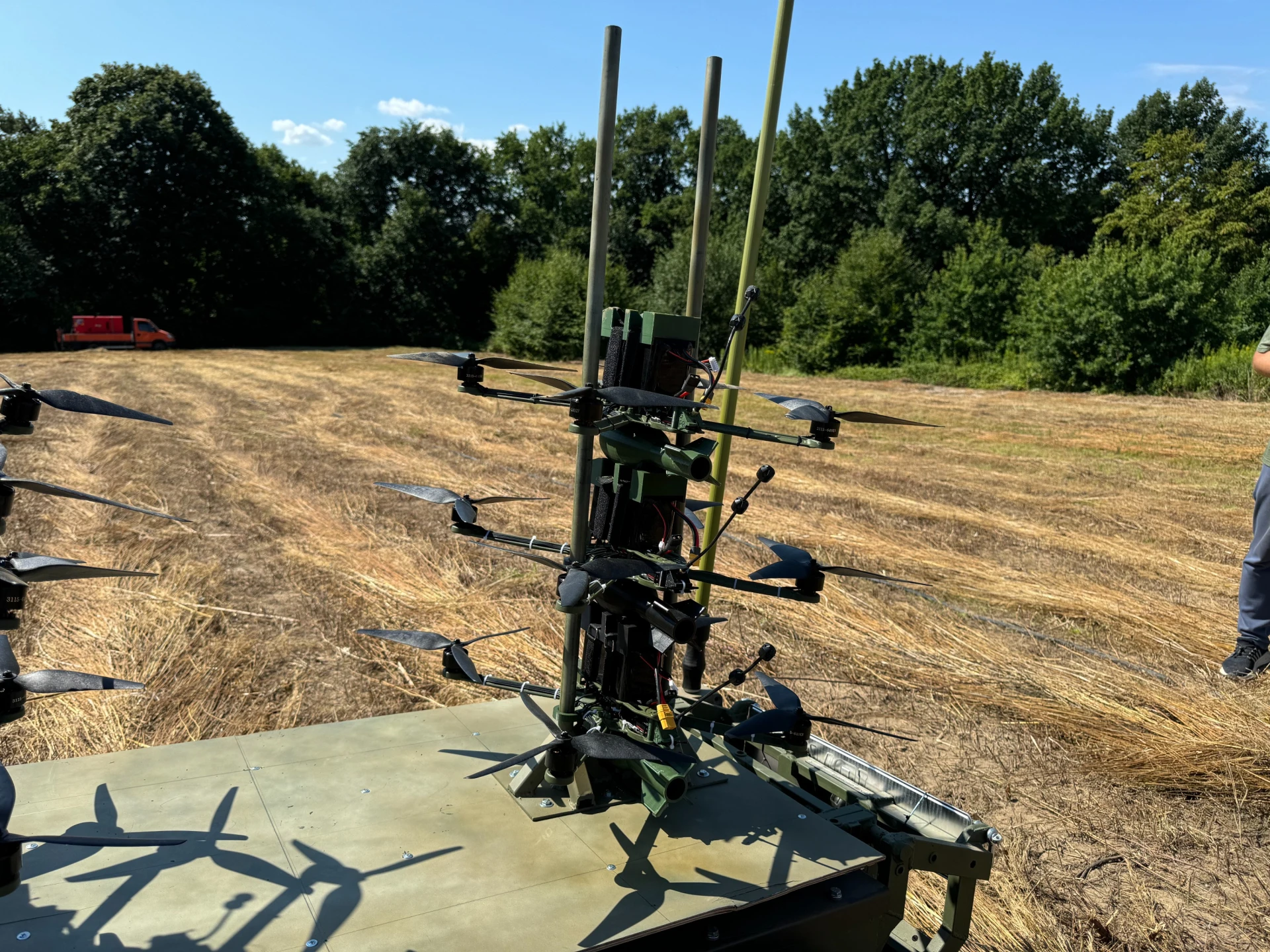
The cost of one Karakurt unit is approximately UAH 2 million (approx. US$47,000), with half of that amount covering the aerial component – 12 drones, relays, and software – and the other half going to the ground platform.
IRV says it is in no hurry to codify its technology due to the ongoing need to adapt frequencies and improve the product. Codification, the developers argue, would significantly reduce the flexibility to upgrade the system.
At the same event, other military innovations were also showcased, including a universal auto-targeting module for FPV drones developed by Ukrainian company Dwarf Engineering.
Support Ukrainska Pravda on Patreon!