Star Wars: what kind of space nuclear weapon is Russia developing and why?


Space-based nuclear weapons may seem like the stuff of science fiction, but real life sometimes yields new stories, especially when it comes to Russia. US officials say Moscow is developing a nuclear weapon to target satellites. Once launched, it could stay in orbit for weeks or even years. If detonated, the weapon would inflict "indiscriminate" destruction to satellites.
NATO Secretary General Mark Rutte has underscored Russia's plans to deploy nuclear weapons in space, noting that Moscow's space capabilities lag behind those of the West. "Developing nuclear weapons in space is a way for Russia to improve its capabilities," he said. "This is a matter of grave concern."
Why has the space threat frightened the US so much and what is Russia preparing? What are Kremlin ruler Vladimir Putin's motives and how is Washington being advised to respond?
The beginning of the space threat
An intelligence report delivered by Republican Congressman Mike Turner to the US Congress on 14 February 2024, warning of a "serious national security threat", sent shockwaves through the global media. He did not specify any details, though media reports quickly linked the warning to Russia and its activities in space.
"This would not be to drop a nuclear weapon onto Earth but rather to possibly use against satellites," sources told ABC News at the time.

CNN later reported that Russia was developing a weapon capable of producing a powerful electromagnetic pulse (EMP) upon detonation which could disable both government and commercial satellites. Pentagon sources told CNN that the satellites in question are those responsible for mobile and Internet communications, such as the large Starlink constellation of small satellites.
A former senior Pentagon official noted that the impact would depend on the distance of the satellites from the detonation point, the force of the EMP and the age of the satellites.
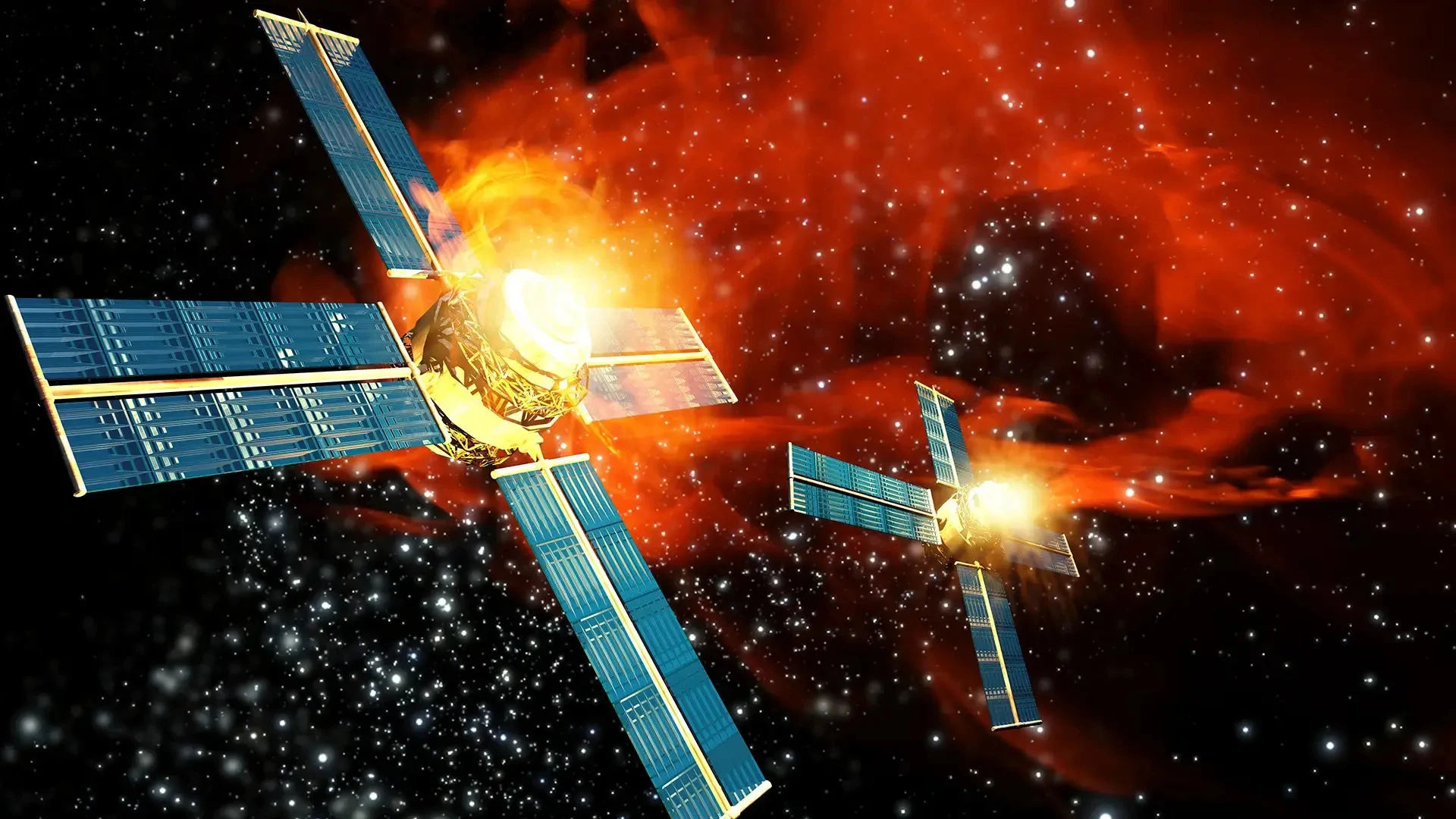
Another CNN source warned that the greatest danger of EMP devices in orbit is their potential to create a "minefield" of disabled satellites. These could drift into chaotic orbits, posing a threat to all newly launched satellites.
Even if it were "merely" a satellite carrying a nuclear power reactor and kinetic means of destroying other satellites (cannons or missiles), the creation of such a system would be a significant escalation on the part of the Kremlin, said Hans Kristensen, Director of the Nuclear Information Project at the Federation of American Scientists.
This Russian satellite destroyer could target US military command-and-control devices (Milstar) and missile warning satellites (SBIRS).
Later, John Kirby, former White House National Security Communications Advisor, officially confirmed that Russia was developing anti-satellite weapons. He emphasised that the threat was not immediate at that time. Kirby also stated that the United States had begun direct diplomatic engagement with Russia and other countries on the issue.
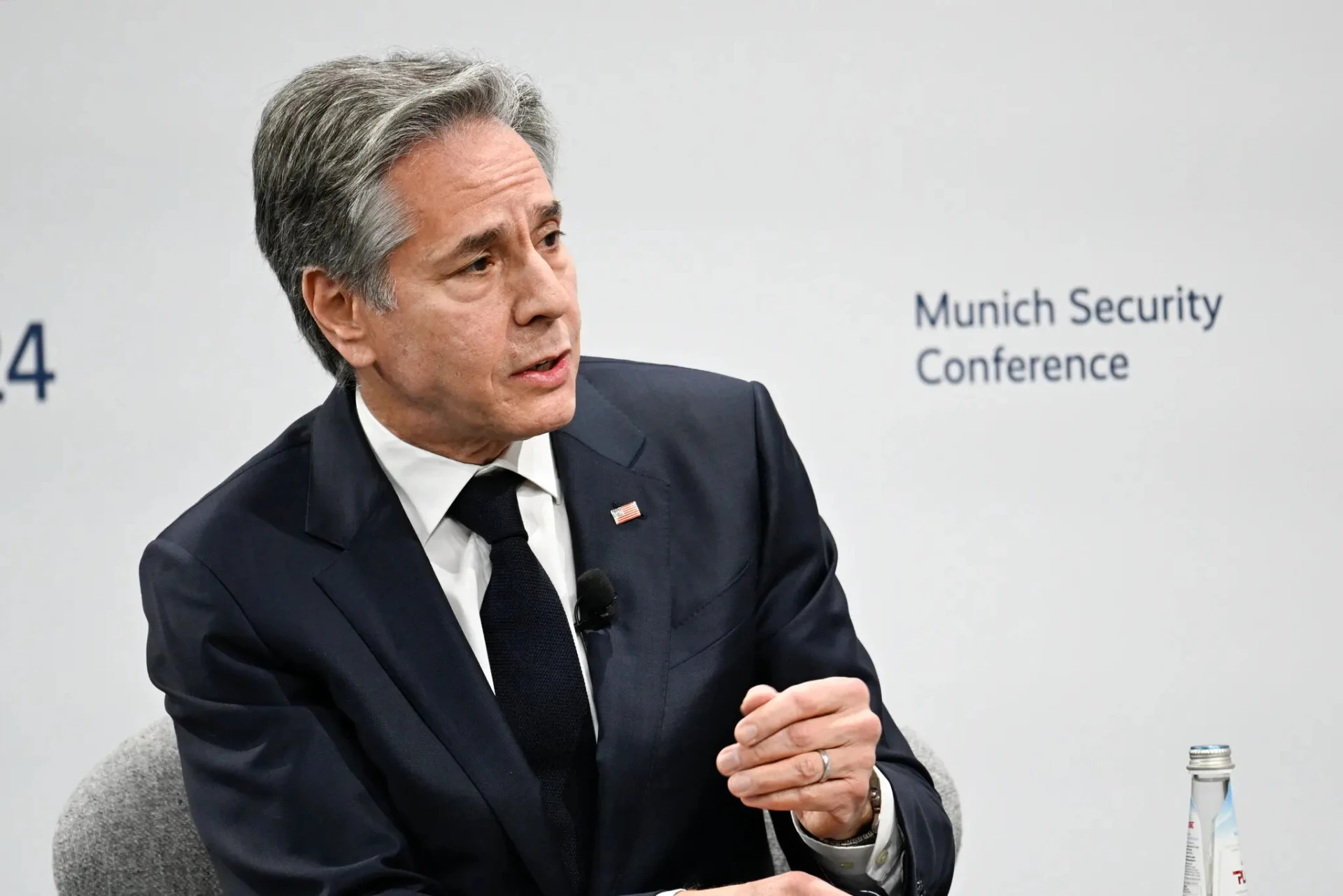
Details of the diplomatic effort were later reported by The New York Times (NYT). The paper noted that during the Munich Security Conference in February 2024, the then US Secretary of State Antony Blinken discussed the possibility of Russia deploying nuclear weapons in space with the foreign ministers of China and India, urging them to exert pressure on the Kremlin.
Blinken stressed that China's Xi Jinping and India's Narendra Modi should dissuade Putin from actions that could lead to disaster, warning that a nuclear explosion in space would not only destroy American satellites but also those belonging to China and India.
The US State Department warned that the use of such weapons could cripple global communications systems, disrupting everything from emergency services to mobile networks, and that the resulting debris could make satellite navigation difficult or even impossible.
The NYT reported that US intelligence became aware of the new weapon's development following several secret satellite launches by Russia in early 2022. Intelligence officials explained the Kremlin's rationale: Putin believes that none of his adversaries, including the United States, will risk direct confrontation with Russia if a threat looms over global communications.
Putin's spokesperson, Dmitry Peskov, dismissed these warnings as a "trick" by Washington to sway Congress into approving aid for Ukraine. Putin insisted that Moscow had no plans to deploy nuclear weapons in space and was merely developing space capabilities comparable to those of the United States.
Satellite killer
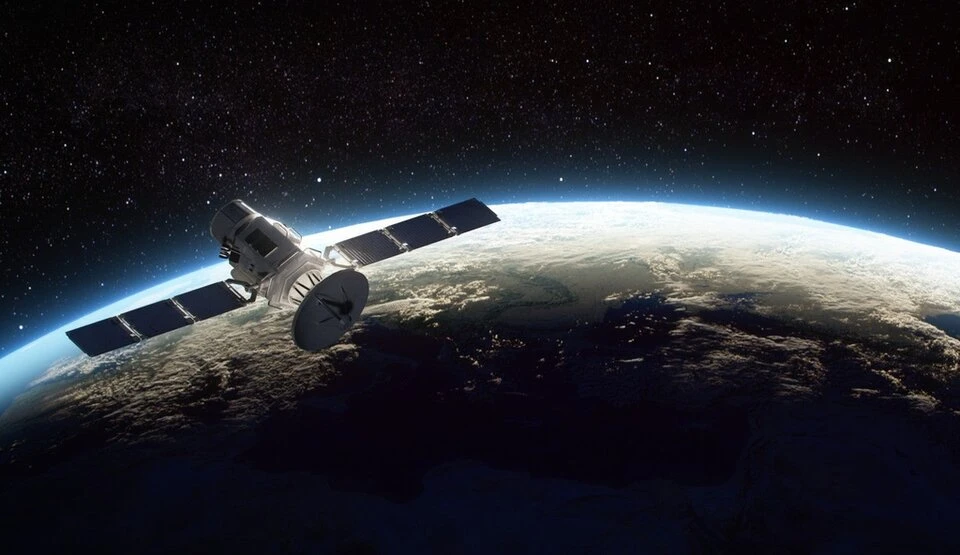
The Pentagon subsequently stated that Russia had launched an anti-satellite vehicle into orbit on 16 May 2024: "Russia launched a satellite into low Earth orbit that we assess is likely a counter-space weapon presumably capable of attacking other satellites in low Earth orbit."
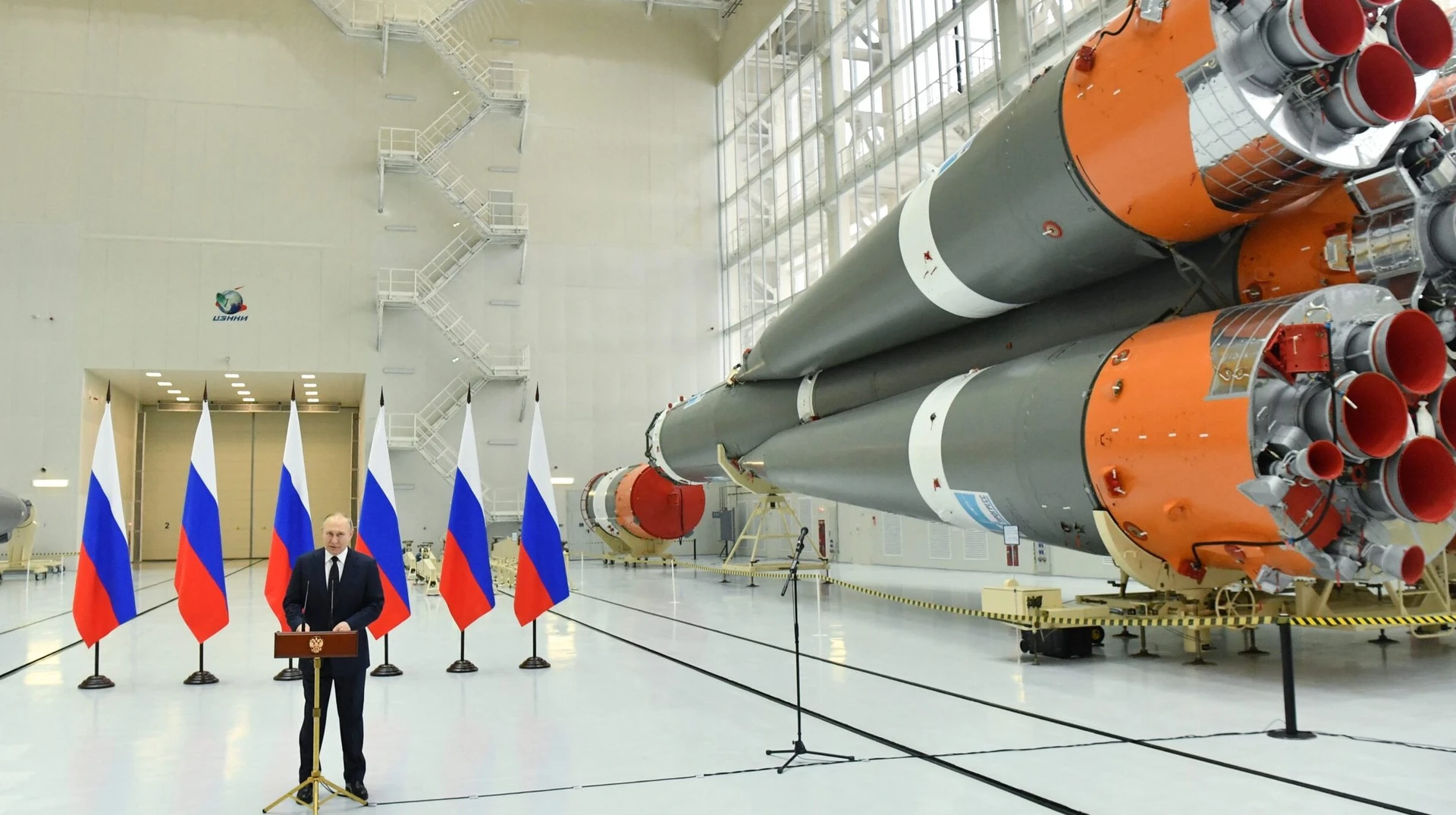
Roscosmos, the Russian state corporation responsible for space flights, cosmonaut programmes and aerospace research, confirmed the launch of a Soyuz-2.1b rocket carrying equipment for the Russian Defence Ministry, but did not specify what it was.
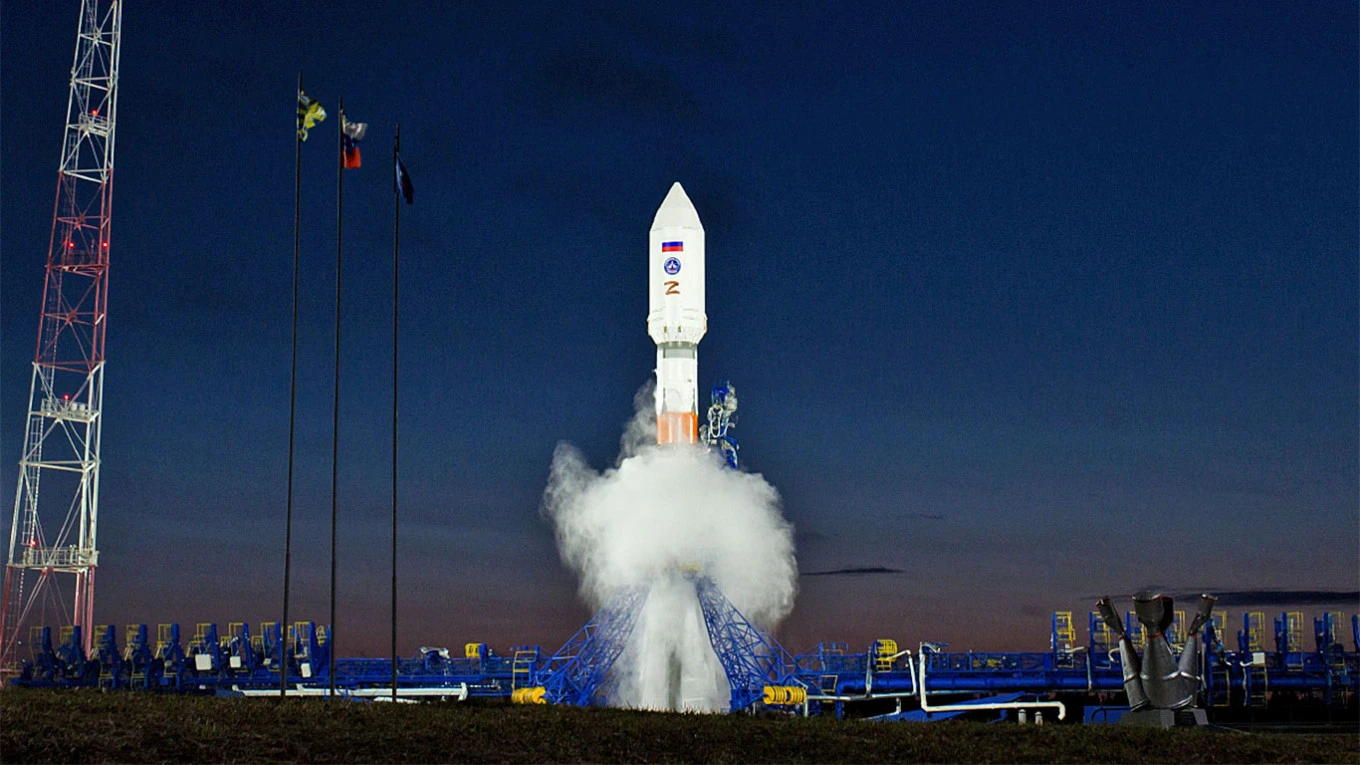
The Pentagon states that Russia has placed the device in the same orbit as a US government satellite. The new Russian satellite shares technical characteristics with those Russia deployed in 2019 and 2022. Peskov asserted that Russia was "acting under international law and not violating anything".
The Wall Street Journal (WSJ) found in May 2024 that Moscow launched the Kosmos-2553 spacecraft, which contained components of Russia's anti-satellite nuclear weapons system, on 5 February 2022. The launch was confirmed by the Russian Ministry of Defence and Roscosmos, but little was mentioned about the satellite's purpose, aside from the fact that it was equipped with systems designed for testing "under conditions of exposure to radiation and heavy charged particles".
The WSJ notes that Kosmos-2553 does not carry a nuclear payload, but it does have non-nuclear components of a new weapons system. If deployed, Moscow could use a nuclear explosion to destroy hundreds of satellites in low Earth orbit "in a part of space dominated by American government and commercial assets, including SpaceX's Starlink constellation, which has proved critical for Ukraine's war effort".
On 25 April 2025, Reuters reported that the Kosmos-2553 satellite had apparently failed. Its bizarre behaviour was first detected in November 2024 by a radar system from LeoLabs, a company tracking satellites and debris. Further observations in December confirmed with "high confidence" that the satellite was "spinning uncontrollably".
"This observation strongly suggests the satellite is no longer operational," the Center for Strategic and International Studies, a Washington-based think tank, commented on LeoLabs' analysis.
Diplomatic struggle at the UN
In response to intelligence findings, the United States and Japan drafted a UN Security Council resolution in April 2024 calling for a ban on the deployment of nuclear weapons in space.
The draft stated that a nuclear explosion, or the use of any other weapon of mass destruction in space, could have severe repercussions for all nations. The authors of the resolution advocated against the development of nuclear weapons or any other types of weapons of mass destruction intended for placement in Earth's orbit.
The document encouraged the peaceful use of outer space and aimed to prevent an arms race there. As expected, Russia blocked the resolution's adoption, rejecting all accusations, while China abstained from voting.
Subsequently, Russia prepared its own draft resolution to permanently prevent the deployment of weapons in space, but the UN Security Council rejected it. US Deputy Permanent Representative to the UN Robert Wood accused Moscow of legal manipulation and distracting "global attention from its development of a new satellite carrying a nuclear device".
Russian Permanent Representative to the UN Vassily Nebenzia responded by saying: "I didn't even fully understand what he was talking about". After the vote, he claimed that the West had "finally thrown off its masks and revealed its true colours".
Star Wars during the Cold War
Republican Turner’s report and intelligence findings have served as a wake-up call for officials in Washington, although the threat of a nuclear attack in space is nothing new. The Soviet Union tested a nuclear weapon in space four times in the early 1960s, at altitudes above 100 km, considered the lower limit of space. Two of these tests occurred during the 1962 Cuban Missile Crisis.
The United States also detonated nuclear weapons in space in the early 1960s. During the Starfish Prime test on 9 July 1962, the US exploded a 1.4 megaton warhead 400 km above the Pacific Ocean, nearly a hundred times more potent than the bomb dropped on the Japanese city of Hiroshima in 1945.
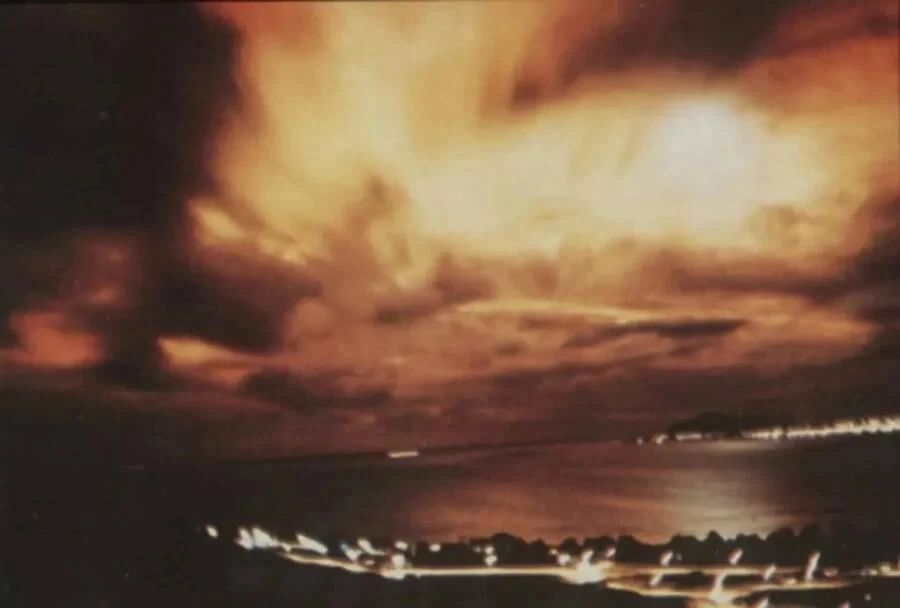
The Starfish Prime experiment had a greater impact than anticipated. Rather than generating only a large electromagnetic pulse, the explosion left elevated radiation levels in low Earth orbit for several months, causing the early failure of electrical components in several satellites.
David Larson of Lawrence Livermore National Laboratory estimated that the test had led to the failure of at least a third of all satellites in orbit at the time in the weeks and months after the explosion.
Afterwards, the United States and the Soviet Union concluded that testing nuclear weapons in space was not in their interest, as the fallout was widespread and indiscriminate. In 1963, the United States, the Soviet Union, and the United Kingdom, a nation that had lost its first satellite due to the Starfish Prime test, signed a treaty banning further testing or use of nuclear weapons in space.
The 1967 Outer Space Treaty expanded the ban by prohibiting the deployment of nuclear weapons in orbit. Any such deployment would violate these agreements – a point the US has reiterated.
Deterrence in space was maintained throughout the Cold War since both sides understood that using nuclear weapons in orbit would be seen as a prelude to nuclear war on Earth.
Washington's alarm over recent intelligence suggests that the US is beginning to question its ability to deter Russia, according to Todd Harrison, a senior fellow at the American Enterprise Institute.
American officials repeatedly accused Russia of unleashing an arms race in space even before Moscow's full-scale invasion of Ukraine. They stressed that the Russians were developing and testing systems in orbit – anti-satellite weapons and inspection satellites – that violated the spirit of the Outer Space Treaty.
Since 2014, the United States has repeatedly voiced concern over Russia's development and testing of anti-satellite missiles. These fears were confirmed in 2021, when Russia launched a Nudol missile and destroyed its own Kosmos-1408 satellite, generating around 1,500 pieces of orbital debris. In a similar move, India shot down its Microsat-R satellite in 2019.
The US Army continues to report that Russia is developing and deploying orbital anti-satellite weapons, devices designed to approach other satellites and either disable or investigate them. In 2020, amateur astronomers tracking objects in orbit observed that the Russian satellite Kosmos-2542 appeared to be hunting a US reconnaissance satellite.
Why does Russia need this?
The exact nature of the Russian anti-satellite system remains unclear. Analysts believe that Russia may use nuclear energy to jam or fry satellites' electronics rather than destroy them outright.
Although Kosmos-2553 contains non-nuclear components, the Pentagon maintains that the vehicle is nuclear in nature. The key question is why Russia would deploy a potential nuclear device in orbit. According to the NYT, the Kremlin may be aiming to put the US satellite network at risk, threatening equipment rather than human lives.
"Instead, it would lurk as a time bomb in low orbit, a reminder from Mr. Putin that if he was pressed too hard with sanctions, or military opposition to his ambitions in Ukraine or beyond, he could destroy economies without targeting humans on earth," experts told the NYT, trying to explain the Kremlin's likely goal.
The prospect of Moscow launching nuclear weapons into space raises questions about the security of critical military systems, telephone networks, payment systems and investments in the space economy, although Putin has denied such intentions.
The Federation of American Scientists has identified three main reasons for Russia to deploy nuclear weapons in space.
The first is the development of nuclear weapons. The Kremlin has invested heavily in programmes that would counter America's superiority. This is how the Poseidon long-range nuclear submarine torpedo and the Burevestnik nuclear-capable cruise missile were developed.
The second is geopolitical insurance. Russia may want to have such nuclear capabilities and leverage to prevent the US from attacking Russia first.
Thirdly, Putin wants to be able to harm America on the eve of a direct conflict. "Being able to detonate a nuclear weapon in space and damage, if not destroy America's extensive constellations of military satellites could be seen by Russia as both useful and even necessary to prepare for a possible conflict with the West and America," the Federation said. "Its threatened use could be used to try and force America to back down in a crisis, or even used preemptively as a prelude to a major military move by Putin against NATO or America itself."
However, experts differ on whether a nuclear explosion in space would significantly damage satellites. Ivan Moiseyev, head of the Russian Space Policy Institute in Moscow, argues that the impact would be minimal.
"The destructive power – the electromagnetic pulse – depends heavily on the distance from the explosion's epicentre," he said. "An explosion might damage two or three satellites, up to ten, at most, while thousands are in orbit. Blinding the entire Starlink constellation would require hundreds of such blasts, if not more."
Andrii Kolesnyk, a former employee at Ukraine's State Space Agency, believes the impact would depend on the strength of the nuclear device. "Why are they doing this? To show the world they are willing to do anything to achieve their goal. Russia is losing the competition in outer space. So the stakes are being raised."
Kolesnyk noted that if the Kremlin dares to take such a step, it will become an outcast in the global space community.
Moiseyev also sees no practical advantage in deploying such weapons into orbit. "Using nuclear weapons as blackmail? This would constitute a violation of two fundamental space treaties and a major diplomatic failure. There is no gain in this, because conventional missiles can be used as threats, something that is being done," he added.
Nuclear space weapons could target commercial satellites, particularly those operated by SpaceX. Starlink communications are critical for Ukraine on and off the battlefield, so the Kremlin may consider it a "legitimate military target".
Analysts interviewed by CNBC say that deploying such a weapon could cause "indiscriminate" damage, wreaking havoc on systems people rely on daily, from payments and GPS navigation to weather forecasts.
Putin might consider the launch of space-based nuclear warheads risky because it would destroy Russian satellites as well. However, the Russian leader may see that kind of fallout as a lesser cost than losing a strategic war to the US, according to the Carnegie Endowment for International Peace, a Washington-based international affairs think tank. American officials are convinced that an EMP device will almost certainly become a "weapon of last resort" for Russia.
What the US is being advised to do
"Regardless of the confidence level of the intelligence, the stakes involved are too high to ignore," said Todd Harrison of the American Enterprise Institute before the 2024 US election. "Any use of a nuclear weapon in space would have broad, severe, and indiscriminate effects for every nation that relies on space.
Moreover, this kind of attack could undermine the very foundation of US military power projection capabilities. Rather than panic or cower before the threat, the next administration must rebuild deterrence against this type of threat using history as its guide."
"As the conflict [war – ed.] in Ukraine has demonstrated time and again, Russia is scared of NATO," he added. "It has gone out of its way to avoid strikes against NATO forces or on NATO territory. Russia has repeatedly threatened to use nuclear weapons in Ukraine if certain 'red lines' were crossed, yet many of these lines have been crossed and nuclear deterrence has continued to hold. Russia knows that using a nuclear weapon in Europe – even if it is not against a NATO member – would bring the wrath of the alliance against it."
Harrison pointed out that the White House should immediately start working within NATO to secure support for a declaration at the June 2025 NATO summit on Russia's nuclear anti-satellite threat.
"The statement should be simple, concise, and strong – a single sentence would be sufficient," he added. "It should state in unequivocal terms that any use of a nuclear weapon in space will be regarded as a direct nuclear attack against all NATO member states and will warrant a direct and proportionate response."
"It does not need to be specific about what kind of response would be used because that will depend to a great extent on the specific circumstances of an attack, but a nuclear response would certainly be on the table," Harrison noted. "And it should not stop with NATO – the next administration should pursue similar bilateral statements with our major non-NATO allies, particularly Japan, South Korea and Australia."
If US diplomats have not yet made clear to other spacefaring nations – allies and rivals alike – the extent of damage a single Russian space-based missile could cause to their satellites, they should. According to Carnegie, Putin must understand that the international fallout from using such a weapon would be dramatic.
Experts suggest that the United States should enhance the survivability of its command-and-control satellites to better protect them from radiation. Such hardening will not guarantee a satellite's survival in the event of a nearby explosion, although it could help satellites located farther away withstand the electromagnetic pulse.
However, none of these options is a panacea.
"If Putin's back were against the wall in a war against the United States, he might not worry much about how third parties would react to his detonating a nuclear weapon in space," Carnegie says. "Hardening satellites is expensive and provides only partial protection.
The political prospects for arms control are poor. Nonetheless, because of the risk of crisis instability, Russia's space nukes are uniquely dangerous. It is better for the United States to respond with half measures than not at all," Carnegie concludes.
Author: Oleksii Pavlysh
Translation: Artem Yakymyshyn
Editing: Susan McDonald