A shield against FPV drones: is Ukraine's electronic warfare capability matching drone advancements?
What is the future of the technological confrontation between drones and electronic warfare, and what is still needed to fully protect Ukrainian troops?


Russia is deploying an increasing number of first-person view (FPV) drones. It is driven by the summer season, the training of additional operators and the mass production of the UAVs themselves.
It is a mistake to assume that the FPVs in question are only the fibre-optic drones that everyone has heard about. Russia will have plenty of conventional radio-controlled FPVs both now and in a month's time, making protection against them a crucial issue for Ukraine's military.
Frontline town residents feel the threat of FPV drones as they suffer from Russian terror day after day. The issue was covered in another article by Oboronka, a defence industry project from Mezha Media (a technology and IT news platform run by Ukrainska Pravda's holding company).
The conventional defence against drones is electronic warfare (EW), which interferes with signal reception as the drone approaches its target and cuts off communication with the operator. Since 2023, there has been an ongoing technological race between drones and EW assets. Each side has tried to develop its drones to bypass obstacles and switch between different frequencies, while developing their electronic surveillance (ES) and EW work to detect enemy frequencies more quickly and accurately jam them.
Where is the technological confrontation between drones and EW heading, and what is still missing for the complete protection of Ukraine's military?
Ukrainska Pravda would like to thank Anatolii Khrapchynskyi, Deputy Director of Piranha Tech (a Ukrainian EW developer), for his assistance in verifying the technical details of this article.
Which is winning: drones or EW?
Drones are controlled through radio waves: the operator sends commands on specific frequencies, while the drone receives them and transmits video on a separate channel. A reliable way to counter this is to detect the operator's frequencies and broadcast a stronger signal on the same channels. If successful, the drone loses control and either crashes or returns to base, provided that it has that capability. This is how EW works.
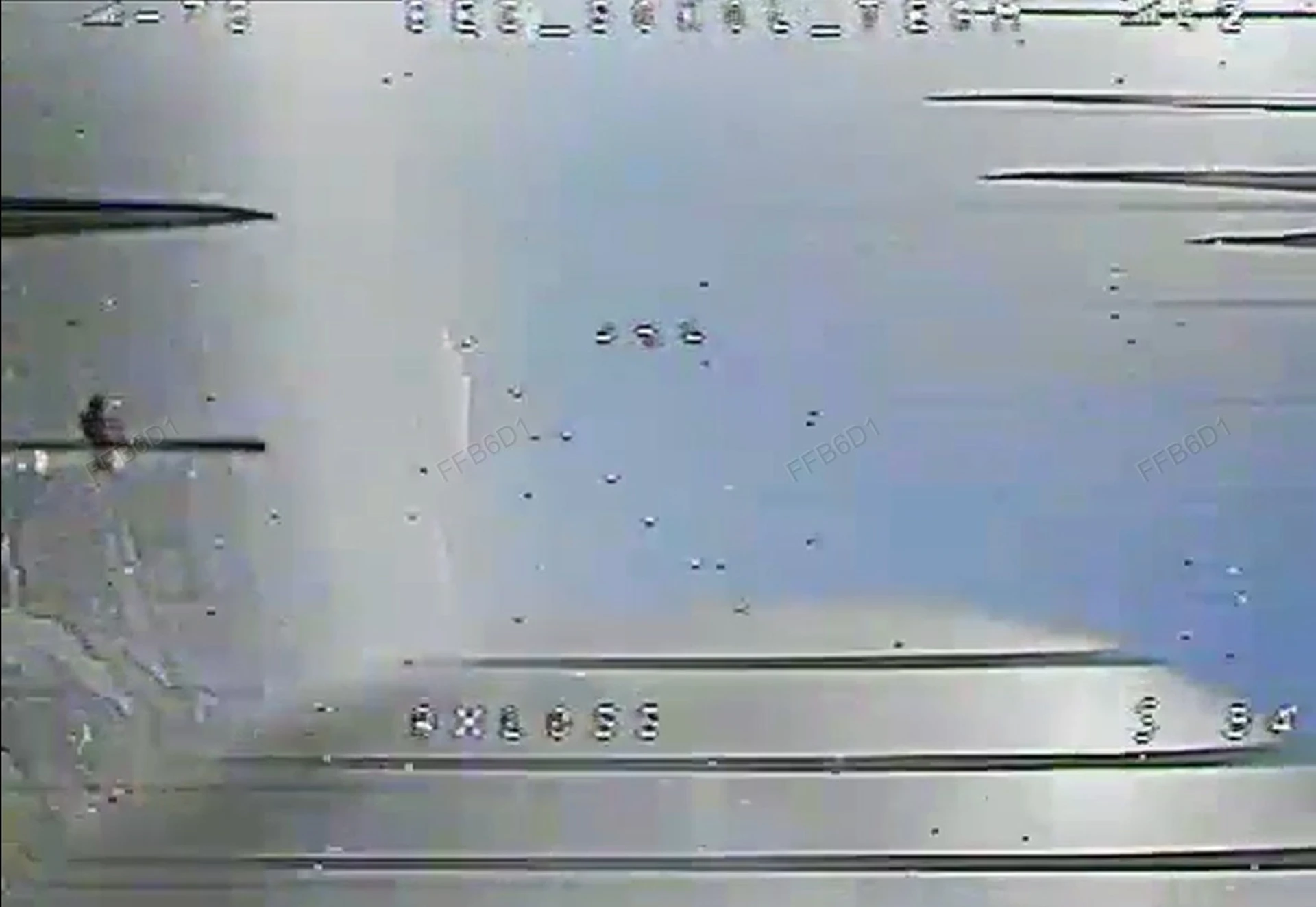
Back in 2023, drones operated on a few standard frequencies. However, as electronic warfare (EW) systems were developed to target these frequencies and reduce drone effectiveness, the drones began shifting to new frequencies.
Today, Russian drones operate on various frequencies to improve their chances of bypassing EW systems. Serhii "Flash" Beskrestnov, a Ukrainian military radio technology expert, said that in one frontline area, 20% of drones fly on frequencies between 400 and 490 MHz, another 30% use the more conventional 720 to 1020 MHz range, and the rest operate at 2.1 to 2.3 GHz. The proportion of frequencies used can vary across different parts of the war zone.
The drones themselves are also evolving to bypass trench EW systems – not just through the use of fibre optic cables. Some radio-controlled drones can dynamically change their operating frequency, use signal amplifiers to improve their chances of evading EW, feature automatic target acquisition even after losing communication and navigate independently despite radio interference.
The Russians also use low-orbit radio reconnaissance satellites to detect sources of electromagnetic radiation (such as EW and electronic countermeasure systems) on Ukrainian soil. These satellites analyse the electromagnetic environment, record the coordinates of active transmitters and can relay this information in near real time. This enables the Russians to plan routes that bypass EW-saturated zones or prepare strikes against them.
"But we can counter this", Khrapchynskyi tells Oboronka. "We can create false signals, mask real sources or jam satellite communication channels between the terminal and the satellite using highly directional EW assets. There are also developments aimed at generating broadband electromagnetic interference, making it harder to pinpoint the true coordinates of radiation sources. Additionally, Ukrainian EW systems constantly manoeuvre and shift frequencies, significantly reducing the effectiveness of satellite reconnaissance."
EW systems are in high demand on the front lines because they protect infantry from radio-controlled FPV drones, which remain widespread. The effectiveness of EW depends on factors such as the quality of components, compatibility with Russian frequencies, terrain and weather conditions, the quality of enemy drones, coordination with other systems, proper deployment and more.
Speaking generally about the drone-EW confrontation, sources interviewed by Oboronka agree that drones currently hold the initiative, as offensive technologies tend to evolve first while defensive measures respond to emerging threats.
"EW isn't losing – It's simply that we have yet to achieve the necessary scale of EW coverage in terms of quantity and organisation", says Khrapchynskyi. "Technologies are advancing in parallel: drones are constantly evolving (analogue, digital, fibre optic, autonomous), and EW systems are developing in response (broader ranges, better selectivity, autonomy, AI). The problem is not the lack of technology, but the institutional speed of deployment and the lack of modern mobile short-range EW systems."
"We are gradually entering a zone of complete uncertainty, as the unpredictable evolution of offensive equipment demands substantial resources to develop defensive measures in advance", says Yaroslav Kalinin, director of Infozakhyst (a Ukrainian defence firm developing software and hardware for security and law enforcement). "No one is prepared to systematically allocate resources for this."
Ukrainian frontline forces are particularly affected by the constant race for the latest frequencies.
"A drone we couldn't jam hit us", says Istek, a Ukrainian service member who leads the EW department in the 13th Khartiia Brigade, speaking to Oboronka. "We examine its chip – it supports frequencies from 300 to 1100 MHz. This means if they're currently flying on 700 or 900 MHz, the Russians can update their firmware to operate anywhere within the 1100 MHz range. We analyse all this. If we lack EW devices for such frequencies, we order a batch in advance. No single EW system can block everything at once. We place orders in batches but can't meet all our needs immediately. As drones switch to new frequencies, demand grows for equipment covering those ranges."
How does EW work?
Frontline EW systems use different types of antennas. Omnidirectional (or dome) antennas create a protective field by distributing signal energy in all directions at once. They are effective when multiple drones approach from various directions. However, because the energy is spread out, the signal strength is lower, limiting the range. Typically, these systems provide protection within a 200-300 metre radius.
There are also directional antennas, which concentrate their power in a specific direction within a narrow angle (often between 10° and 60°). By focusing on a small area, these antennas can jam targets several kilometres away. However, unlike dome antennas, EW operators using directional antennas must know the target's exact direction. Different antenna types are suited to different purposes and tasks.
There are several types of EW equipment for close protection:
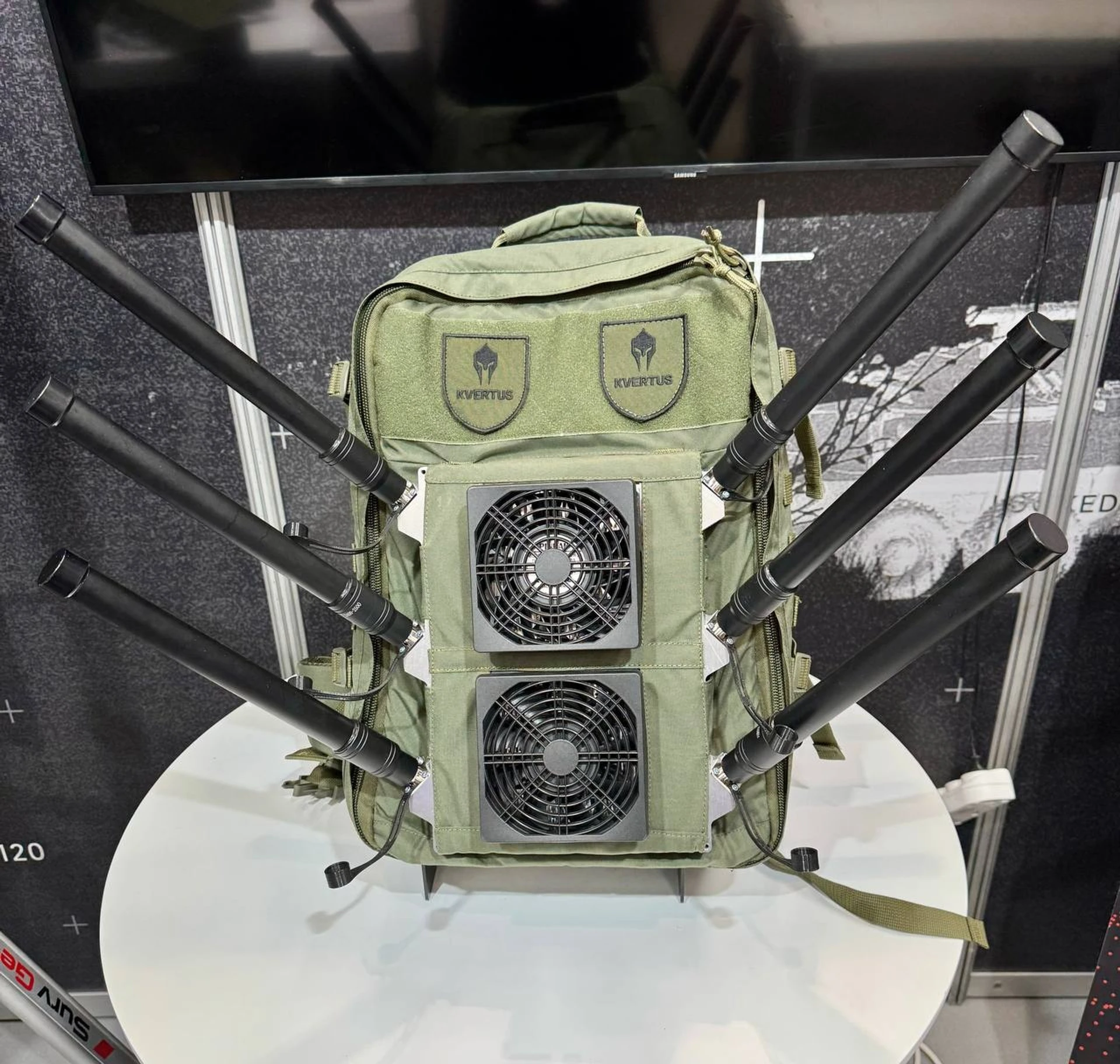
EW backpacks are portable devices used by infantry. They consist of transmitters that jam multiple frequency bands, plus antennas to send signals, a battery lasting up to eight hours, and a cooling system.
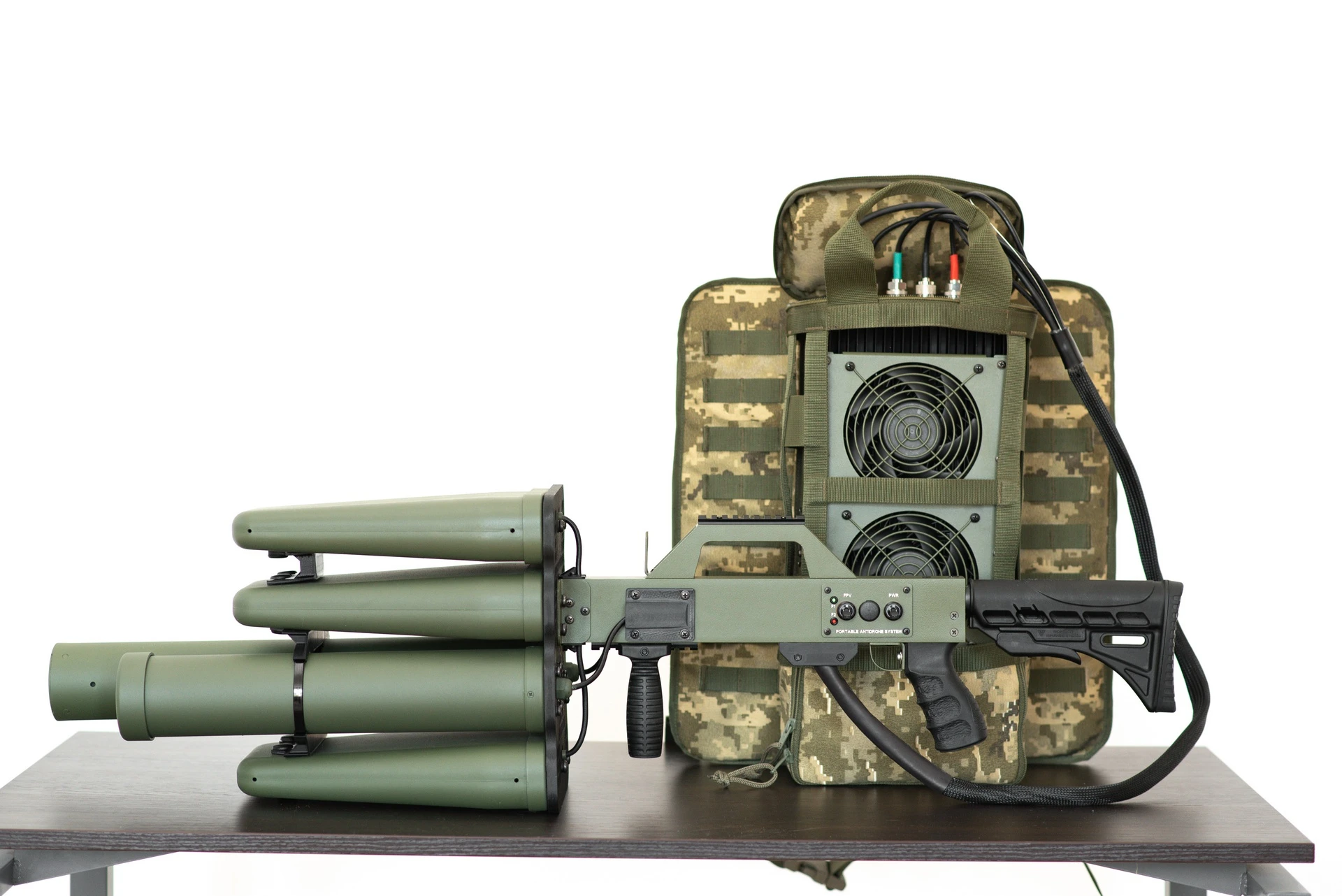
An anti-drone rifle is visually similar to a conventional firearm, but instead of firing bullets, it emits radio waves in a specific direction. When a soldier sees a Russian drone, they aim and press a button. If everything goes well, the radio signals block communication between the drone and the operator.
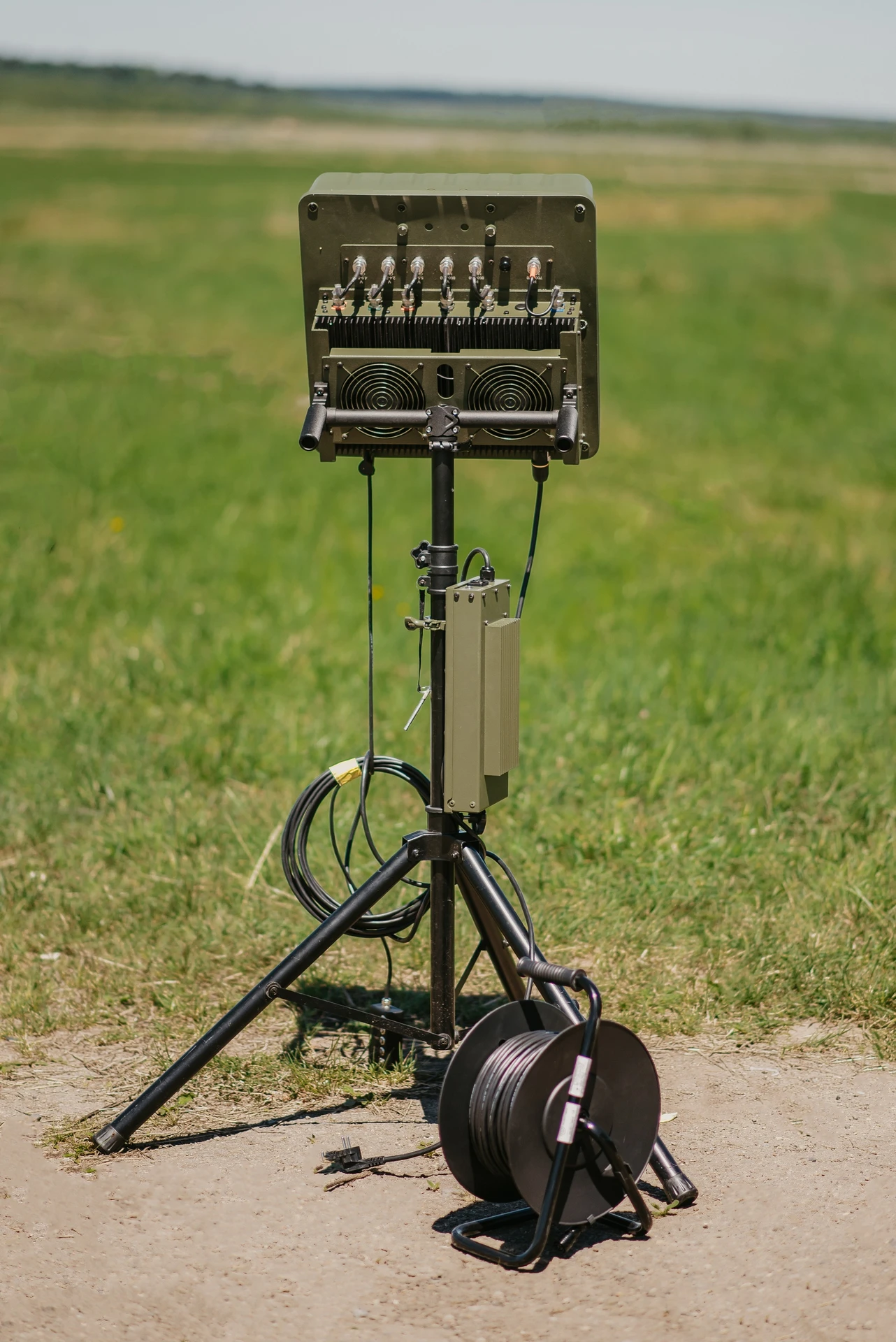
EW devices installed at fixed locations are called stationary. They protect equipment positions, headquarters and critical facilities to minimise the risk of aerial attacks.
EW devices for protecting vehicles are called portable or mobile. These can be either add-on units simply placed on a car's roof or fully integrated into vehicles by major manufacturers.
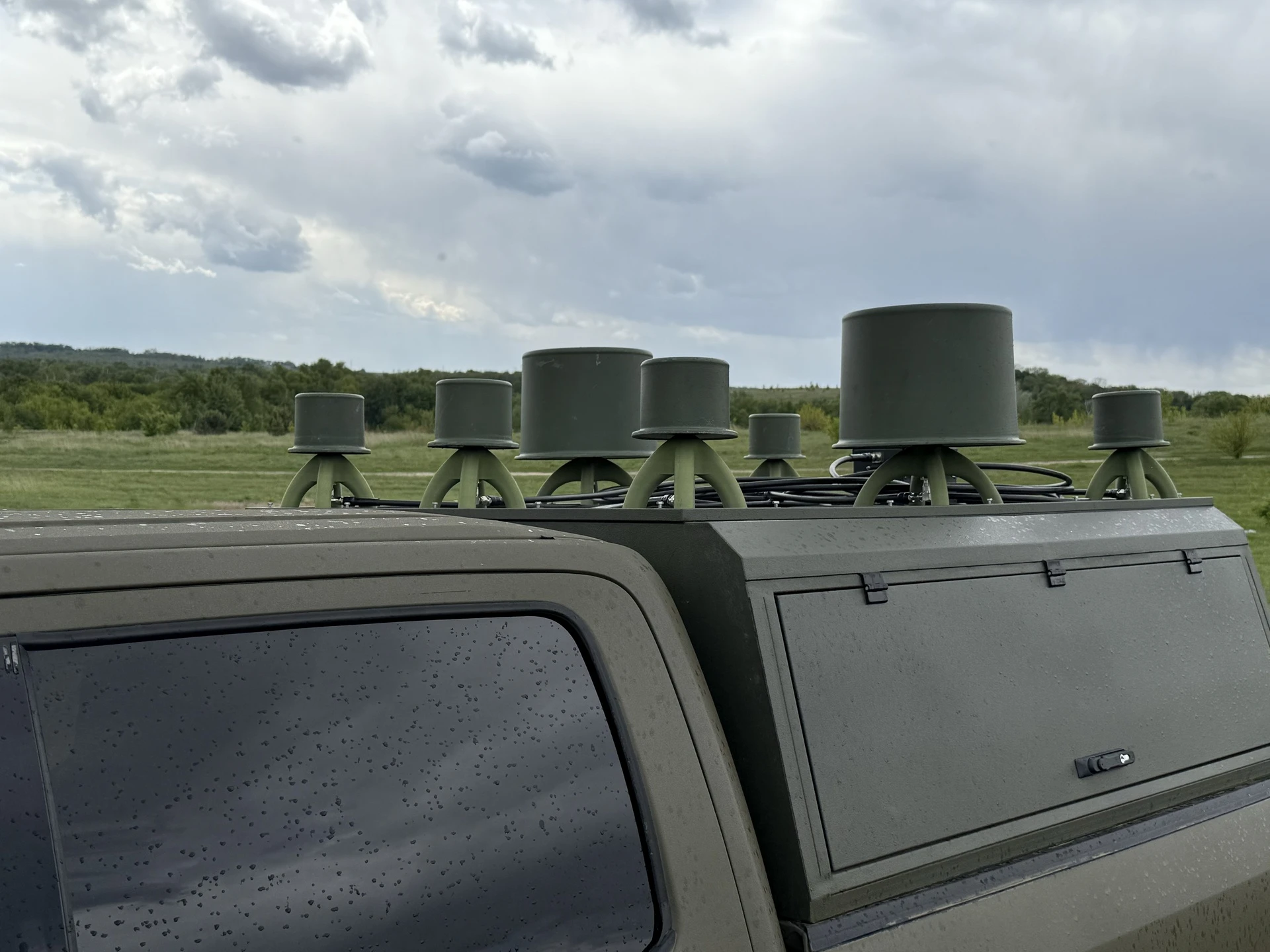
Among EW devices installed on vehicles or in trenches, the military prefers modular systems with batteries separate from the antenna units for greater convenience.
"In modular devices, we can change individual frequencies as needed or quickly replace a damaged unit while maintaining the system's operability", says Istek. "Monoblock solutions are difficult to conceal and move; even minor damage can disable the entire system. This is especially critical for trench EW devices, which weigh between 20 and 50 kg, plus a generator and fuel that must be delivered to the position."
Electronic surveillance helps EW work effectively. Depending on their type, model, and mission, these systems can collect aggregated data on Russian operating frequencies across the entire war zone, provide information to EW manufacturers and the military, issue real-time warnings of incoming Russian drones, identify their frequencies, instantly send jamming signals to EW units and even intercept drone video feeds.
For example, large Plastun and Azimuth systems analyse radio emissions from Russian targets within a radius of tens of kilometres, identify them and track their direction of movement.
Portable detectors carried by soldiers warn of approaching enemy targets, enabling rapid response. For example, Tsukorok is designed to detect Russian Mavic and Lancet drones, while Chuika detects FPV drones across three frequency bands. Numerous detectors are available on the market, varying in price and effectiveness.
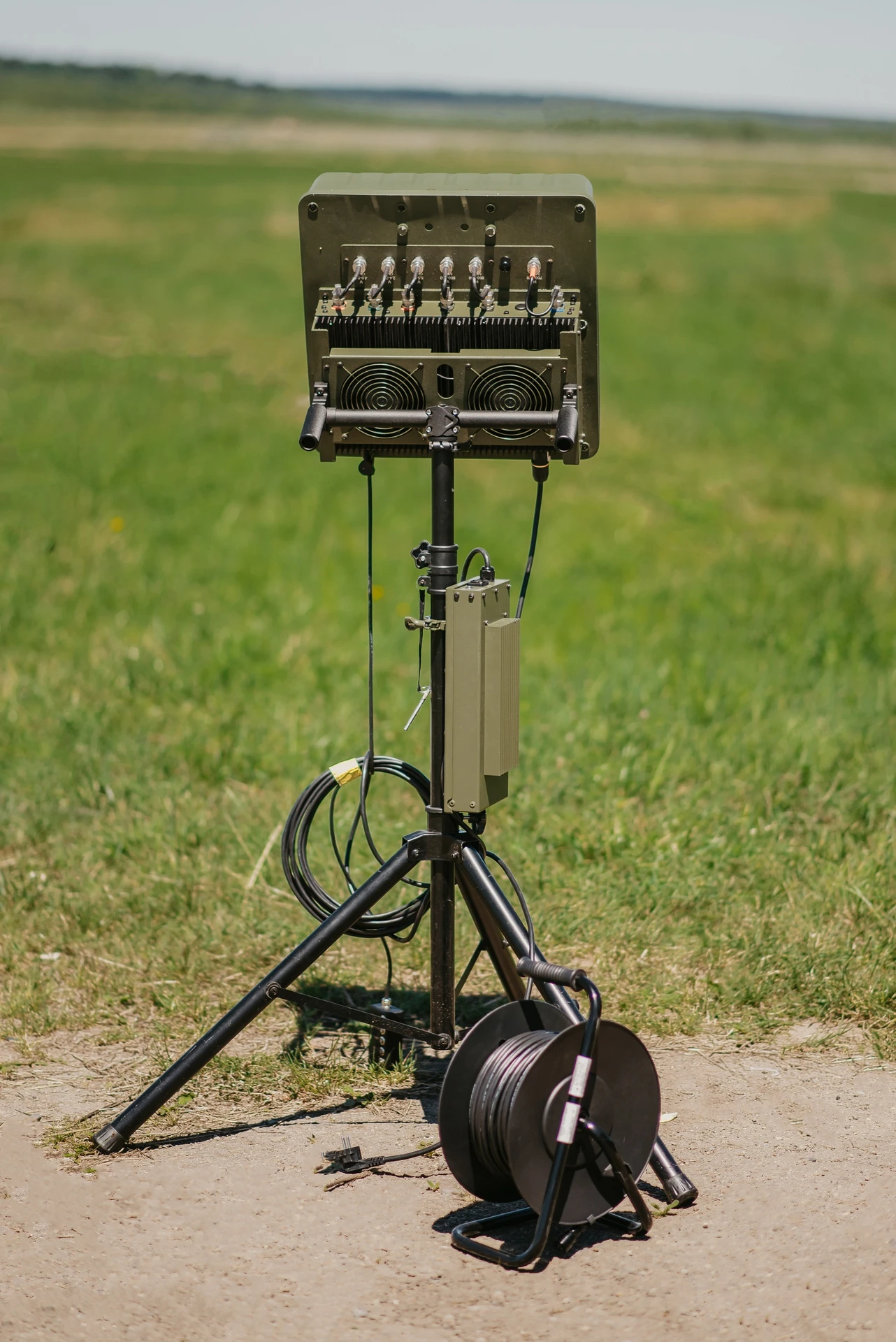
Accurate electronic surveillance enables the military to respond swiftly to approaching threats – whether by activating EW systems or taking cover in the nearest shelter.
The trend towards intelligent EW capability
The problem is the sheer number of Russian drones and electronic warfare systems now in play. The battlefield is becoming ever more dangerous and chaotic.
Ukraine's Brave1 state cluster currently sees selective interference systems, which target specific signals rather than jamming everything, including friendly drones, as the most relevant. "The most promising direction of travel is moving from broadband to point jamming", says Oleh Donets, an expert at Brave1.
Point jamming acts like a laser, precisely targeting and blocking only the frequency used for communication between the enemy drone and its operator, without disrupting friendly signals. In contrast, broadband jamming covers a wide range of frequencies, affecting all signals nearby and spreading its power across multiple channels.
Ideally, intelligent electronic warfare systems operate in a targeted way by analysing the radio frequency spectrum through close coordination with electronic surveillance. They identify the exact frequencies of Russian drones and create interference only within that specific range, at the right place and time.
"The most effective tools today are not individual devices, but directional systems with adaptability and modularity", says Donets. "Individual devices serve as the first line of defence, but they can't cover the entire front. A multi-level system needs to be established across the whole combat line."
The system in question is a layered solution where EW assets operate at varying distances and complement one another. The first layer comprises individual devices designed to protect soldiers or small groups. The next layer consists of assets safeguarding positions and equipment. Above that are mobile systems covering larger areas, while stationary systems in the rear detect and jam drones from significant distances.
All of this must be integrated into a single network to form a continuous protective field, a radio wave dome spanning the entire front line, preventing drones from flying through.
How can such an extensive intelligent system be built? Market participants surveyed by Oboronka identify two key paths. The first is to develop a new large-scale project using cutting-edge technology designed specifically for this task from the ground up. The second is to integrate existing EW and electronic countermeasure systems, automate their interaction and supplement the network where needed.
Ukrainian company Kvertus advocates the first approach. It has developed the Atlas project, which combines its Mirage EW system with the Azimuth ES system. According to the developer, the Mirage directional antenna has a range of up to 20 km, while the omnidirectional antenna reaches up to 8 km. The system currently covers frequencies from 300 to 1500 MHz and will soon extend up to 6000 MHz.
"Mirage is a compact system placed at positions away from the front line and connected to a network," says Kvertus director Yaroslav Filimonov. "One Atlas operator can control thousands of devices simultaneously, monitor the entire combat line and activate specific devices as needed in different areas."
According to the company's estimates, 6,000 Mirage units and 300 Azimuth systems are required to establish a dense defence network along the entire 1,300 km front. The cost is estimated at over UAH 5 billion (approx. US$120.5 million). So far, only 10% of this amount has been raised.
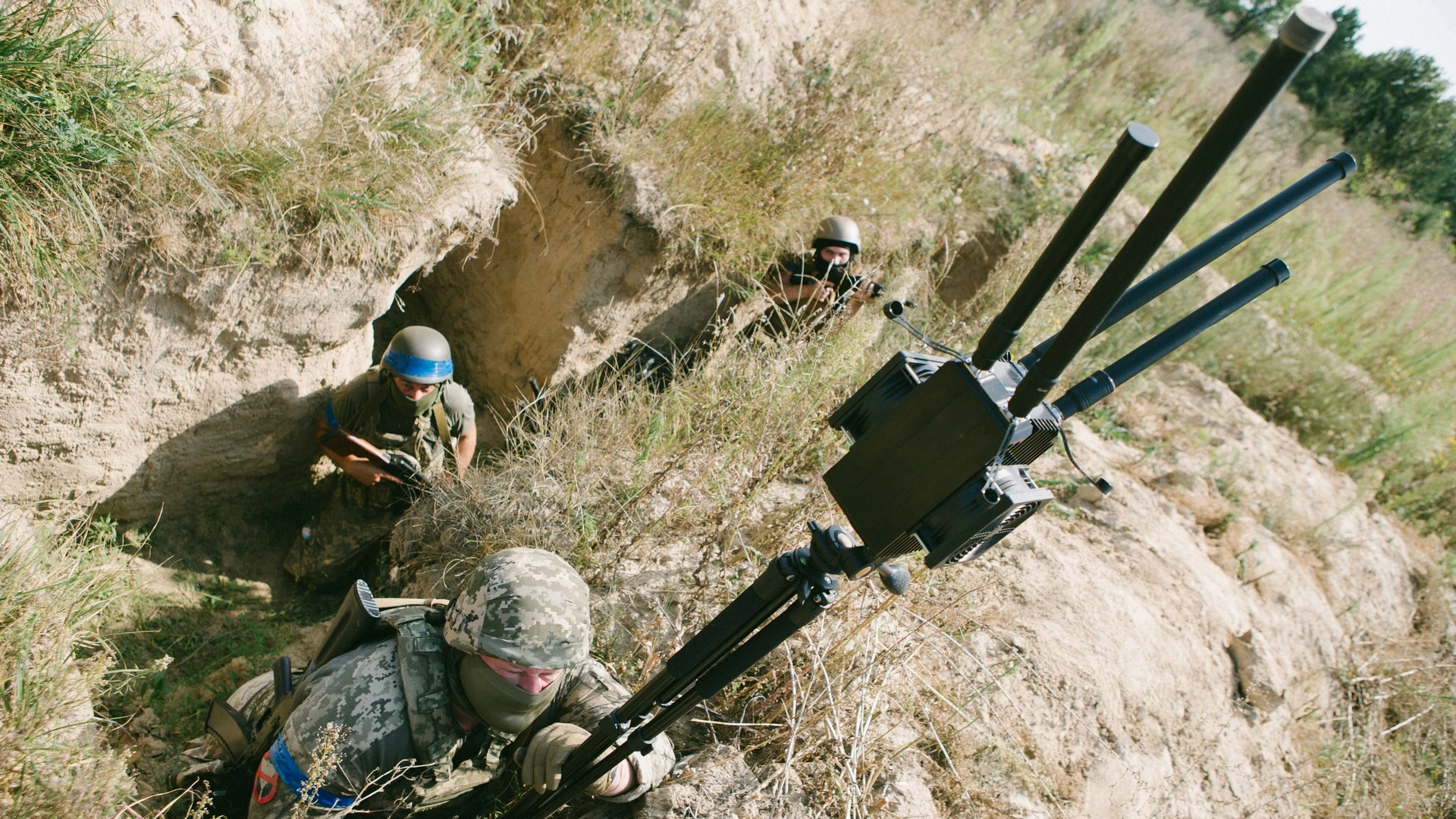
However, another perspective shared by industry experts and military personnel is that an intelligent defence system should not be built from scratch. Instead, existing ES and EW systems – from various manufacturers – already in use on the front line should be integrated. This approach could save significant costs.
"Any large-scale new project is an attempt to surpass the existing, complex and diverse electronic warfare system built by our defence forces", says Infozakhyst director Yaroslav Kalinin. "This is beyond the capacity of a single company and makes little sense. We need to integrate the existing ecosystem, not create something entirely new. We already have components that work seamlessly with current systems."
"For a long time, there were no centralised protocols or a dedicated centre to define them", he added. "Now there is the 69th Separate Centre for Electronic Support of the Main Directorate for Radio Electronic Warfare. It coordinates manufacturers on compliance and protocols which is invaluable. This protocol sets out how to gather information from EW devices and the commands used to control them."
How to improve protection?
Manufacturers and military personnel surveyed by Oboronka note a lack of consistency in the continued effective countering of drones within the EW segment.
"Experts need to develop clear technical specifications outlining where, how many, and what resources are required", says Khrapchynskyi. "Without consistency, resources are wasted and outdated models flood the market."
Istek from the 13th Khartiia Brigade noted that few units maintain detailed records of EW equipment. Clear guidelines from command are lacking on how the military should collect and report this information to higher authorities, so the centre can analyse it and supply the military with updated equipment and recommendations.

Another pressing issue is the quality of operator training. Everyone needs EW, but not everyone knows how to use it properly.
"Most of the equipment is either misused or causes damage to their own units by, for example, jamming their own drones", Oleksii Dubynka, a consultant for the Come Back Alive Foundation (a Ukrainian charitable foundation supporting the Armed Forces), told Oboronka. "We need not just engineers, but people with basic knowledge of electronics, programming and topography. That's why the foundation only provides equipment to units with competent, specialised personnel. The key criterion is having trained staff."
"The military often receives electronic warfare equipment without basic training, leading to antennas being positioned incorrectly or their operation being blocked", says Khrapchynskyi. "There have been cases where antennas are hidden in metal boxes, which renders the device inoperable. Or they're placed under nets, which creates a Faraday cage effect – electromagnetic shielding that blocks or significantly weakens the signal. You can learn how to use the electronic warfare system in six days, but there is no scalable system for training and implementing such skills in the military."
However, Ukraine is seeing an increasing number of opportunities to learn how to use electronic warfare tools effectively, ranging from two-day intensive courses to full academic programmes.
Currently, there are several levels of training for electronic warfare operators. Applied courses include those offered by Global Drone Academy and Taifun (covering spectrum analysis and field training), the Boryviter school (a 12-day course on antennas and video monitoring) and programmes from the Dignitas Fund and the Army+ app. At the university level, Kharkiv National University of Radioelectronics offers a specialisation in electronic warfare.
Some manufacturers (e.g. Kvertus) conduct specialised training for users. Relevant training centres for electronic warfare operators are being set up in the Armed Forces and the National Guard.
Ukraine's future ability to defend against constantly evolving drones depends directly on the state's capacity to build large, complex systems for intelligence gathering, military coordination and production. This presents a significant challenge for the entire industry.
Author: Iryna Levytska
Translation: Artem Yakymyshyn
Editing: Shoël Stadlen