Ukraine tests fibre-optic drones with up to 40-km range – photos

Last week, the Brave1 tech cluster tested a dozen Ukrainian fibre-optic drones, a considerable number of which are capable of striking targets at distances of up to 40 km.
Source: a journalist from Oboronka who was present at the tests
Details: Three months ago, Brave1 was testing fibre-optic drones with a range of up to 20 km. Now Ukrainian developers are testing whether that distance could be doubled.
One of Brave1’s priority tasks is to create drones that can strike targets at a distance of 30-40 km in order to expand the strike zone. The Russians operate much more openly at such distances and are less likely to expect an attack compared to frontline roads.

One advantage of fibre-optic drones is that they are immune to electronic warfare systems and can strike targets that require them to fly through several rooms or a network of trenches. A radio-controlled drone would simply lose the connection during that kind of mission due to the limited radio horizon or uneven terrain.
Creating fibre-optic drones with a range above 40 km is no easy task. As one Brave1 tech cluster representative told Oboronka, not all drones are currently suited to flying with large reels of fibre-optic cable. Moreover, increasing the weight of the reel significantly reduces the drone’s payload capacity. Another issue is selecting a suitable media converter that can correctly transmit the signal over long distances.
During the tests, the Brave1 specialists paid close attention to drone deployment tactics. Experience with fibre-optic systems has shown that it is important to calculate the route to the target carefully so that the fibre does not run across roads or sharp angles that could tear it.
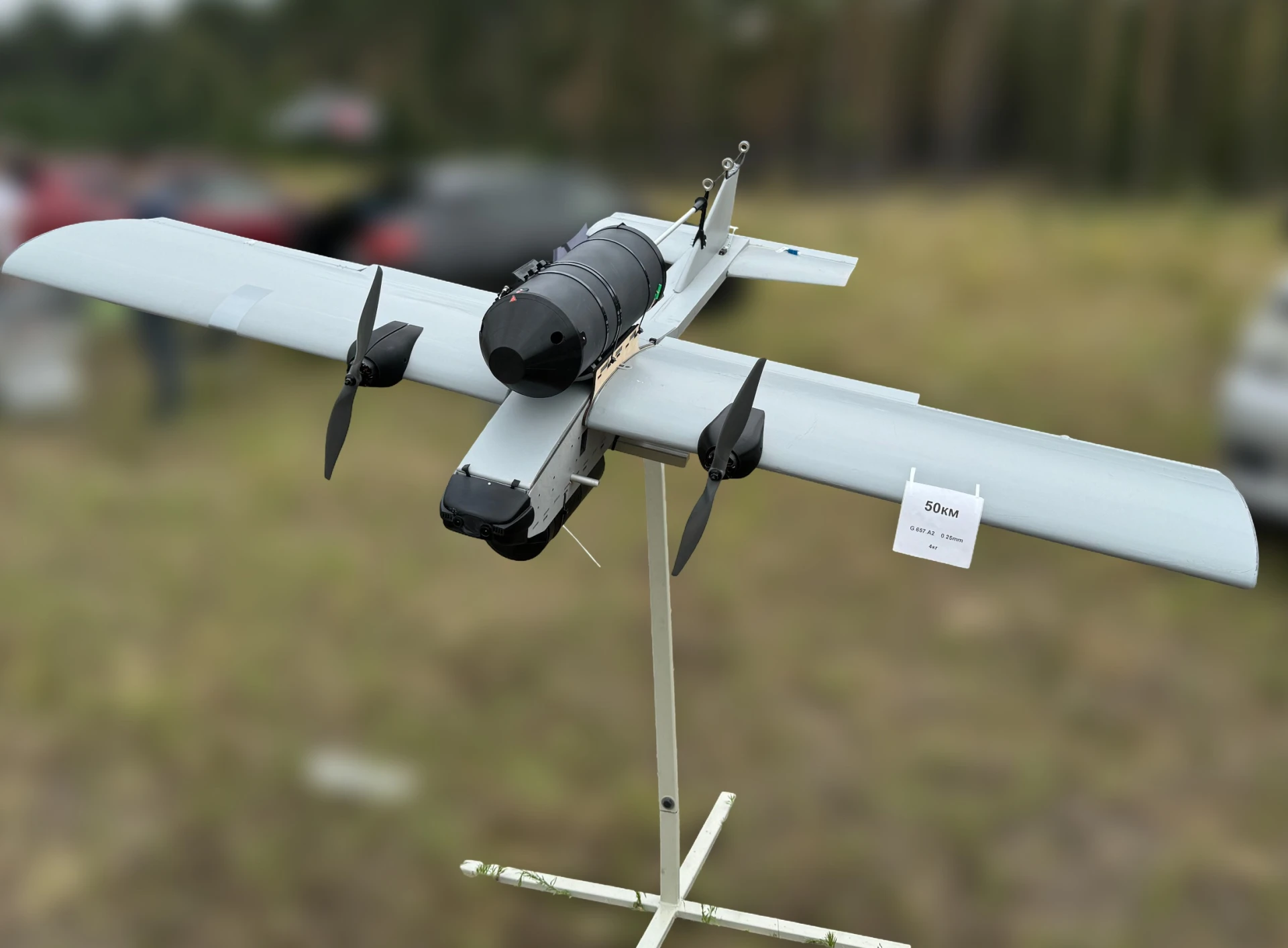
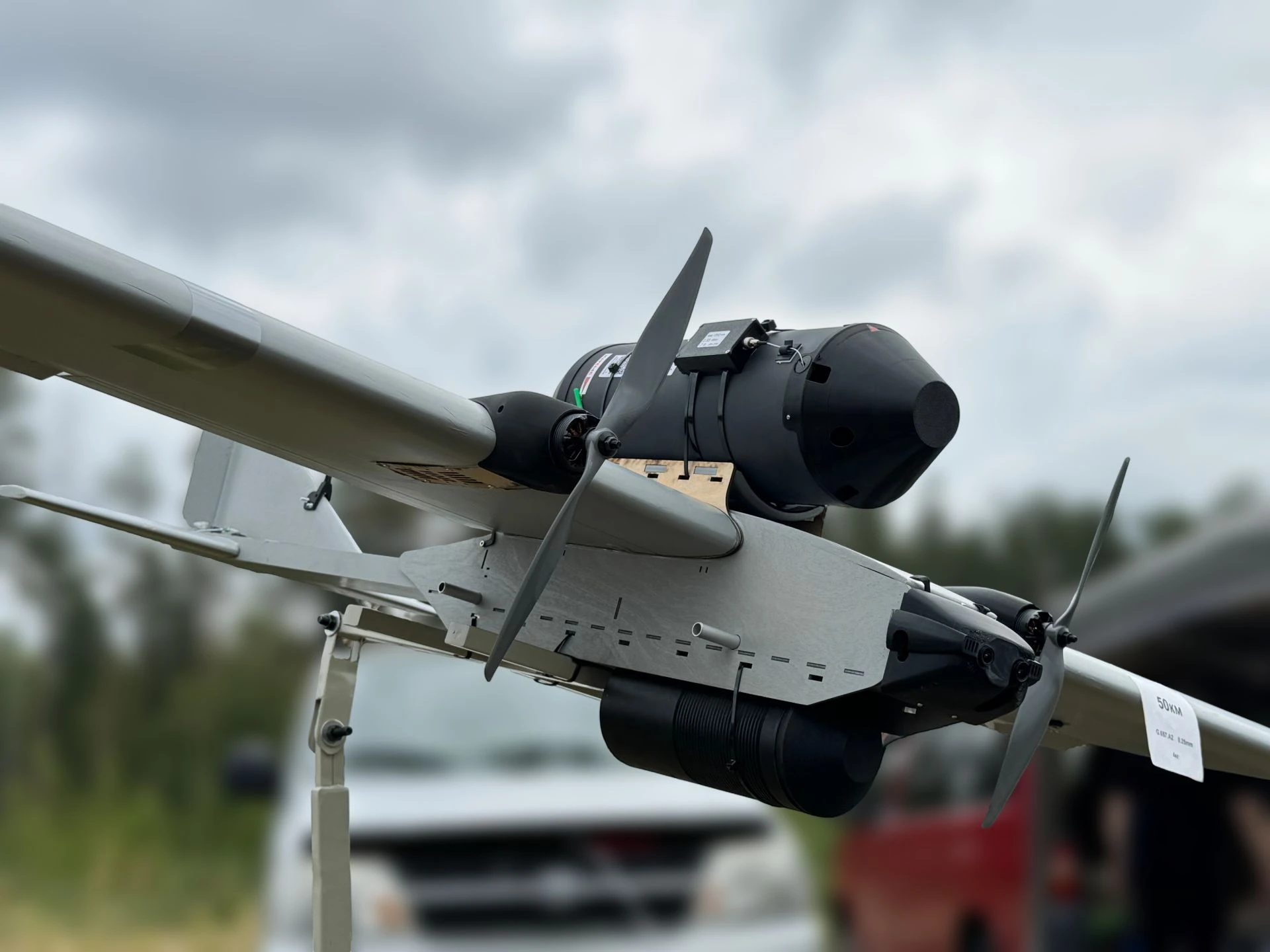
The trials featured a modified twin-engine fixed-wing kamikaze drone called Darts with a 50-km range via fibre-optic cable. The manufacturer, Stalevi Shershni, partnered with another company, which was responsible for the fibre-optic systems, to create this drone.
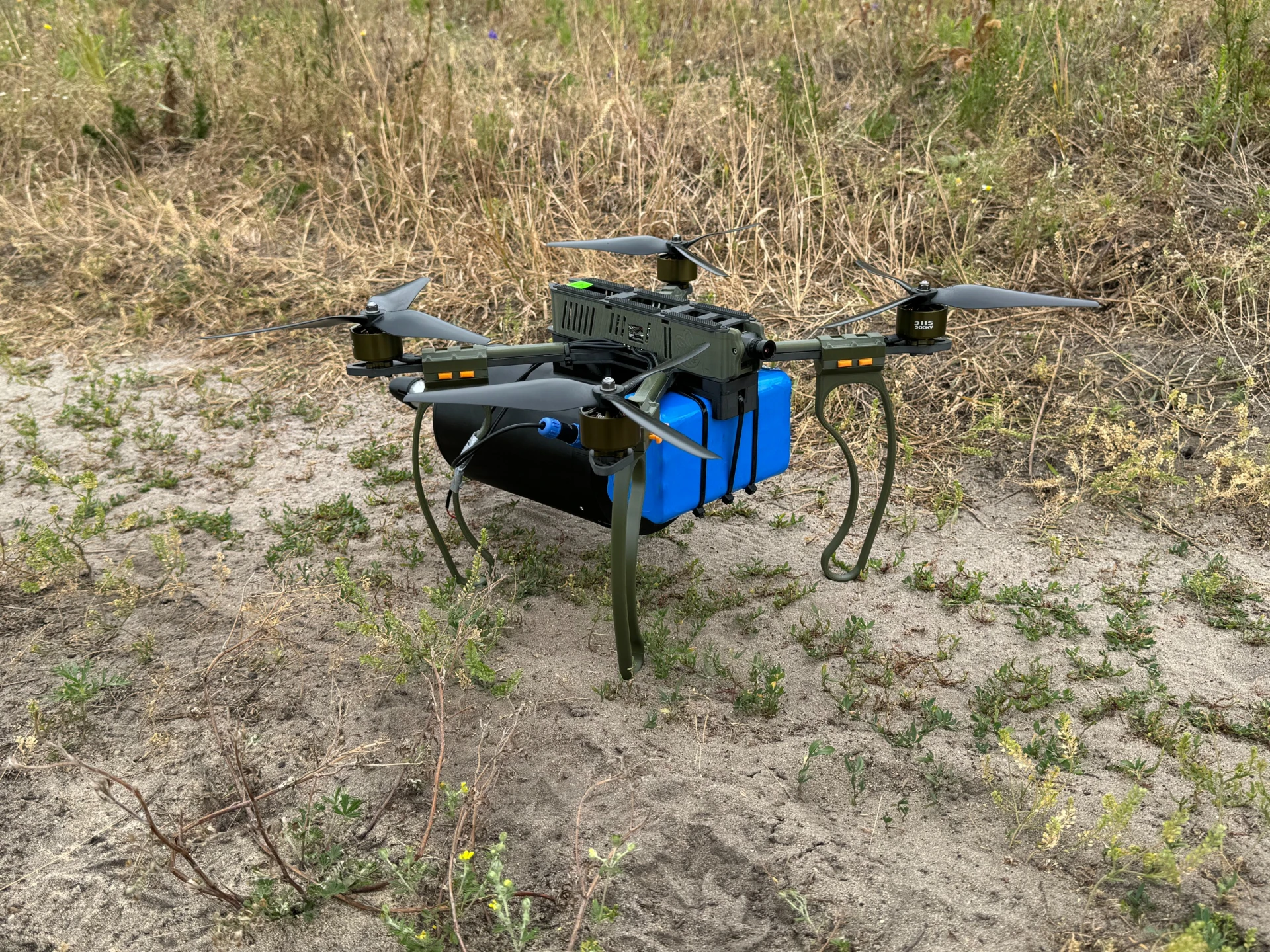
BeeTA fibre-optic drones were also flown. In addition to UAVs with a range of over 35 km, the company presented a smaller version – a drone with a 10-inch frame and a 20-km reel.
A team from Mechanic Lab showcased a custom-built fibre-winding machine capable of spooling 20 km of fibre per hour. The company representative said they can produce five such machines per day. Their key customers include military units and drone workshops in the rear.
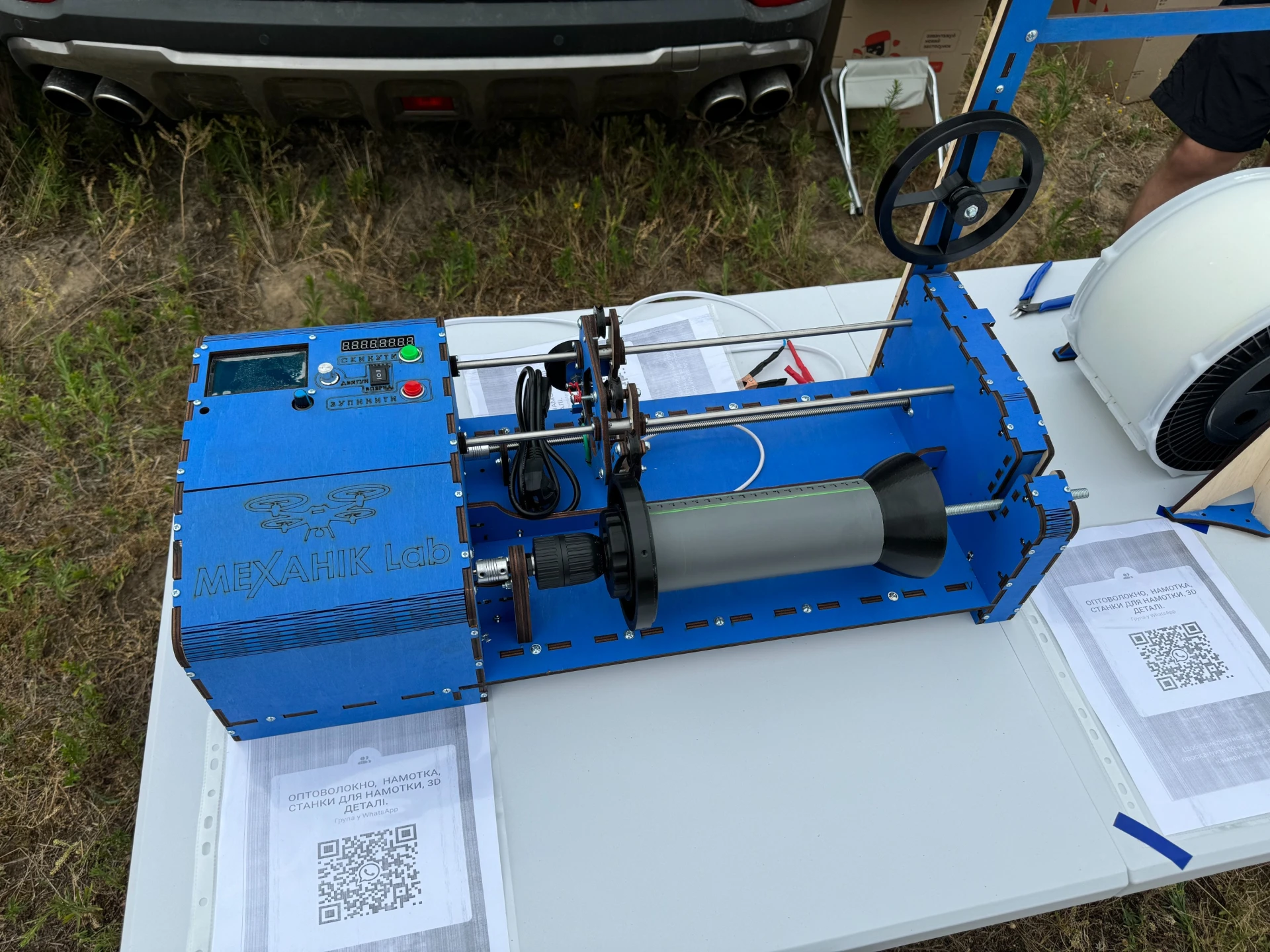
Mechanic Lab noted that one of the issues with fibre-optic drones is that the cable can become twisted in flight. The wire frequently fails to unwind in a straight line and fall flat on the ground, but coils into spring-like loops instead, which negatively affects the drone's aerodynamic properties. Additionally, when the fibre coils into loops, the light inside has to travel a longer distance, which can lead to signal loss and loss of the drone itself.
To prevent such problems, the machine’s developers suggest lubricating the fibre during winding. This allows it to remain firmly in the reel, unwind smoothly, and lie flat on the ground.

Brave1 acknowledges the dependence of Ukrainian manufacturers on Chinese fibre-optic cable, but notes that Ukraine is gradually localising some components for such drones.
Previously:
In May, the Brave1 cluster tested attack drones that can hit targets at distances of up to 30-40 km. A single-engine version of the Darts drone was demonstrated, along with other UAVs including the Hunter Killer, R2D2 and Siromakha.
The main idea behind the event was to create a mass-produced drone that is capable of reliably reaching targets up to 40 km away. This would enable the effective destruction of Russian depots, equipment and air defence systems, and keep Russian supply routes under pressure.
Support Ukrainska Pravda on Patreon!