My brother was detained by militants, yet my father welcomed Russia: the tragic reality of families torn apart by Russia's occupation of Mariupol


Wednesday 21 May marked three years of Russian occupation in Mariupol. When the last Ukrainian defender left the Azovstal Iron and Steel Works, Russia took complete control over the city.
Official estimates suggest that the Russian military killed about 20,000 people in Mariupol, but the real number may be much higher.
The Russians razed almost the whole city to the ground. Repression, the replacement of Ukrainians with migrants from the Russian provinces, racketeering and widespread propaganda began.
The Russian occupation has also left another painful mark, not obvious at first glance: families that have been torn apart.
How do you talk to your own mother when yesterday she loved Ukraine and today she believes Russian propaganda? How do you defend Ukraine at the front, knowing that your father supports the Russians?
These painful questions faced those residents of Mariupol whose relatives remained there, in the ghost town where the Russians were much quicker to bring their propaganda than humanitarian aid.
Ukrainska Pravda.Zhyttia talked to three residents of Mariupol who have lost not only their homes, but also their relationships with those closest to them.
Of course, some people who do not have a direct connection to the war may think that "it’s not that simple" and the pro-Russian views of some citizens are genuine.
However, the stories of the interviewees in this article once again confirm that the support for Russia among some Ukrainians is either a survival strategy through a denial of reality or an echo of years of propaganda.
The following stories are told by our interviewees in their own words.
Svitlana Korablova, 38
Photographer, communications specialist
"Grandma blames the Ukrainian government, Europe, the US – anyone but the Russians"
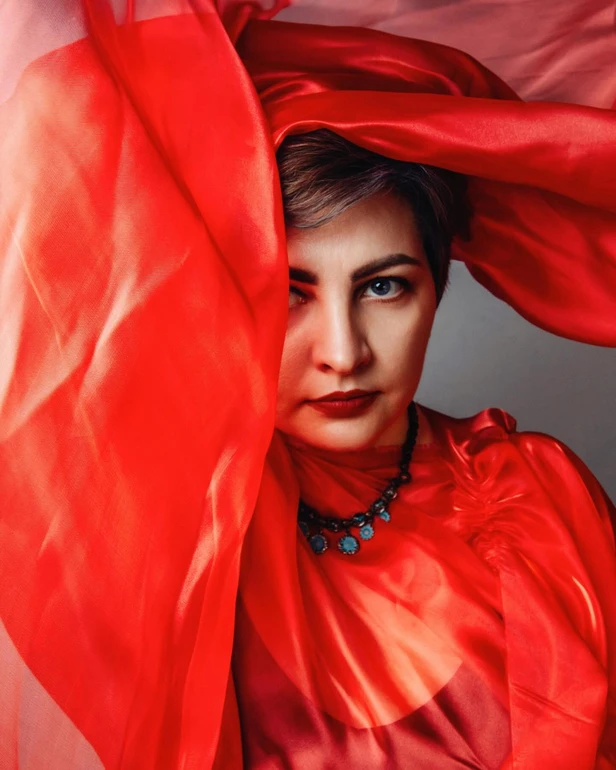
I had lived in Mariupol all my life.
I was happy before the war. I’d moved in with my second husband. I was doing great with my job: I was working as a photographer, developing myself and becoming an active citizen, restoring old doors in the city to preserve its history.
My husband, son, daughter and I left Mariupol on 24 February 2022. I was unsure at first, but when I saw my frightened children in tears, I knew I had to leave the city. By the third or fourth day after we left, it was already hell near our house, so we left just in time.
The city I was leaving can be described as "frozen". Everything seemed to freeze, and people hid. Shops and petrol stations were closed. It was empty and scary. This is how I remember it.
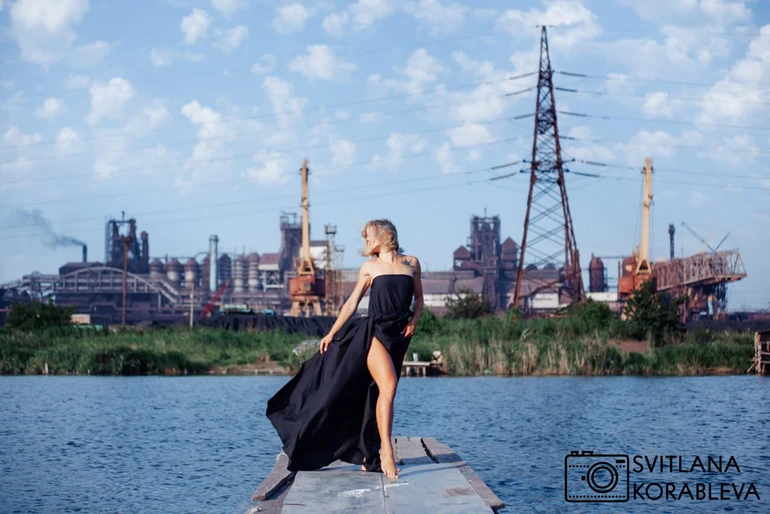
My grandmother, father and first husband – the father of my children – stayed in Mariupol. When I left, I immediately started calling everyone and offering help. My grandma said, "I'm not going anywhere with the cat." People didn't have a complete understanding of the danger.
I haven't spoken to my mother since 2014. She lives in St Petersburg now. At first, we tried to get along, but later I became a "Fascist" and a "Nazi" to her.
I stayed in touch with my father until 2022, but not anymore. I still speak to my grandma, but we agreed only to talk about everyday life, her grandchildren and her flowers. I love her as a person, but I don't agree with her views. When she started trying to impose her opinions on me, I decided to avoid discussing political issues.
When Russia's full-scale invasion of Ukraine started, my grandmother hid in the basement of her five-storey building. There was a strike at her house. Thank God, no one was killed, but the roof was damaged, and later the flat was further damaged by rain. My father's house was completely destroyed, yet he continued to spout pro-Russian views.
Their life was terrible during those three months. When I was finally able to contact my grandmother, her health and strength had greatly declined. It seems to me that at that time she was well aware that the Russians were attacking her. But when you're under such stress, you probably cannot reflect or search for the guilty. At first, she talked about other things, and then she closed up. It hurts her to go back to those memories.
When electricity was restored in some parts of the city in 2022, centres were set up where you could charge your phone. The Russians immediately parked lorries with TV screens there that broadcast their propaganda. And it is effective. I can see that three years in the occupation have really affected my grandmother. She has become more aggressive towards Ukraine.
We call her sometimes, although the connection is bad. She tells us about how she does repairs, goes to the doctor, and has to queue five hours for her pension. But she considers that it’s not Russia that is to blame, but the Ukrainian authorities, Europe, the United States – anyone but the Russians.
My grandmother is a Soviet person. She was a Communist Party member, and even under independent Ukraine she ran for the Communist Party. Her values are based on the idea that the Soviet Union was the best thing that happened in her life. But I don't understand people my age who didn't live in the Soviet era and are still unable to analyse information properly.
People probably see what they want to see. If you believe that Ukraine is to blame, you will always find evidence of this.

I believe that all the pro-Russian thoughts of the locals are the result of systemic toxic propaganda, which was laid down even before Ukraine gained independence. My generation learnt the history of Ukraine, but my parents were taught the Soviet version. My great-grandmother survived the Holodomor [the deliberate starvation of millions of Ukrainians under Stalin], and she told us about it, but my grandmother perceived it not as a crime of the Soviet government, but as a kind of "drought" or "poor crop". As if these were natural circumstances, not genocide.
The result of this brainwashing is broken families. In Europe, for example, family values were important, but in the Soviet Union, children were taught from an early age that they could betray their parents if they were an "enemy of the people". The only religion was the party, Stalin, the state…
Of course, I think my parents' attitude towards me is very unfair. I didn't do anything wrong to them. I feel very upset because I can't hug them, come to my grandmother's house for tea, or celebrate the New Year with them. It hurts. But I understand that they are adults. Each of us has decided on our own values.
I never tell my children that "great-grandma is bad". I still want them to see their roots in Mariupol and feel that there is a family member there. But as they get older, it becomes more difficult for them to talk to her. My son will soon be 18, and when my grandmother says that he should go to Mariupol so that he is not mobilised into the Ukrainian army, he reacts very sharply to this.
He doesn’t speak to his father because he is furious about his pro-Russian views. My 12-year-old daughter has also stopped contacting him, although I didn't interfere in any way. I think they just have nothing else to talk about.
"Historian", 42
Serviceman of the Armed Forces of Ukraine
"I’ve been hearing ‘Ukraine is destroying Mariupol’ from my father for 10 years"
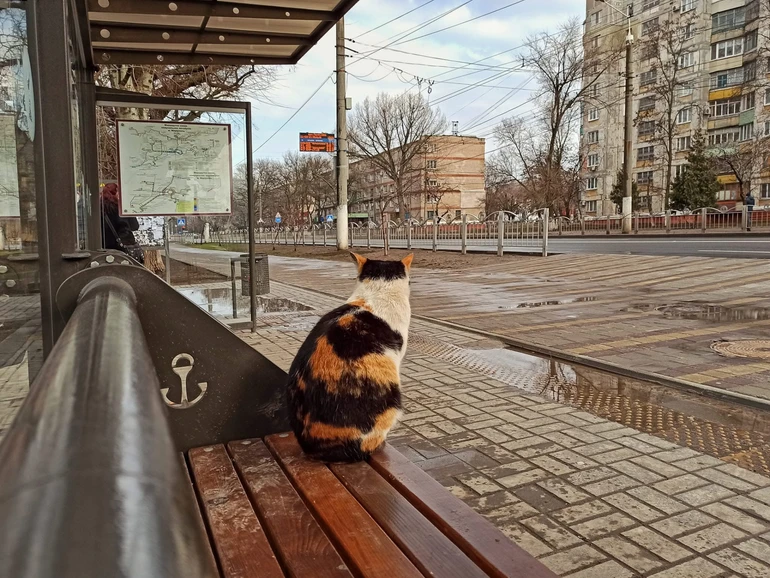
I was born and raised in Mariupol. I did a degree in history, so I have the corresponding call sign, but I worked at Azovstal for more than eight years. My older brother has a PhD in political science and fought in the Anti-Terrorist Operation (ATO) in Ukraine.
Our parents, who are already over 70, remain under occupation. We contact our mother daily, but we’ve had a complicated situation with my father. Because of his pro-Russian position, the war finally broke our relationship. He and our mother even live in separate flats.
Our houses were located in the East district, where literally 300 metres away there’s a field, and then it’s occupied territory, the so-called Donetsk People's Republic [a self-proclaimed and non-recognised independent republic in Donetsk Oblast]. On the outskirts of our city it all started back in 2014, when there was the first offensive on Mariupol, but this is not comparable to what happened in 2022.
We were bombarded until 22 March. Then the "DPR" fighters came in, and there was hardly any incoming fire, but cleansing and checking started. I was very lucky that at least there were no aircraft in our district. I encountered them at the front line, and it was real hell. In the centre of Mariupol, the attacks continued until May, both from ships and aircraft.
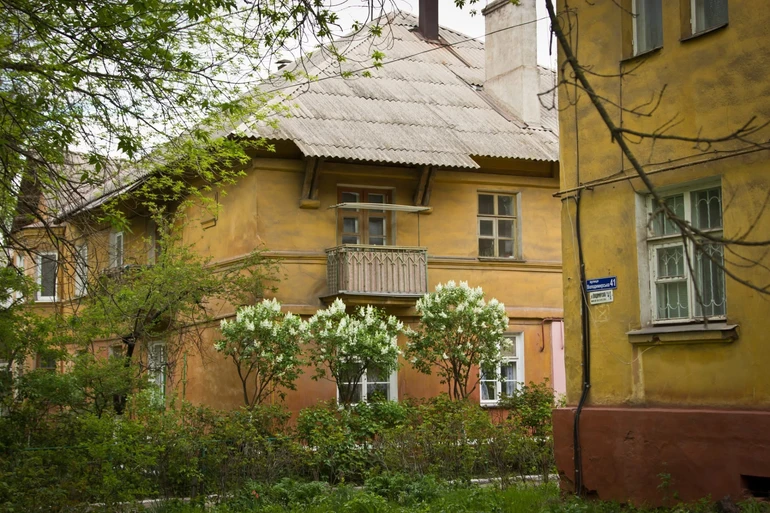
My father stayed in his apartment, which remained intact. He understood exactly what was going on: he saw Russian uniforms and equipment taking over the city, but he liked it. I have been hearing the same thing from him for 10 years: "Ukraine is destroying Mariupol" and "Ukraine is to blame".
I miraculously escaped from a bullet or shrapnel three times while walking around the city or cooking borshch [traditional Ukrainian soup with beetroot] in the yard. My father would come to our house and express his pro-Russian views. I would respond: "I have enough war outside – don't bring it here." He was also afraid of dying, but he still said: "It's all because of you."
Then the so-called "DPR counterintelligence" detained my brother at one of the checkpoints because of his tattoos. They have some kind of fixation on these tattoos. Fortunately, the Russians did not find out that he was a military man, because my brother is a man of titanium-strength self-control. He managed to leave the city.
I wanted to leave the city right away, but I finally made the decision to leave when my ex-wife, who lives in Kyiv, called and said: "We have a free apartment, come here." I came up with the story that I was going to see my wife because if I didn't, she would file for divorce. At one checkpoint, obviously an FSB [Russian security services] checkpoint, they started questioning me, but they believed my story.
Upon arrival in Kyiv, I went to the military enlistment office. Now I am serving in the infantry, doing my duty. By the way, my father still does not know that I am in the army. My mum hasn't told him because he doesn't know how to keep his mouth shut.
Why does he support Russia? I still can't figure it out... As a historian, I’ve tried to find answers to this question. Both my father and mother came from repressed families, and my maternal great-grandfather was exiled to Siberia. But my mum's relatives retained their Ukrainian identity, while my father's did the opposite.
Perhaps this is just a survival strategy and mimicry – to feel nothing for your homeland to make life easier.
I made my choice a long time ago, and I don't regret it. But it hurts me a lot that my parents are elderly and I can't fulfil my duty to them as a son. When my mother broke her arm, no one could help her...
I used to believe that I would return to her in Ukrainian Mariupol, but now, being at the front, I am not sure. The only thing I can console myself with is that, thank God, we all survived.
Olha, 28
Regional media journalist
"I'm glad my parents don't wrap themselves in Russian flags"
I moved to Mariupol from Brianka in Luhansk Oblast when I was 10 years old. My parents were miners and left in search of work. Here in Mariupol I studied, worked in the media, and met my husband.
We lived in the village of Myrnyi near the Illich [Steel] Plant and could not believe that there would be a full-scale war until the last moment. We thought: we have the maritime guard, we have Azov [the enormous steelworks and the brigade of soldiers with the same name]. Even if there is an offensive, it will stop at the border. We didn't even discuss the prospect of leaving home.
On 3 March 2022, the mobile connection disappeared in the city. All hell broke loose, everything was on fire, and we were under a complete blockade. It was clear that the Russians would be looking for my husband because he was a police officer. We tried to come up with a fake story for him, but the Russians already had all the bases covered...
After the Ukrainian military left the Illich plant, "filtration" began in the village: my husband and father were taken away from our home just as we were about to have soup for lunch that my mother had cooked from some leftovers. They said they would release them in two days, but it took 32 days.
My father, along with other civilian men, was held in a school in the village of Bezimenne, and my husband was taken to the Olenivka prison camp and interrogated for a month.
I found out that prisoners were being taken to Donetsk Oblast, so I went to my mother-in-law, who lived in occupied Donetsk. I persuaded my mother to come with me, at least to get away from the bombardments, but she refused, saying she would wait for my father at home. That's how our family split.
The last time I saw my mother was on 25 April, when she accompanied me to the bus to Donetsk, and I had not seen my father since the day of his detention. When I first left the village for the central part of Mariupol, I saw the terrible destruction of houses, blackened high-rise buildings, and burials in the yards. Then I got the feeling that there was no turning back...
I went to the detention camp in Olenivka, tried to find out where my husband was, but the Russians lied to my face – "there is no such person here". He was only released when the exit from Azovstal began because he did not have an "article" [a fabricated criminal case against him]. Volunteers helped my husband, my mother-in-law and me leave through Russia and Belarus. It took us seven days to get to Ukraine.
My dad was released around May, but my parents have remained under occupation. I wouldn't say that they are pro-Russian, but the question "What if we leave?" does not even arise in their minds. If they were told to leave and start all over again, they would look at you with wide eyes. It's scary, hard, incomprehensible.
My parents' house survived. My dad continues to work as a builder, and my mum works in a bakery. She tells me about her cat, her garden, her health and her work: "I baked buns", "I'm making pizza", "I planted strawberries". They seem to have shut themselves off from the world at home, but I realise that their lives are grey and joyless. This is the most painful thing – to know that they are not happy but still stay there.
It has been very difficult for me to accept the situation. I lived with a constant feeling of guilt, so I went to a psychologist. Now I talk to my mum once a month, and to my dad even less often. We have never been close. Sometimes I even silently blame him for the fact that my mother stayed there with him...
I'm glad that my parents don't wrap themselves in tricolours [Russian flags], don't engage in any political activity, don't write stupid things on the internet – because some of my friends' parents have done that. But I’ve noticed that over time, my mother has succumbed to the propaganda a little bit and started repeating strange narratives about Europe and the United States. I tried to explain things to her, because she always believed me, but it was useless.
Denying reality is her way of protecting herself, of not being torn between the questions of "who is to blame?" and "why am I living here?" We had an argument, I set boundaries, and now we don't talk about these topics.
When people look at such situations from the outside, they don't understand. How do you answer the question, "Why do you talk to your parents?" Because I love them, because it is important for me to keep in touch with my family. I know for sure that they stayed in Mariupol not because of their love for Russia, but because it is difficult to go out into the unknown, with no money, no guarantees. Those who did that are great, but not everyone can do it.
My husband and I started again from scratch, first in Khmelnytskyi, then in Kyiv. We moved a lot of times, looking for apartments, surviving without work. If I had told my parents about this, they would have said, "We don't need that."
I don't know if I will ever see my parents' house again, or hug my mother... As long as Mariupol is under occupation, my husband and I will not be able to return, because at the first checkpoint we would be taken "to the basement" [for detention, interrogation and possibly torture].
Sometimes I think that all I want now is for someone to recognise how much it hurts me to lose this relationship with my family... For society to understand that not all the people who stayed in Mariupol support Russia.
Mariupol residents are not to blame for being under occupation. It is the fault of the Russians, who invaded us and forced us to choose between staying at home or leaving.
Author: Olena Barsukova
Translators: Yuliia Kravchenko, Yelyzaveta Khodatska
Editor: Shoël Stadlen