"We should have been more decisive in dismissing people who slowed down change": Fedorov sums up his time at Ukraine's Defence Ministry
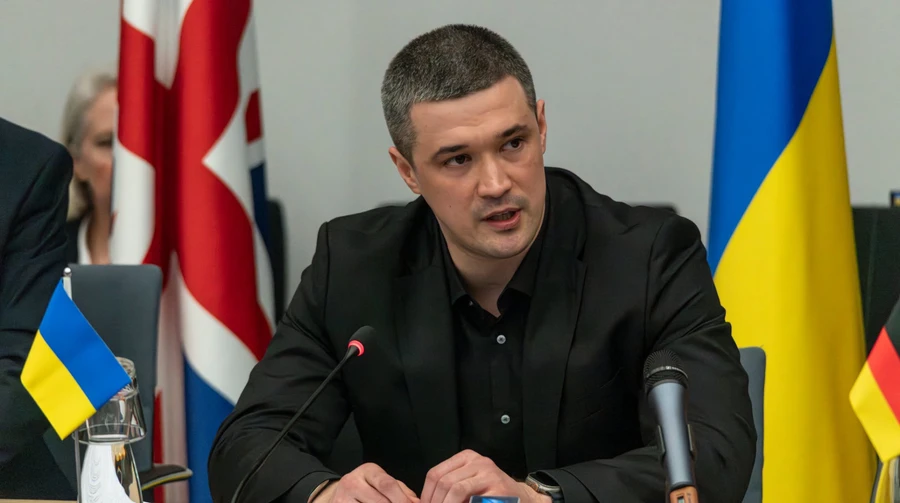
Defence Minister Mykhailo Fedorov has summed up his time in office, thanked those who supported him and said he will continue his mission to "defeat the enemy through asymmetry, the speed of innovation and the power of organisation".
Source: Fedorov on Facebook
Quote: "It was a great honour to serve the Ukrainian people as Defence Minister."
Details: In summing up his work in the role, Fedorov set out what his team managed to accomplish:
- Disabling Starlink for the Russians, which drastically reduced their ability to wage an effective drone war.
- Making a high-risk decision after taking over the Defence Ministry without a dedicated budget, using funds from the year-end military pay reserve and investing them effectively in mid-range drones, fibre-optic FPV drones, low-cost reconnaissance, uncrewed ground vehicles, interceptor drones and long-range drones. In four months, more drones were procured than in the entire previous year.
- Launching "Logistics Lockdown" as a standalone, separately funded programme which, together with targeted procurement decisions and support for leading units, made it possible to sever Russian logistics and begin isolating temporarily occupied Crimea; continuing the funding programme for the Drone Line, which serves as the basis for procuring drones for the Unmanned Systems Forces; launching a support programme for modern drone-assault units that primarily fight using technology.
- Introducing 70% advance payments for procurement through E-points [E-points are earned by Ukrainian units for confirmed strikes on Russian soldiers and equipment – ed.] on the Brave1 Market portal; radically changing the procurement system. Launching the first tenders for long-range artillery and hundreds of thousands of drones, generating billions of dollars in savings for the state budget; procuring thousands of pick-up trucks, buggies and quad bikes for the military for the first time, also through tenders.
- Integrating Pavlo Lazar [Pavlo "Lazar" Yelizarov, the founder, commander and sponsor of the National Guard's separate special-purpose detachment, Lasar's Group] into Ukraine's Air Force and introducing a procedure for reviewing every large-scale attack through an After Action Review. During this period, the drone interception rate rose from 83% to 91%, the interception rate for cruise missiles rose from 47% to 87%; awarding contracts for missiles for Patriot PAC-2 GEM-T systems for the first time and submitting an application, financed through a European loan, for the purchase of PAC-3 missiles; introducing a baseline system for supplying drones to brigades and corps. From July, all combat brigades and corps will begin receiving planned drone supplies without the need for manual intervention, allowing them to better forecast their next steps.
- Launching a large-scale grant programme for explosives and missile manufacturers; an unpopular but vital transformation of the military, including fixed-term contracts and deferments for all; introducing some of the world's highest salaries for infantry and assault troops, foreign recruitment on transparent and attractive market terms and new tools to encourage service members who have left their units without official authorisation to return.
- Holding three meetings of the Ukraine Defence Contact Group, also known as the Ramstein format, where Ukraine managed to counter Russia's narrative of its supposed defeat and restore partners' confidence in Ukraine. US$40 billion in support for this year was announced, not including the European loan; a mechanism was launched to use the European loan for Ukraine's military priorities. This was a separate, highly complex bureaucratic challenge that was ultimately accomplished successfully. A solution was found to scale up production of low-cost missiles capable of countering jet-powered Shahed-type drones. A record-breaking contract was signed.
- Our ballistic missile. Symbolically, on the day the government was dismissed, we successfully tested a ballistic missile developed within the Defence Ministry's area of responsibility. We made fundamental changes to the technical specifications and brought the system to maximum accuracy. We cut the cost by 30%. Ukraine is set to enter a new league.
- Signing a contract to purchase Swedish Gripen fighters, which will make it possible to shoot down Su-series aircraft carrying guided aerial bombs; planning and carrying out Operation Auchan together with the military, which halted Russia's mechanised offensive for six months; opening exports under the Drone Deal programme in order to attract investment and increase production in the defence industry; launching Trophy Lab to give partners the opportunity to study Russian military developments; launching the Defense AI Center A1 to accelerate the use of artificial intelligence in the war.
More details: Fedorov also listed what was not achieved:
- Completing the Ministry of Defence's organisational transformation in line with NATO standards and common sense. The new structure was launched, many staff were dismissed and a range of processes were set in motion. But people who were slowing down change should have been removed even more decisively.
- Moving all procurement, without exception, to competitive tendering.
- Building a culture of responsibility for decisions taken. Fedorov said he believes this institutional culture will be shaped by the heroic Ukrainian people.
"Thank you to everyone who defends Ukraine and works for its victory. I am grateful to my entire team for their effective service around the clock, and especially to my family for their patience. Thank you all for your support. I will continue to serve the mission that first brought me to the Defence Ministry: defeating the enemy through asymmetry, the speed of innovation and the power of organisation. There is more to come," Fedorov said.
Background:
- According to Ukrainska Pravda sources within the Servant of the People parliamentary faction, Zelenskyy will not put Fedorov forward for the post of defence minister. Instead, he is expected to nominate Ihor Klymenko, who is currently serving as acting Interior Minister.
- Sources in the faction also say Fedorov remains on the president's team, "but what he will do next will become clearer next week".
Subscribe on Patreon to back our journalism long-term.