Almost 70% of Russian POWs consider war "justified", survey shows
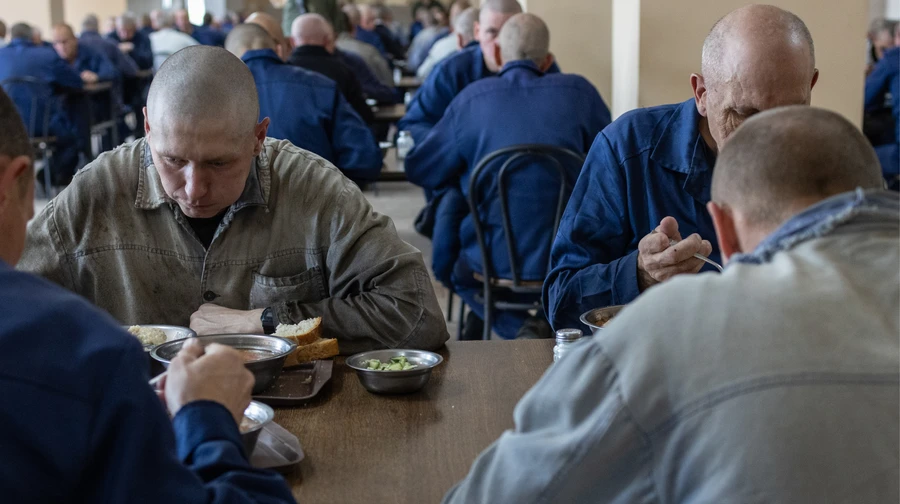
Almost two-thirds of Russian prisoners of war view Russia's war against Ukraine as justified and necessary, while over 40% of captured troops said they do not regard Ukrainians as fully human.
Source: a study conducted by LingvaLexa, a Ukrainian non-governmental organisation (NGO)
Quote: "The average level of perceived SMO (Special Military Operation) legitimacy in the sample was moderate, at 35.81%. Overall, 68.29% of soldiers perceived the SMO to be legitimate, necessary and justified to some extent." [The SMO is a term used by Russian propaganda to describe Moscow's war against Ukraine – ed.]
Details: LingvaLexa also emphasised that among prisoners of war who believe Russian propaganda, about 88% rated the war as justified to some extent (giving it a score above zero). Among those who do not believe the propaganda, 51% still said Russia's war against Ukraine was justified.
"Strikingly, about 13% of strong believers said the SMO was absolutely justified and necessary (giving it the highest possible score), compared to only 2% among the sceptics. This means soldiers who fully believed propaganda were six times more likely to view the war as completely legitimate – a difference that is meaningful in psychological terms," the sociologists said.
Overall, on average, 47.61% of prisoners of war believe Kremlin propaganda. Meanwhile, 76.95% believe in at least one propaganda narrative.


The survey also found that 42.94% of Russian POWs believe the average Ukrainian is not fully human. On average, Russian soldiers judge Ukrainians to be only 88% as "developed" as other people.

The Sociologists note that a stronger belief in propaganda is associated with a greater tendency to deny Ukrainians full human qualities.
Similarly, prisoners who most strongly accepted Russian propaganda were more likely to indicate a readiness to return to war: 32.71% would rejoin the Russian Armed Forces after release, 28.92% were prepared to return in non-combat roles and 22.29% reported some willingness to fight again.
The sociologists emphasised that among those who strongly believe propaganda, there were twice as many willing to go to war again (33%) compared to those who "weakly believe" propaganda (17%).
Similar trends were observed regarding voluntary surrender: among soldiers who strongly believe propaganda, the level of voluntary surrender was almost twice as low (9%) as among those who do not believe it (15%).
The study was conducted with support from the Office of the Prosecutor General of Ukraine and in partnership with the European Association of Military Social Psychology, the Kyiv School of Economics and Law, and the law firm Mitrax.
A total of 1,060 Russian prisoners of war were surveyed using standardised printed questionnaires, with an average age of 39.
The organisation LingvaLexa was founded in Ukraine in 2023 to conduct in-depth work and counter propaganda that enables the commission of the gravest international crimes during armed conflicts.
Support Ukrainska Pravda on Patreon!