Ukraine disrupts Russian plans in Dnipropetrovsk Oblast, Russia prepares to advance in Donetsk Oblast – what spring will look like on the front


President Volodymyr Zelenskyy and Commander-in-Chief Oleksandr Syrskyi toured around a dozen corps and brigade headquarters in Donetsk Oblast on 6 March – from the Azov unit, which is holding the line on the Dobropillia salient, to the 81st Airmobile Brigade, positioned furthest along the Sloviansk front.
The president was interested in the readiness of the Ukrainian grouping of forces in Donetsk Oblast for the Russian spring–summer campaign, as it is in this region that the Russians are preparing a new offensive.
"It is important that our positions are strong. It is important that our brigades are adequately supplied. Our warriors are holding their ground with dignity," the president summed up.
As Ukrainska Pravda has learned, brigade and corps commanders were fairly candid with Zelenskyy – as much as is possible in the presence of the commander-in-chief, who appointed each of them to their posts and on whom their further military careers depend.
Most often, the president was asked for drones of various types, as well as for stricter accountability of servicemen for unauthorised absence from duty.
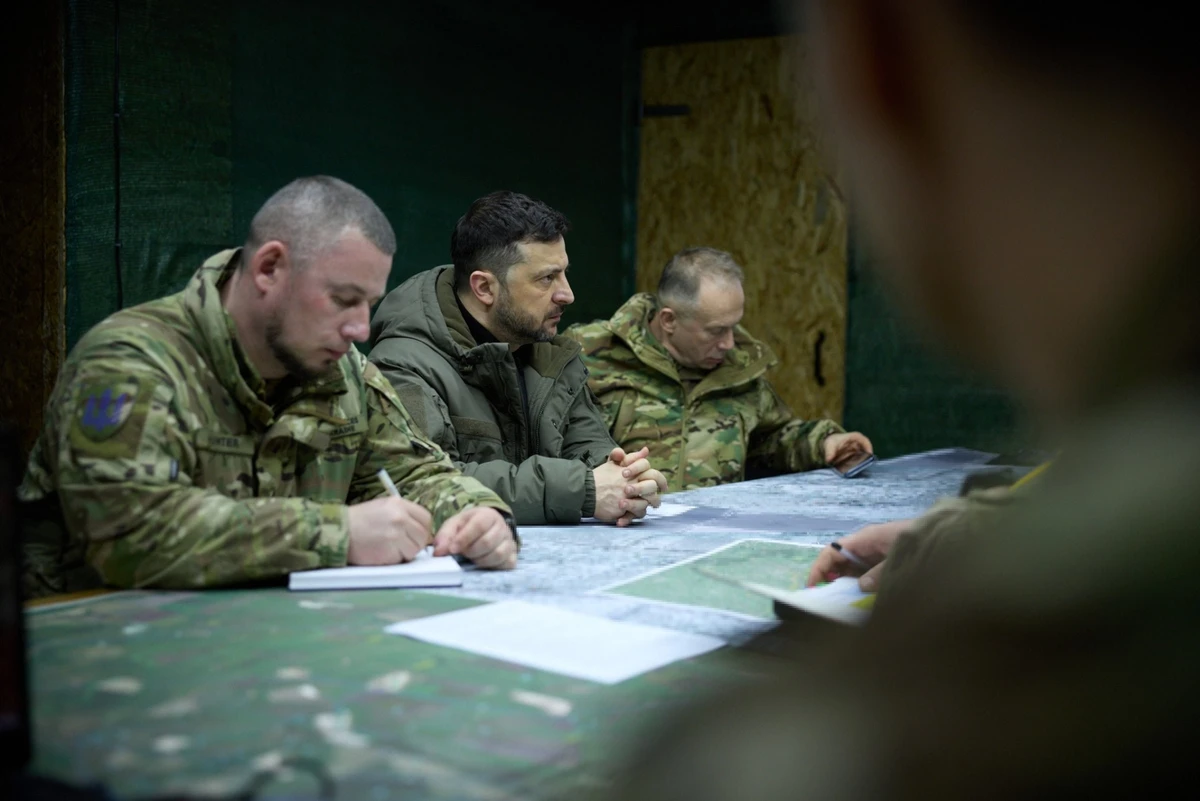
However, even setting aside the factor of subordination and the desire to smooth over painful issues – such as the permanent shortage of personnel, which was largely left unspoken – the readiness of the Ukrainian forces for the Russian spring campaign this year appears to be at a higher level than last year. At least this is how defence forces sources described the trip to UP.
Mykhailo Drapatyi, commander of the Joint Forces grouping responsible for the front in Sumy and Kharkiv oblasts and part of Donetsk Oblast, is similarly confident that Ukraine is better prepared for a Russian offensive this year than in previous years.
"This year, in our grouping, we began preparing for the spring campaign back in January. We took seasonal elements – sun, water, foliage cover, temperature – into account . We calculated how many personnel, how much ammunition, UAVs, video cameras and remote mining systems we would need. We held a briefing with corps commanders where each explained how he sees our defensive preparedness at this time," Drapatyi told UP in a phone conversation.
For four years now, the main objective of the Russians in the spring–summer campaign has remained unchanged: to occupy the entirety of Donetsk Oblast.
Most likely, according to Ukrainska Pravda sources, Russia will focus on the Lyman front or the Kramatorsk agglomeration – Kostiantynivka, Druzhkivka, Kramatorsk and Sloviansk.

In the most optimistic scenario for the defence forces that UP heard while working on this piece, by the end of the summer the Russians will not even have been able to capture Kostiantynivka, whose outskirts they have already entered. In the most pessimistic, they will seize Kostiantynivka and attempt to prepare conditions for an assault on Sloviansk and Kramatorsk.
In addition to Donetsk Oblast being a vast battlefield and home to several million Ukrainians, it is also – painful as it is to write – the subject of negotiations between Ukraine and Russia mediated by the United States.
Russia is demanding that Ukraine withdraw its troops from Donetsk and Luhansk oblasts. If Ukraine fails to meet this condition, Moscow is reportedly threatening to walk away from negotiations. Ukraine, has consistently rebuffed this proposal, largely due the strength of public opinion against it in Ukraine.
This is the second reason why Zelenskyy travelled east. Recording a video address in Druzhkivka – already within range of Russian FPV drones – he is demonstrating to US President Donald Trump that the Russians are once again exaggerating their battlefield successes and that Ukraine, even with reduced American assistance, is continuing to fight for its cities.
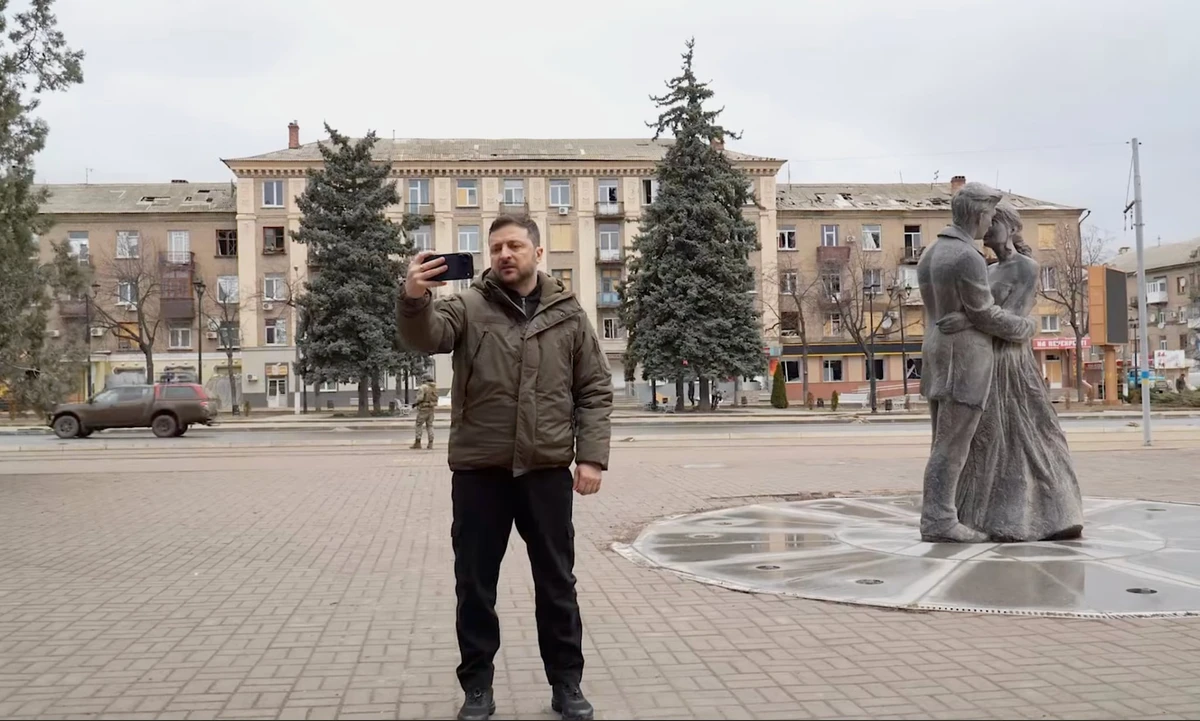
We take a deep dive into where exactly the Russians may exert pressure in Donetsk Oblast this summer, what the true scale of the defence forces' offensive actions on the Oleksandrivka front is, and why the Russians are capturing tiny villages in Sumy and Kharkiv oblasts.
The real situation on the front
1. Donetsk Oblast. The initiative on almost all fronts lies with the Russians. A difficult spring and summer lie ahead
The full capture of Donetsk Oblast remains both the number-one military and political objective for Russia. It is here that they will concentrate their forces this spring.
There are several possible fronts that could be the location for Russia's main offensive focus:
- The Lyman front, from which the Russians are trying to "close off" the Kramatorsk agglomeration from the north.
- The Sloviansk front, where the Russians are pressing the positions of Ukraine's 30th Brigade from the direction of Nykyforivka and Pryvillia.
- The Kostiantynivka front, where the Russians have already reached the outskirts but cannot advance deeper into the urban area.
- The Dobropillia front, where the Russians continue assault operations and have likely not abandoned the idea of encircling Donetsk Oblast from the Dobropillia salient towards Izium.

"The Russians' 'maximum plan', as always, is capturing the entire Donetsk Oblast and pushing further into operational depth, where it will be impossible to to stop them," says Vladyslav Urubkov, head of the military department at Come Back Alive. "In my view, the 'minimum plan', if we're talking about the next six months, is the capture of Kostiantynivka and reaching the outskirts of Sloviansk. Or starting a battle for Dobropillia."
"It is still difficult to forecast how the situation will develop west of Pokrovsk. In essence, defensive lines are already starting to be positioned there. For now, it remains an open question as to whether the Russians will move in that direction," he added.
2. Dnipropetrovsk and Zaporizhzhia oblasts. Ukrainian defence forces are disrupting Russian plans for the spring-summer campaign
Behind the sudden news about a breach of the Russian defensive line on the Oleksandrivka front, announced by Ukraine's Air Assault Forces Command in early March, stands several months of work. At the end of 2025, assault units, including the 1st Separate Assault Regiment, entered the Huliaipole front to deliver a preparatory strike against the Russians.
"Offensive actions on the Oleksandrivka front and in the Huliaipole area are in fact a single concept," Dmytro "Perun" Filatov, Commander of the 1st Separate Assault Regiment, told UP. "But it was not concentrated on the Huliaipole front. For example, we entered the sector between Dobropillia [in Zaporizhzhia Oblast] and Nove Zaporizhzhia to deliver a strike on the enemy's flank, to press them there, so that this would become a precondition for the further liberation of Dnipropetrovsk Oblast,".

Officially, the Air Assault Forces General Command has stated that the goal of the Ukrainian army's offensive was the liberation of Dnipropetrovsk Oblast, where the Russians had advanced back in summer 2025. However, there is speculation that the plan might be more far-reaching, considering that the objective of an operation is usually not announced during its active phase, especially when it concerns a conservative structure like the Air Assault Forces General Command.
According to Perun, his 1st Regiment managed to break through Russian defences and advance 12 kilometres into Russian positions on vehicles, which is an impressive achievement. Despite this, he refers to such offensive actions as "minor successes" and emphasises that they do not constitute a "new counteroffensive".
"These are offensive actions to improve our tactical position and stabilise the front line in the area where the enemy redeployed its forces," Perun explains. "They viewed it as their pre-spring campaign – I emphasise, pre-spring. In spring, I am certain, the enemy will start first on the Pokrovsk front – establishing a clear defensive line. And then on the Lyman front."

Another source involved in the offensive, Anton Derliuk, Commander of the 2nd Battalion of the 95th Air Assault Brigade, led his unit into the Oleksandrivka front at the end of January.
He was tasked with pushing the Russians out of Dnipropetrovsk Oblast. To achieve this, Derliuk executed a clever and well-planned manoeuvre:
"First, under snow and fog, we entered the enemy's rear and destroyed their reconnaissance – the MAVIC drone operators – so they could not see what was happening on the battlefield. Then we mopped up the sector we had quickly passed through. Essentially, it was sabotage. We surrounded about 60 Russians, captured three and the rest were killed."
The Russians, whose positions the paratroopers passed through, realised they were encircled around a week later.

Derliuk's battalion, like Perun's unit, advanced 10-11 kilometres beyond the line of contact. The paratroopers moved on foot, which they are particularly proud of, noting that no matter how much Ukraine's defence forces rely on drones, UAVs cannot penetrate deep into Russian positions and secure them, especially in low-visibility conditions.
"It was an infantry operation, where everything depends on people's training," adds Derliuk, referring to his men.
Interestingly, despite his preference for assault units, Syrskyi placed Oleh Apostol, Air Assault Forces General Command's commander, in charge of the offensive operations on the Huliaipole and Oleksandrivka fronts.
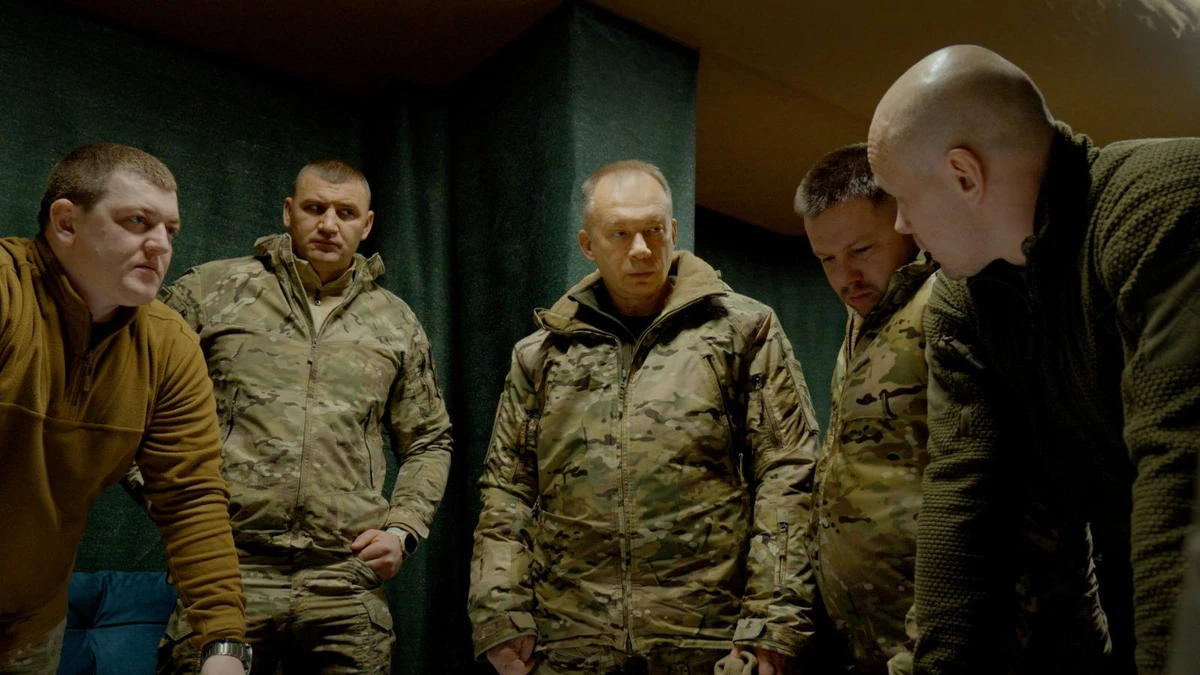
Volodymyr Zelenskyy and Oleksandr Syrskyi have stated that the area of liberated/mopped-up territory on the Oleksandrivsk front amounts to 300-450 square kilometres. However, it is difficult to assess such claims.
On the one hand, 450 sq km is a huge figure – equivalent to half the size of Kyiv. On the other hand, the offensive on the Oleksandrivka front may be more extensive than it seems. The names of the settlements Ukraine's defence forces managed to regain remain classified.
Ukrainska Pravda has found that the Ukrainian army began advancing through the southernmost villages of Dnipropetrovsk Oblast – Vyshneve, Yehorivka, Pershotravneve – and later entered Zaporizhzhia Oblast, pushing the Russians back from Novoehorivka, Novoivanivka, Pavlivka, and others (see map above).
However, it remains an open question as to whether Ukraine's defence forces will be able to consolidate their positions and consequently hold these villages.
3. Sumy and Kharkiv Oblasts. Russians "bite off" border villages to form a "buffer zone" in both oblasts. Reinforcements likely needed.
Despite constant activity along the border, the Russians probably do not intend to advance on Sumy or Kharkiv this spring-summer. Its goal is to create a 20-kilometre "buffer zone" along the border in both oblasts, Mykhailo Drapatyi, Commander of the Joint Forces of Ukraine, explains to UP.
This is why the Russians continue "biting off" more and more border villages in Sumy Oblast – including areas where the battlefield is not even present. In military terms, this is "tactical distraction" or the application of a "thousand cuts" tactic. They do not follow these up by committing heavy vehicles to the areas or conducting assaults.
"You cannot say this is a 'secondary front' or a 'front to divert our forces'; no, every Russian formation has its own objectives," says Drapatyi. "For its Sever group, positioned opposite us in Sumy and Kharkiv Oblasts, this is a buffer zone – or, as they call it themselves, an 'area of influence'.
"We have identified 12 fronts where the enemy, with forces from an assault company to possibly a battalion, will attempt to expand its control. This will include Krasnopillia, Velyka Pysarivka and Zolochiv fronts."

To prevent the Russians establishing this so-called buffer zone along the border, Ukraine's defence forces need to reinforce or replace the units defending that line.
The initial capture of Hrabovske and then Sopych in Sumy Oblast – accompanied by the abduction and transfer of local residents to Russia – is the clearest evidence that border guards and Territorial Defence units are struggling with their assigned task.
What the Russian army is betting on
This spring-summer, the Russian army will likely follow a well-worn pattern.
Firstly, it will continue infiltrating between Ukrainian positions, which will be facilitated perfectly by the foliage that will provide cover from next month.
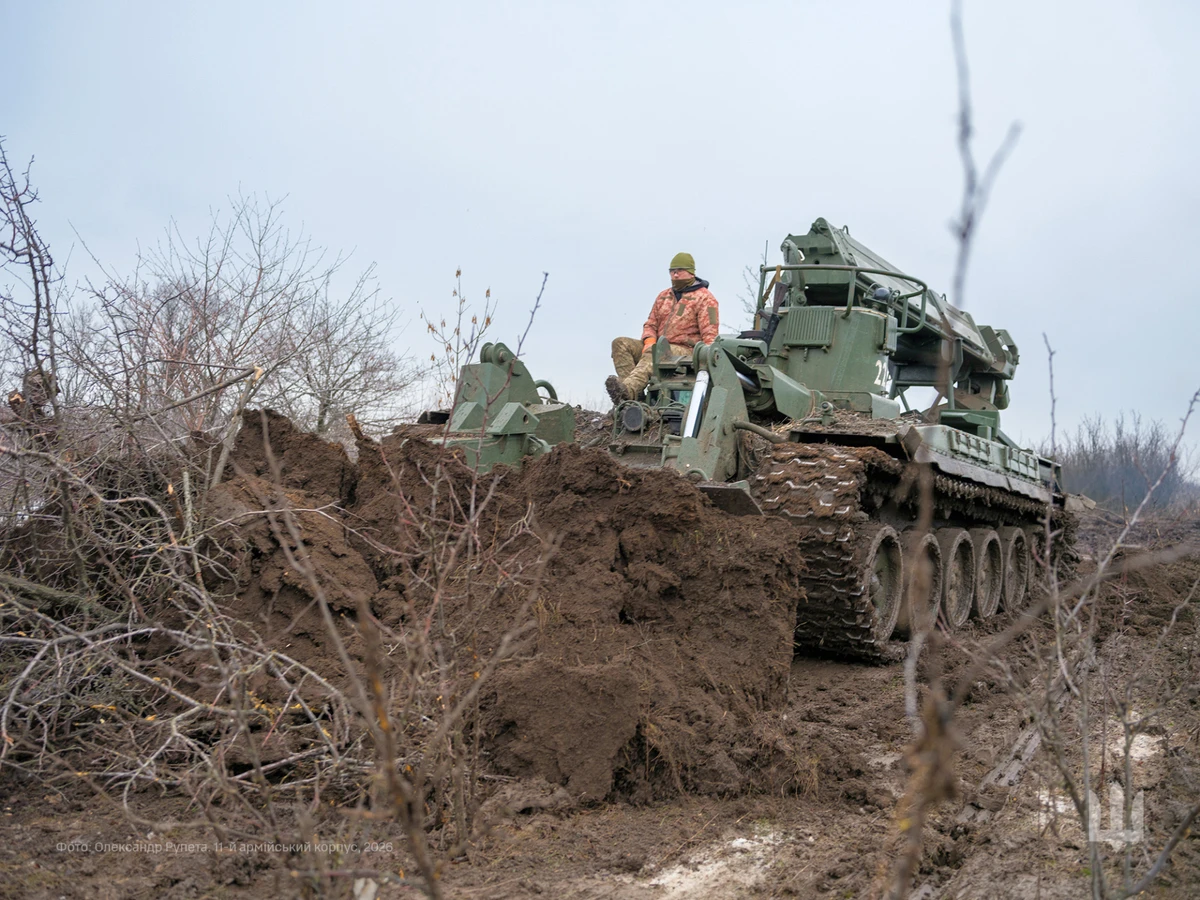
Secondly, it will continue to disrupt Ukraine's defence forces' logistics with drones up to 10-15 kilometres deep.
Thirdly, and most dangerously, according to Ukrainska Pravda sources, it will scale up its ace card – the once-secret Rubicon military unit.
The full name of Rubicon is the Test Centre for Advanced Unmanned Technologies. As colleagues from Radio Liberty have reported, it combines development, testing, procurement of various UAV types, an analytical centre, and combat crews working directly on the front line.
There is no equivalent to such a "centre" within Ukraine's defence forces in the form of a single, integrated unit.
"The Russians are now focusing not only on developing Rubicon, but on scaling up its experience," Dmytro Pulmanovskyi, chief of staff of the 3rd Svoboda Battalion of the National Guard brigade Rubizh, told UP. "Their military districts and naval fleet are deploying large training centres and the necessary logistical infrastructure for this. They are creating an entire infrastructure and command structure for it. After that, they will deploy hundreds of such Rubicons across the territory of Russia."
Why is Rubicon dangerous?
When entering the battlefield in late 2024 - early 2025, Rubicon began with strikes on Ukrainian logistics. Using fibre-optic FPV drones, which at the time were still a novelty, the crews of this unit effectively cut the main supply road for the Ukrainian grouping in Russia's Kursk Oblast. Later, they forced the complete withdrawal of the Ukrainian forces from Russian territory.
By mid-2025, Rubicon had gone further and began actively targeting Ukrainian reconnaissance aircraft. Leleka, Chaklun, Shark and other Ukrainian reconnaissance UAVs began to appear in the lists of targets hit, which the Russian unit publishes on its Telegram channel several times a day. Later, they were joined by heavy bombers, which the Russians collectively call Baba Yaga, as well as unmanned ground vehicles, Starlinks and antennas.
Now Rubicon is knocking out almost everything.
And it is precisely this unit that played a major role in the emergence on the front line of such a concept as a dense kill zone.
How should Ukraine's Defence Forces respond to the expansion of Rubicon?
At the very least, even if belatedly, they should begin systematically striking the launch points of Russian UAV operators. Shooting down FPV drones along main logistics routes is not enough – it is just a fight against the consequences rather than the cause.
Since June 2025, Ukrainian UAV operators in conversations with Ukrainska Pravda have regularly stressed that the Ukrainian forces need to create separate reconnaissance and strike drone crews that will detect and destroy the equipment and positions of Russian drone pilots.
Because of the loss of the "small sky" – the airspace above the battlefield and roughly five kilometres in front of it – Ukrainian forces had to withdraw from most of Pokrovsk and later from Myrnohrad.
However, such appeals in the media produced no effect.
Units tasked with countering Russian UAV operators appeared only in resource-rich brigades such as Khartiia. Line brigades do not have personnel assigned for this kind of task.
According to two sources familiar with the issue of protecting the sky over the front line who spoke to UP, Robert Brovdi, the commander of the Unmanned Systems Forces and in charge of the strongest UAV units, was not interested in targeting Russian pilots. The reason allegedly lay in the fact that the effect of striking pilots' positions is difficult to measure and therefore difficult to convert into e-points – the main efficiency metric and the "currency" of the Drone Line units.
Now, in March 2026, the importance of such a step is clearly understood by the newly appointed Minister of Defence, Mykhailo Fedorov, and by Pavlo Palisa, adviser to the Head of the Office of the President. However, how quickly this understanding will be converted and scaled into effective "anti-Rubicon" crews remains unknown.
An even more obvious and unquestionably useful response to the expansion of Rubicon, which will certainly target Ukrainian logistics, would be to repair and cover all frontline roads with anti-drone nets. Ideally, additional roads should be found or laid (for example with concrete slabs) and divided so that heavy and light vehicles are separated.
The more potholes there are on a road, the more often a pickup truck slows down, and the more often it slows down, the easier it becomes for a Russian FPV drone to strike it.
Due to overload and frost, the Kramatorsk - Oleksandrivka - Lozova - Pavlohrad road, which is the key logistics artery between Donetsk Oblast and Dnipropetrovsk Oblast, has over the past couple of months come to resemble a lunar landscape. The Novomykolaivka - Pavlohrad and Barvinkove - Lozova roads are also in terrible condition.

As far as UP knows, the issue of broken roads was also raised during the president's visit to Donetsk Oblast. That is one of the reasons why Donetsk Oblast Governor Vadym Filashkin appears in one of the photos.
He asked for additional funding for roads, to which the president apparently agreed. Repairs are to begin as soon as it gets warmer.

A hint of restrained optimism
While preparing this text, we asked our interlocutors their view on the Ukrainian forces' readiness for a new wave of Russian offensive. The range of answers varied from the familiar "we're all f***ed" to the less standard "if we don't do anything stupid, we might even seize the initiative around Sloviansk and Kramatorsk".
Although the latter, as of early March, when Russians are already shelling Kramatorsk with artillery, is a little hard to believe.
"We need to be realistic: once the greenery appears, we will start losing territory," explains Perun from the 1st Assault Regiment calmly. "Everyone says we have killed more Russians this winter than they have mobilised. But it was the same last winter – they [the Russians] are just clearly visible right now."
It seems that Ukrainian soldiers have been given a little more confidence by seeing evidence of the Russians' exhaustion: in February 2026 the Russians seized half as much Ukrainian territory as it did in January, and more broadly, it was the least territory seized in any month since June 2024.
What is also starting to work in the Ukrainian forces' favour is the launch of a mechanism for the fair distribution of mobilised personnel, under which a brigade is guaranteed to receive several dozen soldiers each month, the reinforcement of brigades that have been incorporated into combat-ready corps and the increased capability of the corps themselves.
Some corps commands have even received mid-strike drones at their disposal. These are strike drones that fly 50-200 kilometres.
The corps reform is finally moving into the stage where brigades are being reassigned into the area of responsibility of the command they have been designated. However, for now not everyone has this opportunity and privilege.
Some emotional uplift for Ukrainian soldiers also comes from Ukraine's successes on the battlefield, on the Kupiansk and the Oleksandrivskyi axes. As does the recent changes in the Ministry of Defence personnel, which is now ready to act ahead of the enemy, as in the situation with switching off the Russians' Starlink systems, for example.
Another hard spring lies ahead.
Olha Kyrylenko, Ukrainska Pravda
Translated by Myroslava Zavadska, Yelyzaveta Khodatska, Anastasiia Yankina
Edited by Shoël Stadlen